
Related videos:
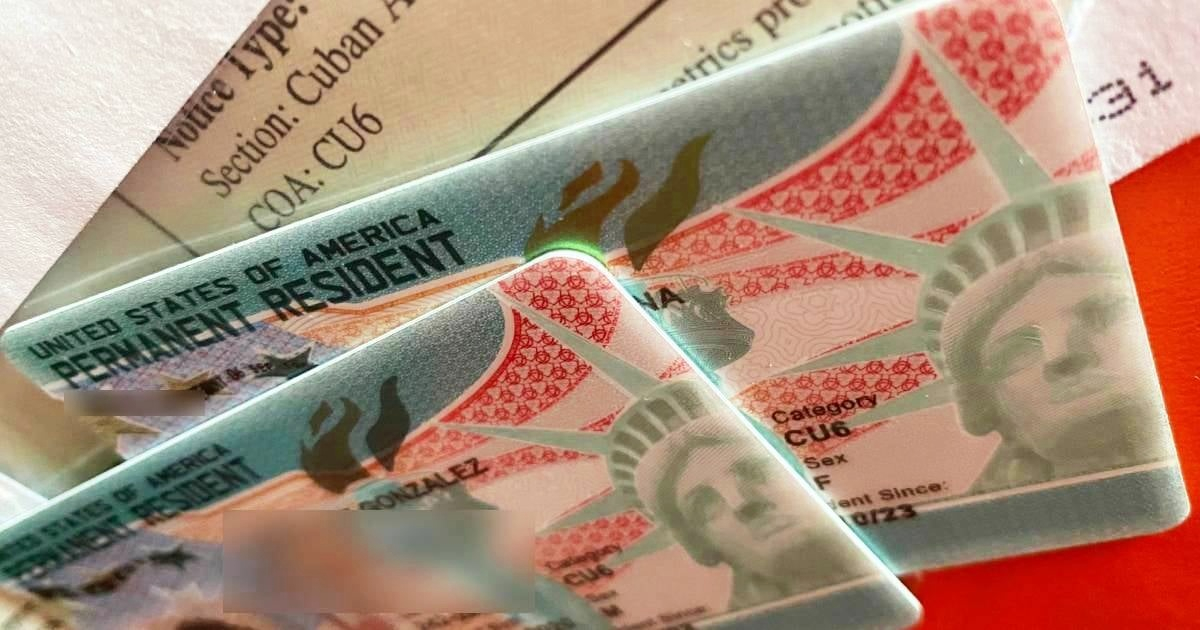
The U.S. Citizenship and Immigration Services (USCIS) has declared an all-out war against immigration fraud, announcing a retroactive review of permanent resident cards and other immigration benefits granted during the Biden administration, with direct warnings that those who obtained these benefits through fraud will face consequences.
The USCIS Director, Joseph Edlow, announced it on April 19 on his X social media account: "At USCIS, we have declared total war on immigration fraud. We are reviewing the past to reevaluate the cases of individuals who were granted green cards and other benefits during the Biden administration, when verification processes were lax. Now there is rigorous verification, and we are reopening those old cases."
In an interview with One America News, Edlow was even more direct: Stop, because we are going to find them. "And even if they have already done it and think they have gotten away with it, we will go back. Prepare to face the consequences."
The potential magnitude of the review is considerable: during the fiscal year 2024, approximately 1.4 million immigrants obtained a green card, 92% more than in 2020, when around 707,000 were granted, according to the Migration Policy Institute.
Since January 2025, USCIS has referred nearly 33,000 cases to its Fraud Detection and National Security Directorate, an increase of 138% compared to the previous average.
Of more than 21,000 completed investigations, 65% indicated signs of fraud. The agency also conducted over 7,000 home visits and more than 26,000 checks on social media.
But in what scenarios can a green card be revoked?
Immigration legislation includes several grounds: fraud or falsehood in the application, omission of criminal records, serious offenses, and abandonment of residency.
For those who have held a green card for less than five years, USCIS warns on its official website that "we may place you in annulment proceedings at any time" if it determines that the holder was not eligible at the time of approval.
For those who have been here for over five years, the government must notify them, and the case is resolved before an immigration judge. Only an immigration judge can formally revoke the status.
Fraud, however, has no time limit and can be grounds for revocation at any time.
The lawyer Haim Vásquez, a former prosecutor practicing in Dallas, Texas, explains it clearly: "If the cancellation is for a reason of fraud, the government has to prove the reason before an immigration judge. If there is fraud, then there is no way to defend the government's decision and the immigrant faces a deportation process."
Prolonged absences from the country pose another independent risk.
According to USCIS and the Customs and Border Protection (CBP), a absence of more than 180 days can interrupt continuous residency and trigger a status review upon reentry, reported Infobae.
Those planning to be absent for more than 12 months must apply for a reentry permit using Form I-131 before leaving.
Without that document, the green card loses its validity for direct entry, and the holder must apply for a returning resident visa at the appropriate consulate.
The lawyer Jaime Barrón, from Dallas, Texas, warns that there are two possible interpretations of the USCIS announcement: "One is that the government honestly wants to review the benefits granted during the previous administration to see if it finds fraud. The other is whether the government will take a hard stance to intentionally identify faults."
Filed under: