
Related videos:
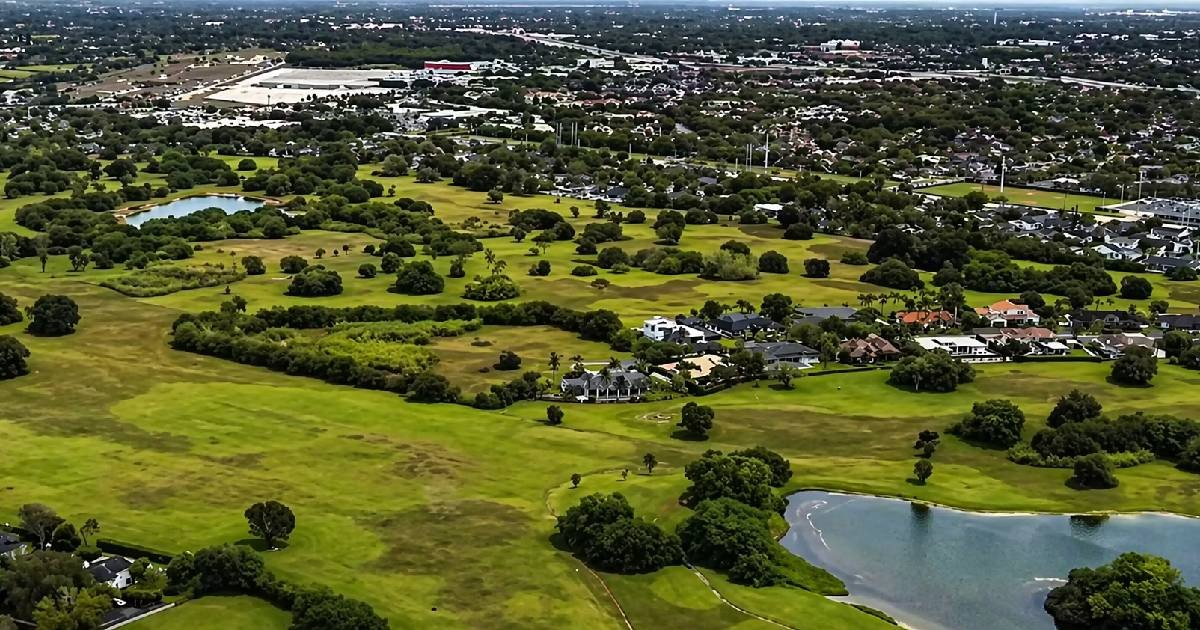
The Miami-Dade County Commission approved yesterday the construction of 524 single-family homes on the former Calusa golf course in West Kendall, bringing to a close nearly seven years of heated debates among residents, environmental groups, and the real estate developer GL Homes.
The vote was eight in favor and five against, and it authorizes the rezoning of a parcel of approximately 168 acres located at 9400 SW 130th Ave., in southwest Miami-Dade, where the golf course closed in 2011 and has not operated since.
The project has a long and troubled history: the initial proposals included up to 1,300 housing units nearly a decade ago, a number that was progressively reduced—from 550 in 2021, to 540 in January 2026—down to the 524 that were ultimately approved.
In 2021, the Commission had already granted initial rezoning approval for 550 homes, but the community group Save Calusa Inc., led by Amanda Prieto, sued the county, claiming inadequate public notification.
The Third District Court of Appeal of Florida revoked that approval, and on May 1, 2024, the Florida Supreme Court denied the review requested by GL Homes, forcing a restart of the entire public hearing process.
One of the most contentious points was the existence of a nesting colony of uncommon birds within the property, including the tricolored heron, classified as a threatened species in Florida.
To gain the support of conservation groups, GL Homes agreed with the Tropical Audubon Society to expand the protected area around the colony from 100 to 330 feet, to enlarge the lake instead of shrinking it, to add native vegetation and foraging areas, and to refrain from building the 37 houses closest to the islet until two years after the completion of the environmental improvements.
The Tropical Audubon Society will also have permanent access to the site to monitor the colony.
Richard Norwalk, spokesperson for GL Homes, highlighted the changes made: "The revised plan expands the lake area, whereas the original proposal reduced it. We have removed all the homes that directly bordered the nesting colony."
However, Save Calusa did not sign the environmental agreement, thus retaining the right to appeal the decision. The opposing residents demanded a maximum of 300 homes and called for the creation of a park or nature reserve.
"Every single person I spoke to mentioned the issue of traffic and expressed their desire for a park or a nature reserve," they noted.
This debate takes place within a regional context where the average price of single-family homes has exceeded $685,000 and more than 60% of renters allocate at least one third of their income to housing costs.
Filed under: