
Related videos:
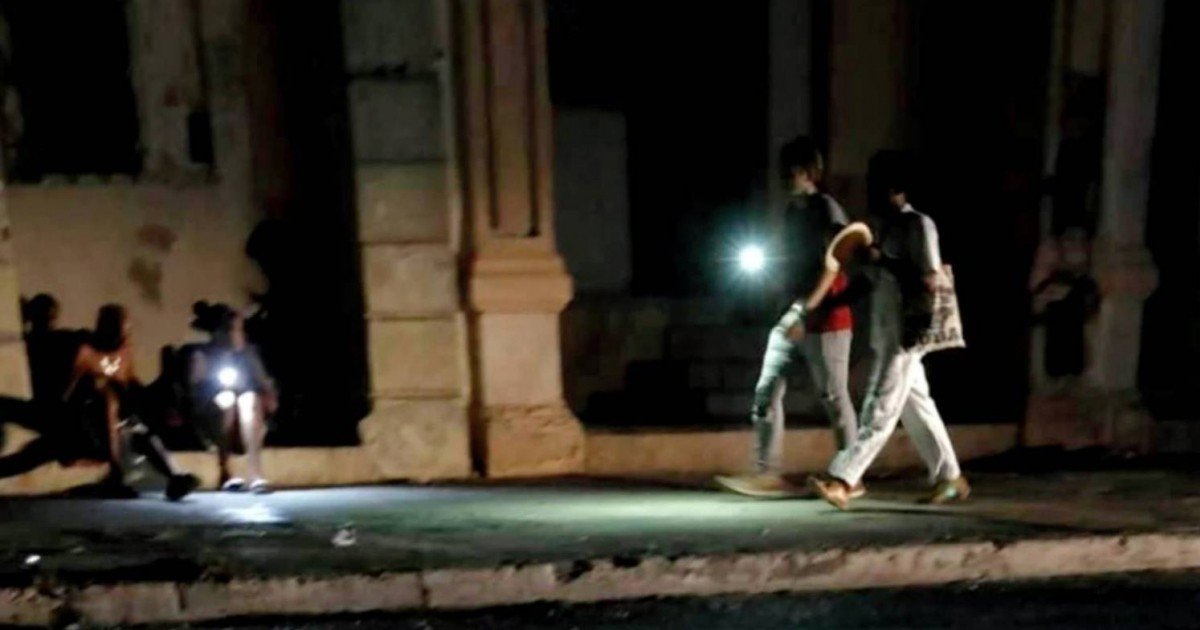
Despite the fact that most of Havana has gone five consecutive days without blackouts, dozens of residents in the capital claim that in some marginalized areas, electricity cuts are still occurring.
"Some of those who are saved," readers of CiberCuba assert, also acknowledge that the rest of Cuba suffers from power outages of up to 24 hours a day, a disparity that highlights the deep inequality in the country's electricity distribution.
The national electric deficit reached 1,333 MW on the night of Thursday, April 23, at 8:10 PM, according to the Union Electrica of Cuba, and for the peak demand period this Friday, a supply of only 1,940 MW was forecasted against a demand of 3,100 MW, with an anticipated deficit of 1,160 MW and an estimated impact of 1,190 MW.
Provinces such as Holguín, Granma, and Santiago de Cuba report outages of between 18 and 24 hours daily. In Moa, power cuts exceed 18 hours, and in municipalities like Bartolomé Masó in Granma, residents spend entire days without electricity.
On Thursday, the nationwide power outages lasted 17 hours and 49 minutes, attributed to the failure of the Melenos barge to arrive and the shutdown of the Mariel Fuel engines.
Among the active outages are units 1 and 2 of the thermoelectric plant Ernesto Guevara de la Serna, unit 6 of the Nuevitas thermoelectric plant, unit 2 of the Felton thermoelectric plant, and units 3 and 5 of the Renté thermoelectric plant, with 293 MW thermally limited.
The temporary relief experienced in the capital is attributed to the prioritized supply of Russian crude, which is insufficient for the rest of the country. The 54 photovoltaic solar parks generated 3,820 MWh on Thursday with a peak of 536 MW, but they only operate during the daytime and lack storage capacity to cover nighttime peaks.
The crisis has structural roots. Cuba went for approximately four months, between January and April 2026, without receiving significant fuel: only one Russian oil tanker, the Anatoli Kolodkin, arrived since December 2025, with a cargo insufficient for more than ten days of operation.
The capture of Nicolás Maduro on January 3 cut Venezuelan oil production between 25,000 and 35,000 barrels per day, and Mexico suspended its shipments on January 9 under pressure from the United States. Cuba locally produces only 40,000 barrels per day out of the 90,000 to 110,000 that it requires.
The National Electric System experienced at least five total outages so far in 2026, with the one on March 16 being the longest, lasting 29 hours and 29 minutes. On March 22, over 90% of Havana was left without power following one of these national outages.
More than 200,000 Havana residents, nearly 11% of the capital's population, lack regular access to drinking water as a direct result of power outages, according to data from April 2026.
The Deputy Minister of Energy Argelio Jesús Abad Vigoa acknowledged in March a collapse of distributed generation after three months without fuel.
Filed under: