
Related videos:
Sonangol, the state oil company of Angola, has lost its 70% stake in the Block 9 in Cuba after failing to make payments amounting to $23.5 million, according to a report published by Melbana Energy on April 21.
Melbana, the Australian company operating the project based in Sydney, activated the contractual mechanism outlined in the Joint Operating Agreement (JOA) which regards Sonangol as withdrawing from the project, implying the transfer of its stake to the Australian company.
The conflict dates back to November 2025, when Sonangol announced that it would not be able to transfer funds that year and requested to postpone the drilling of the Amistad-11 well to 2026.
Melbana then issued a first notice of breach and demobilized contractors. On January 22, 2026, it formally reissued the notice, restarting the 60-day period stipulated in the contract. Sonangol did not rectify the debt within that timeframe, which expired in early April.
As a result, Melbana believes that Sonangol has exited the project and that its 70% stake now belongs to her, which would make her the owner of 100% of the production sharing contract signed with the Cuban state-owned company CUPET.
However, the transfer is not fully formalized: it requires approval from the Cuban regulator before it can take effect. The debt of 23.5 million dollars remains Sonangol's obligation despite its exit, and Melbana is considering legal options for its recovery.
The Block 9 covers 2,344 km² in the oil strip of northwest Cuba, between Havana and Varadero, and holds 99% of Cuba's national reserves.
Sonangol had joined as the majority partner in 2020, committing to finance 85% of the costs for two exploratory wells in exchange for its stake.
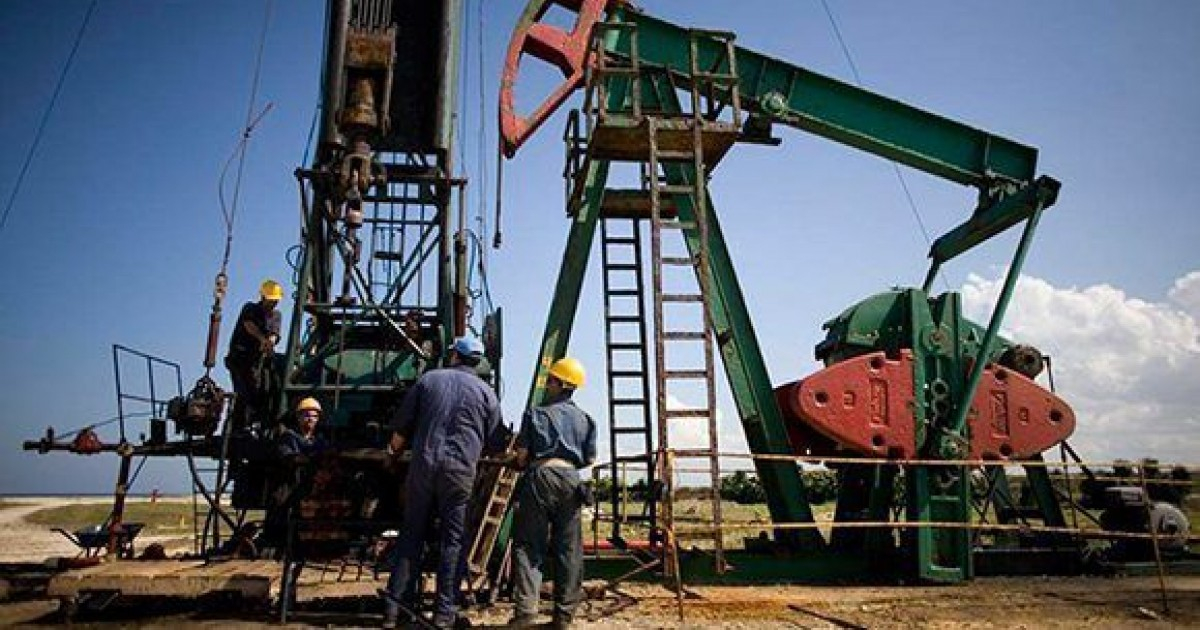
The technical results of the project have been mixed. The Amistad-1 well produced up to 1,235 barrels per day during tests, although it currently produces around 20 barrels per day.
The Amistad-2 well, on the other hand, did not produce oil in significant quantities due to a misunderstanding of the geology based on outdated seismic data: it was drilled in an area where the oil had already migrated.
Before this episode, the company was already facing obstacles to export more than 30,000 stored barrels due to port issues, power outages, and adverse logistical conditions in Cuba.
The Cuban electrical crisis even forced the main drilling platform to be redirected towards a gas well to supply power generation.
After Sonangol's departure, Melbana plans to utilize new 2D and 3D seismic studies to enhance geological definition and reduce risk ahead of future drilling. The company maintains minimal on-site supervision and basic production operations while awaiting regulatory confirmation of full ownership.
The report from Melbana also acknowledges that the project could benefit once regional political issues are resolved, a sign that the Cuban environment remains complex for energy investments, affected by decades of poor management by the regime and a collapsing infrastructure.
A report by McDaniel & Associates estimated the potential of Block 9 at nearly 15.7 billion barrels of oil in place and 676 million barrels of prospective resources, figures that contrast with the current operational reality of the project and with the historical difficulties of the Cuban oil sector in translating its potential into actual production.
Filed under: