
Related videos:
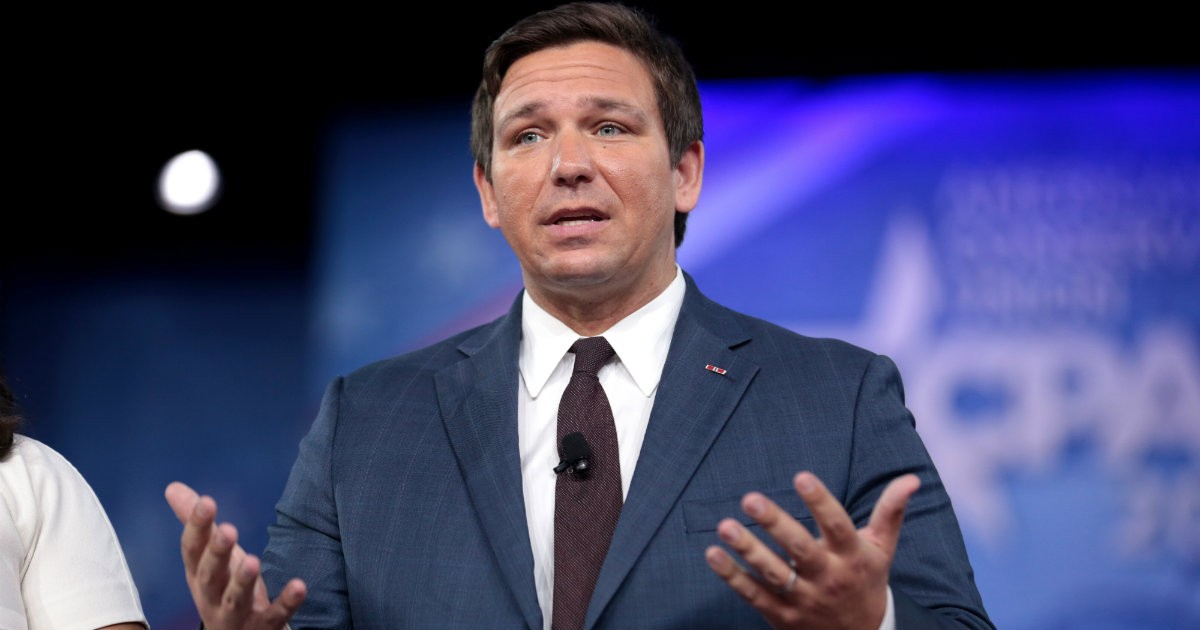
The governor of Florida, Ron DeSantis, announced his proposal for the redistricting of the 28 congressional districts in the state, which, if approved, would grant the Republican Party four additional seats in the United States House of Representatives, increasing their delegation from 20 to 24 federal representatives.
The proposal, which DeSantis shared with Fox News, would reduce Democratic representation in Florida from eight to four seats, leaving only the Democratic-leaning District 10 (Central Florida) and Districts 20, 23, and 24 (South Florida). Under the new map, Tampa Bay would lose all Democratic representation.
The governor justified the measure with a demographic argument: "Florida was undervalued in the 2020 Census and we have been fighting for fair representation since then. Our population has grown dramatically since then, and we have shifted from a Democratic majority to a Republican advantage of 1.5 million," he stated.
The special session of the state legislature to debate the map began this Tuesday and will run until May 1. Republicans hold a supermajority in both chambers of the Florida legislature and have made it clear that they will adopt DeSantis's proposal without creating their own map.
The proposal, however, faces significant legal obstacles.
The Florida Constitution includes the Fair Districts Amendment, approved by voters in 2010, which explicitly prohibits drawing districts with the "intention" of favoring or harming a political party.
Democratic legislators such as Representative Ashley Gantt (Miami) and Representative RaShon Young (Orlando) have denounced the special session as "illegal" and an "override of the constitution."
The warnings are not coming solely from the Democratic camp. Republican strategist Karl Rove pointed out that the plan could be a bad gamble, noting that in order to create new districts favorable to Republicans, it would be necessary to draw Republican voters from safe districts, making them vulnerable.
The Democratic leader in the House of Representatives, Hakeem Jeffries, warned last week that DeSantis's efforts could be counterproductive, citing the primaries in Texas as an example.
Democrats also point to signs of political change in Florida as evidence that aggressive redistricting could backfire.
In December 2025, Eileen Higgins became the first Democratic mayor of Miami in nearly 30 years. And last March, Democrat Emily Gregory won a special election in District 87 of the Florida State House - which includes Mar-a-Lago, Trump's residence - with 51.19% of the votes, in a district that Trump had won by 11 points in 2024.
The initiative by DeSantis is part of a national redistribution war halfway through the decade, driven by President Donald Trump, who reiterated on Fox News on Sunday that Florida should change its map, especially following the referendum in Virginia that authorized new seats for the Democrats.
Florida would be the eighth state to modify its maps ahead of the November 2026 elections, following Virginia, Utah, Ohio, North Carolina, Missouri, California, and Texas, where the battle began in June 2025 at the order of Trump.
Trump has warned Republicans that if they lose control of Congress in the midterm elections, their opponents would initiate impeachment proceedings against him. According to the redistricting tracker from CNN, prior to Florida's action, the national balance slightly favored the Democrats with ten potential seats against nine Republicans.
The special session convened by DeSantis has a broader agenda than just redistricting: it also includes legislation to add non-religious and non-medical exemptions to mandatory vaccines for K-12 schools and regulation on artificial intelligence, topics that will be discussed alongside the new electoral map over the coming days.
Filed under: