
Related videos:
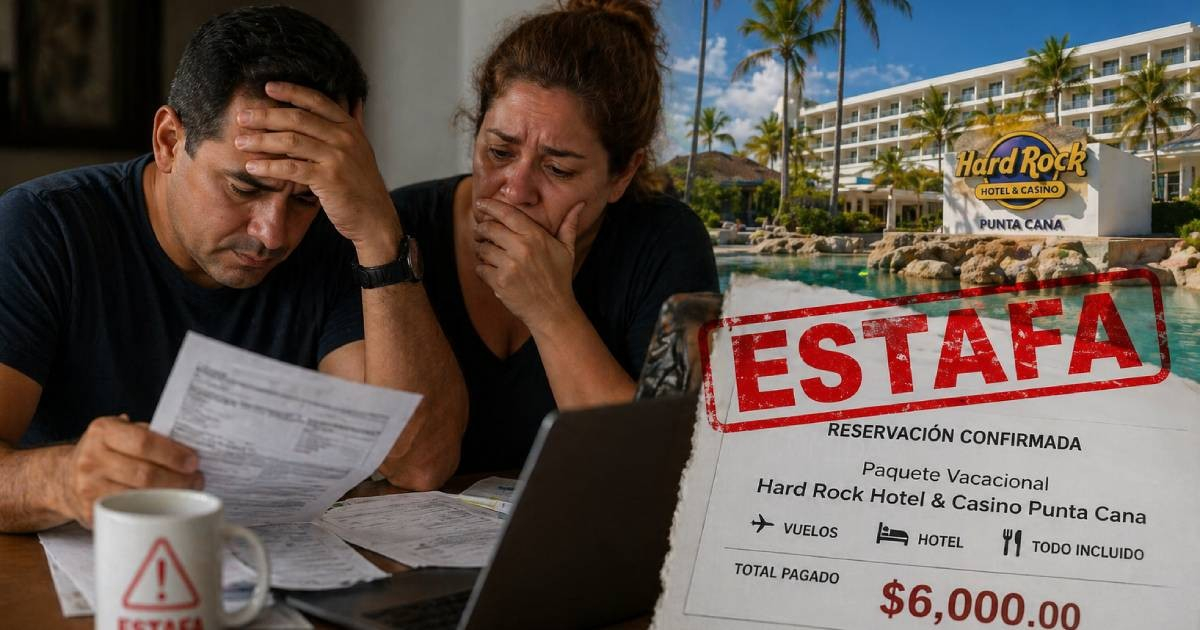
A Cuban family residing in South Florida lost nearly $6,000 after paying for a vacation package at the Hard Rock Hotel & Casino Punta Cana that turned out to be a scam, according to the victim's report to Telemundo 51.
"We paid around 6,000 dollars for three rooms because we planned to bring family from Cuba to Punta Cana to spend a week with us, the grandchildren," explained Santiago Machado to the American media.
The offer seemed legitimate because it came through a friend who had a membership in a vacation program linked to the hotel, and it was presented over the phone by supposed representatives of the chain.
The deception was uncovered when other acquaintances who had also paid tried to travel first and checked the reality.
"There is no reservation, it doesn’t exist, there are no plane tickets, nothing exists," Machado recounted.
While attempting to contact the sellers, the calls were disconnected or deliberately hung up. Machado recounts that during one of those attempts, he could hear laughter in the background: "They hung up the phone again on the third try, and they were laughing behind it."
More than a dozen family friends fell into the same trap, the victim reported.
The emotional impact was particularly harsh when it came to communicating the news to the families in Cuba. "Just imagine, our mothers cried when we told them that they couldn't, that it was all a scam and that we had lost the money," Machado said.
In addition to the economic loss, the victims fear for their safety due to identity theft, as they provided sensitive personal information to the scammers. "These people have all our data, passports, everything. I think it's very serious, in addition to the money that was lost," they warned.
Machado managed to recover part of the money because he paid with a credit card, and his bank initiated a charge dispute while investigating the fraud. He decided to speak out publicly "precisely so that it doesn't happen to anyone else."
The online travel scams in Florida are a documented and growing phenomenon, particularly during vacation seasons.
Cinthya Lavin, spokesperson for the Better Business Bureau (BBB), confirmed that "we have seen many scams, especially in vacation areas like Florida or Las Vegas, which always have specials."
Lavin explained the mechanism used by criminals: "There are scammers and operations that steal the identity of legitimate companies because they know that with a legitimate company, they have that connection."
Among the most frequent scams affecting Cubans in the United States, vacation package frauds have become an especially harmful scheme for families seeking to reunite with loved ones in Caribbean destinations.
The BBB recommends verifying directly with the hotel chain whether the promotion exists before making any payment, and always paying with a credit card, "because it offers more protection against fraud," according to Lavin.
The clearest warning sign, according to the organization, remains the simplest: if an offer seems too good to be true, it probably is.
Filed under: