
Related videos:
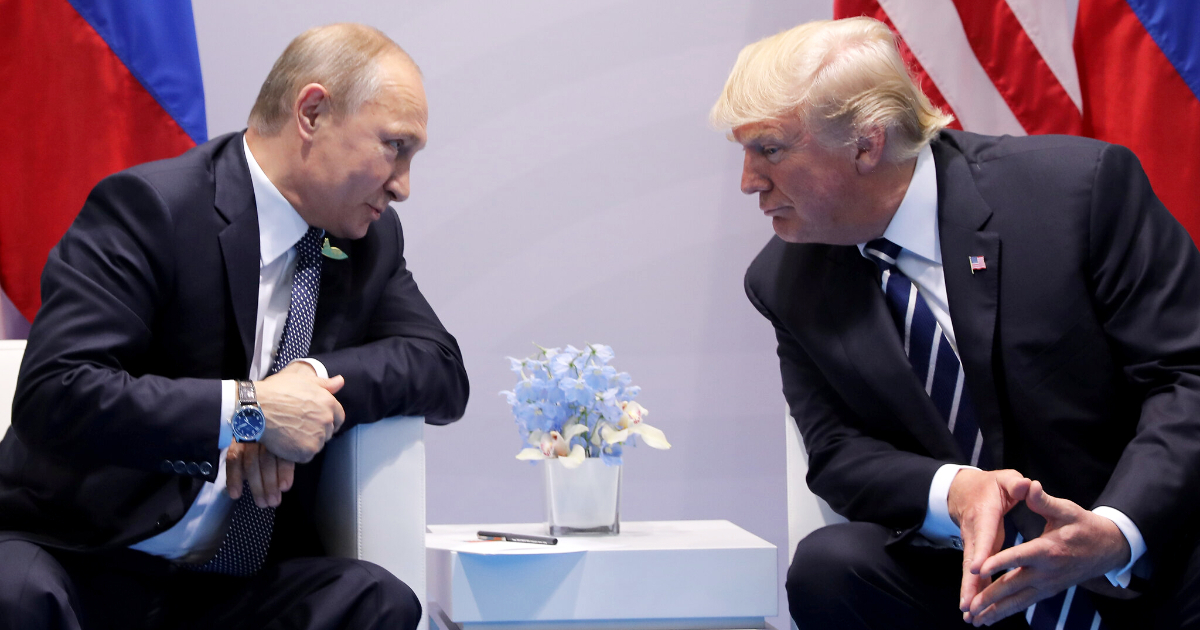
Russian President Vladimir Putin proposed a ceasefire in Ukraine this Wednesday, coinciding with the Russian Victory Day on May 9, during a phone call lasting over 90 minutes with U.S. President Donald Trump, who supported the initiative, as confirmed by Kremlin adviser Yuri Ushakov, as reported by the agency EFE.
It was Trump himself who opened the door to the truce during the conversation. "I suggested a bit of a ceasefire, and I think he could do it. He could announce something related to that," the president stated to reporters in the Oval Office. The Kremlin described the call as "friendly and businesslike."
Trump expressed optimism about the prospects for peace. "We had a very good conversation. I believe we will reach a solution relatively quickly. I hope," he stated, although without specifying timelines or concrete mechanisms.
The call also addressed the situation with Iran. Putin offered to get involved in negotiations regarding Iran's nuclear enrichment, but Trump made it clear what his priority was: "I would much rather you get involved in ending the war in Ukraine. For me, that would be more important."
Trump also referenced the human cost of the conflict, which has been ongoing for more than four years since the large-scale Russian invasion in February 2022: "So many people are dying. It's so ridiculous."
The proposal was met with skepticism by Ukraine and the West. The Ukrainian president, Volodymyr Zelensky, outright rejected it, calling it a "manipulation" and accused the Kremlin of "deceiving the U.S." with short ceasefires designed solely to protect the May 9 military parade in Moscow from potential Ukrainian attacks.
"We value human lives, not parades," declared Zelensky, who reiterated his demand for an immediate unconditional ceasefire of at least 30 days.
The Atlantic Council described the Russian proposal as a "three-day pause" with cynical motivations, noting that Russia omitted tanks from the parade for the first time since the invasion began, precisely out of fear of Ukrainian attacks. The European Commission also criticized the initiative, stating that Russia could halt the bombings "at any time, without waiting for May 8."
This is not the first time that Putin has resorted to brief ceasefires linked to symbolic dates. Russia declared an Orthodox Easter ceasefire effective from April 11 to April 12, 2026, a practice that Ukraine and Western observers have systematically denounced as being violated by Russian forces themselves.
In the broader diplomatic landscape, Ukraine accepted a U.S. proposal for a 30-day ceasefire in March 2025, while Zelensky made himself available to Trump to achieve peace in the early months of the new U.S. administration. Trump and Putin also held a summit in Alaska in August 2025, which did not yield any concrete agreements.
The tension surrounding May 9 intensified due to threats from former Russian President Dmitry Medvedev, who warned Zelensky against "verbal provocations" that day and stated that "no one guarantees that May 10 will arrive in Kyiv." Putin, for his part, has proposed direct negotiations with Ukraine in Istanbul for May 15, a proposal that Zelensky conditioned on a prior truce.
Filed under: