
Related videos:
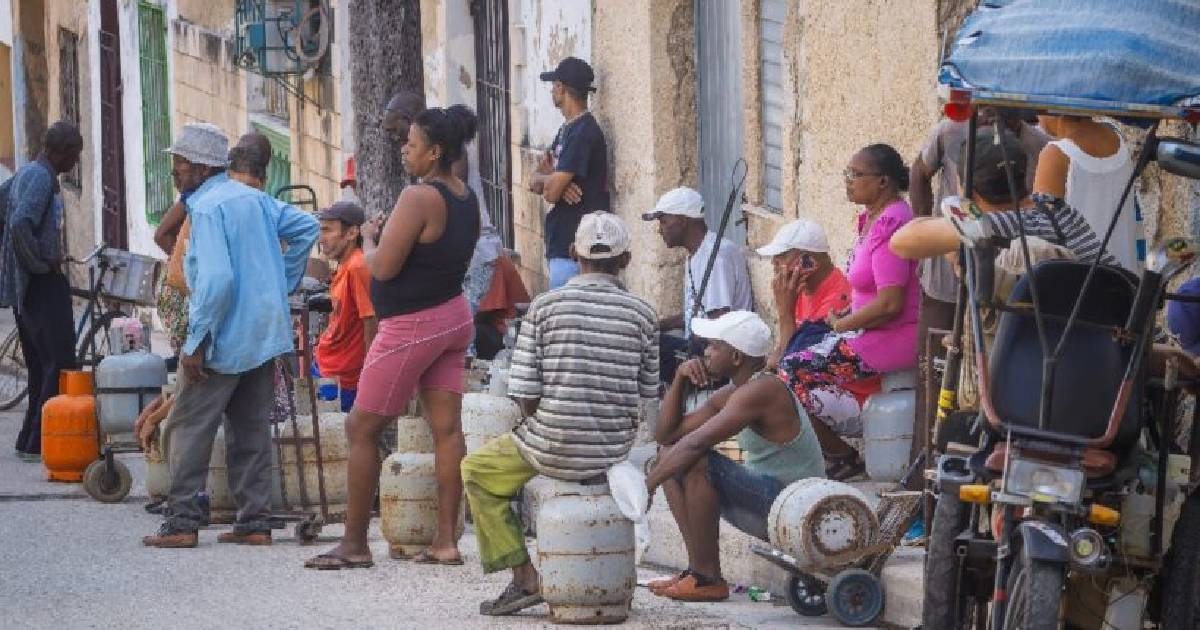
The historic Cuban ration booklet —the rationing system created by Fidel Castro in the 1960s— has collapsed to the point of being practically useless for daily survival, according to a report by the AP agency that documents the critical state of state-run food stores in Havana.
In April, the only products available in a warehouse in downtown Havana with 5,000 assigned customers were rice, sugar, and split peas.
More than two dozen items —yogurt, pasta, soap— are listed on old signs but have not been seen on the shelves for months. The storekeeper José Luis Amate López has had not a single customer in nearly two weeks. "No Cuban can truly survive on the products from the ration book," he stated.
The situation described by AP aligns with what five Cuban provinces are facing at critical levels of food insecurity: Havana, Matanzas, Cienfuegos, Guantánamo, and Santiago de Cuba.
Ana Enamorado, 68 years old, was only able to buy split peas and one kilogram of sugar at her designated store last month. Her salary and pension total 8,000 Cuban pesos, equivalent to just 16 dollars a month.
In response to that, a carton of 30 eggs costs about 3,000 pesos, two pounds of ground meat are around 900 pesos, and a pound of cornmeal is worth 200 pesos. "There's almost nothing in the ration card," she said. "We practically live on air."
"Now we have to cut back, eat once a day, and live off memories," added Enamorado, who recalls when his table included pork, lamb, fricassee, tostones, and moros y cristianos.
The standard bread has also been reduced by half. Lázaro Cuesta, 56 years old, receives two small rolls daily for himself and his wife. "Before they weighed 80 grams and cost 5 cents. Now they weigh 40 grams and cost 75 cents," he said.
«And the quality is worse». Cuesta survives thanks to 200 dollars a month sent by family members from abroad. «If it weren't for the remittances», he said while bringing his hand to his neck, «I would hang myself».
Approximately 60% of Cubans receive remittances, but Rosa Rodríguez, 54 years old, is not one of them. In April, the only thing she received in her store was a donation of four pounds of rice. She earns 4,000 pesos—about eight dollars—per month.
"Everything is scarce here, everything, even that damn bread they give us," he said. "If you buy beans, you can't buy sugar. If I retire, I'll die."
Cuba imports up to 80% of the food it consumes, but the regime no longer has the funds to sustain that system.
William LeoGrande, professor at American University and an expert on Cuba, noted that the government "squandered" the monetary unification of 2021, generating an inflation that persists because the State spends much more than it earns.
"They simply no longer have the money to do it," she stated.
This crisis is perceived as more severe than the so-called Special Period of the 1990s, when the Soviet collapse devastated the Cuban economy.
At that stage, Cubans lost between 5% and 25% of their body weight according to medical studies.
Many who lived through that period say that the current situation is worse than the Special Period.
Díaz-Canel himself acknowledged this Sunday before foreign communists gathered in Havana that Cuba "will eat what we are capable of producing", a statement that encapsulates the official acceptance of the collapse without providing immediate solutions.
In February, the regime announced the so-called "Zero Option" and promised seven pounds of rice per person each month, but that extreme contingency plan has not been fulfilled in practice. A
Starting in April, the government eliminated general subsidies for the regulated basket of goods, replacing them with targeted subsidies — a structural transformation of a system that has been in place for more than six decades.
The crisis of the rationing booklet has a brutal reflection in the figures: deaths from malnutrition increased by 74.42% between 2022 and 2023, rising from 43 to 75 fatalities, according to the National Office of Statistics and Information of Cuba.
Cuban comedians have already put words to the disaster: the character "Pánfilo" sings in a recent video: "Put the notebook in a cemetery, because it's already ready to be buried."
Filed under: