
Related videos:
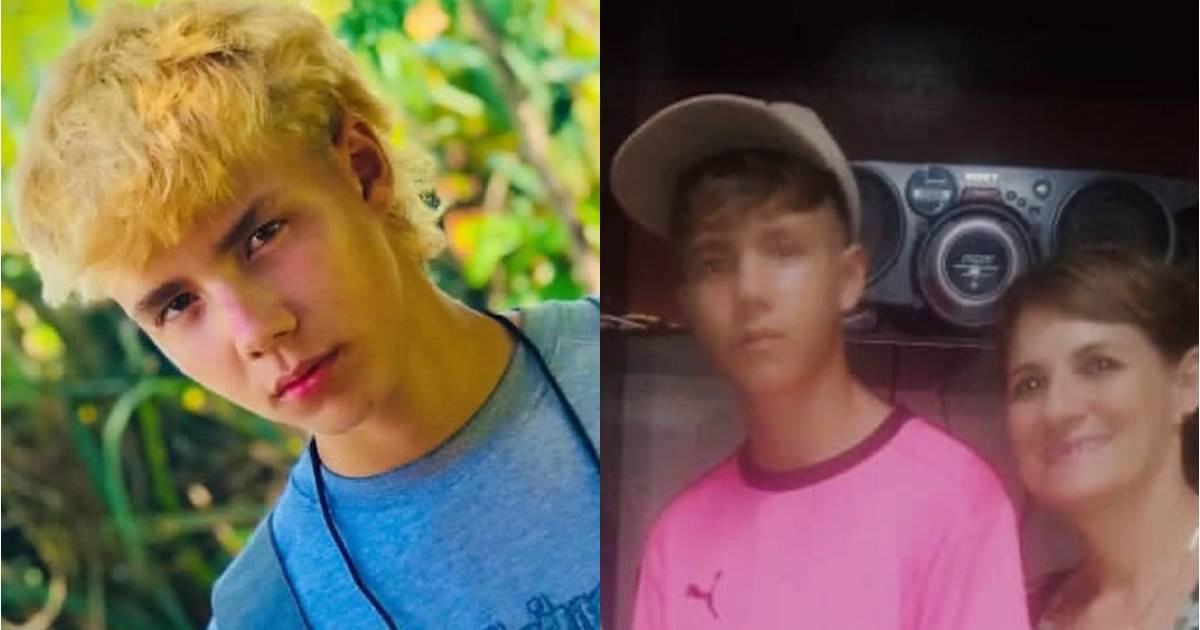
NBC News, the same outlet that provided a platform for the ruler Miguel Díaz-Canel to deny the existence of political prisoners in Cuba, published a report this Friday—based on an earlier version released by Noticias Telemundo, its Spanish division—about the case of Jonathan David Muir Burgos, a 16-year-old adolescent imprisoned in a maximum-security facility after participating in the protests in March in Morón.
The contradiction is direct. On April 12, Díaz-Canel stated before journalist Kristen Welker on the program Meet the Press that the narrative of political prisoners in Cuba was "a great lie" and "a slander."
When he made those statements, Jonathan had already been in the Canaleta prison in Ciego de Ávila for weeks, accused of the crime of sabotage.
The young man was arrested on March 16 when he went with his father to a police summons, days after participating in the protests on March 13, triggered by daily power outages of more than 26 hours and extreme food shortages.
His father, the evangelical pastor Elier Muir, 58 years old, described to Noticias Telemundo the bag of sweets he brought for his son during the first allowed visit, two weeks before the report.
"We still see him as a little boy. We cannot accept seeing him grow up in prison and become an adult," he said.
The pastor also rejected the regime's accusations that opposing families receive external funding, pointing to the unplastered brick walls of his modest home in Morón.
"We are not salaried employees, which is another characteristic they want to use to belittle and discredit us," he noted.
Jonathan weighs only 105 pounds and suffers from dyshidrosis, a chronic skin condition. A medical treatment scheduled for April 18 could not be administered to him in prison.
His mother, Pastor Minervina Burgos López, reported that the teenager suffers from vasovagal syncope. "He falls asleep and when he wakes up, he is disoriented, he doesn't remember where he is," she explained.
At 1:45 a.m. on April 23, Jonathan begged his father: "Dad, please get me out of here, dad, I can't take it anymore".
In recent days, the Cuban regime attempted to counter the allegations by publishing a photograph of the minor playing a musical keyboard in prison, accompanied by the message "The piano doesn't lie. The photo is there. And Jonathan... there he is, safe and sound."
The father reported that his son was deceived with a promise of a prize in exchange for playing the piano and that photos and videos were taken of him without consent. The organization Cubalex described the maneuver as "revictimization".
Jonathan's sister, Dayana Muir Marrero, responded to those who call him a vandal. "If being a vandal means being tired of suffering firsthand, living with an illness where the necessary conditions for treatment are lacking, and having the courage to shout 'freedom', to ask for a little food, a little electricity; if being a vandal is that, then I would accept that he is a vandal."
The Inter-American Commission on Human Rights granted precautionary measures to the adolescent on April 24, considering that his rights to life, personal integrity, and health are at risk of irreparable harm. Cuba did not respond to the prior request sent on April 10.
U.S. Congress members Carlos Giménez and María Elvira Salazar have demanded his release, as has Mario Díaz-Balart, who stated: "No child should be pursued or imprisoned for raising their voice against a dictatorship."
Prisoners Defenders estimated in March that at least 1,092 people remain imprisoned in Cuba for criticizing the government, including 33 minors.
Jonathan is not alone, as at least another 16-year-old, Cristian Crespo Álvarez, is also being held following the protests in March.
Filed under: