
Related videos:
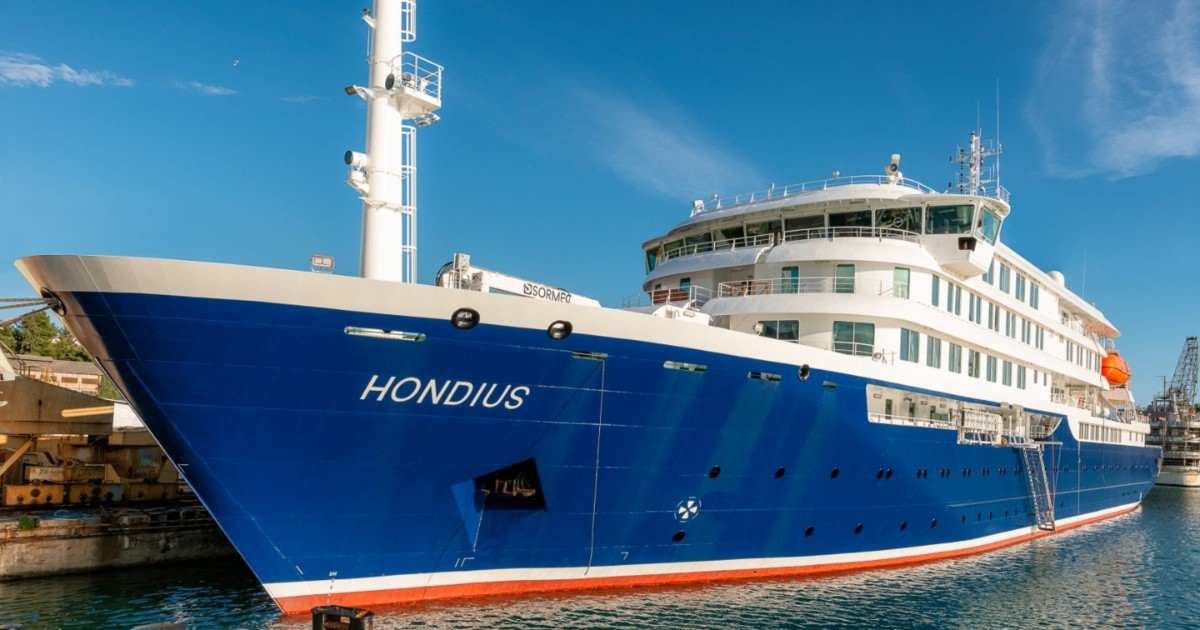
Three people have died and one remains in intensive care following an outbreak of hantavirus aboard the polar cruise ship MV Hondius, which was sailing across the Atlantic Ocean from Ushuaia, Argentina, to Cabo Verde, as confirmed by the World Health Organization to the BBC and the AFP agency.
The WHO reported one confirmed case of hantavirus and five other suspected cases among the passengers of the ship. "Of the six affected, three have died and one remains in intensive care in South Africa," the international organization stated.
The outbreak was initially detected by South African health authorities, who identified a "severe acute respiratory illness" among the passengers of the vessel.
The first victim was a 70-year-old Dutch man who began to show symptoms during the trip and passed away on board. His body was disembarked on Saint Helena, a British territory in the South Atlantic.
His wife, 69 years old and also of Dutch nationality, fell ill on board and was evacuated in critical condition to South Africa, where she died in a hospital in Johannesburg.
A third victim remained aboard the MV Hondius, according to a source close to the case who spoke to AFP on condition of anonymity. Additionally, a 69-year-old British citizen was transferred to Johannesburg and is currently in intensive care.
The cruise, operated by the Dutch company Oceanwide Expeditions, set sail from Ushuaia on March 20 with about 170 passengers and 70 crew members on board, including 57 crew members, 13 guides, and a doctor. Its arrival in Cape Verde was scheduled for this Monday.
According to maritime tracking platforms, the MV Hondius was located yesterday off the port of Praia, the capital of Cape Verde. Authorities were assessing the possibility of isolating two other passengers with symptoms in a hospital in that archipelago, while discussions were underway regarding whether the ship would continue its itinerary to the Canary Islands.
The hantavirus is primarily transmitted through contact with infected rodents or by inhaling aerosols contaminated with their feces, urine, or saliva. Although it typically does not spread between individuals under normal circumstances, there are documented exceptional cases of human-to-human transmission, which makes a confined space like a cruise ship an environment that requires special monitoring.
There is no specific antiviral treatment for the disease, and the mortality rate in cases with respiratory symptoms reaches 38%, according to data from the WHO and the Centers for Disease Control and Prevention in the United States.
The most serious case of person-to-person transmission occurred in Epuyén, Chubut, Argentina, between December 2018 and April 2019: 34 confirmed cases and 11 deaths, marking the largest outbreak of human-to-human hantavirus transmission recorded in the world.
The Foreign and Commonwealth Office of the United Kingdom confirmed to the BBC that it is in contact with the cruise company and local authorities. "We are closely monitoring reports of a potential hantavirus outbreak on the Hondius cruise," the agency stated.
The WHO stated that it was "helping to coordinate between member states and the operators of the ship the medical evacuation of two symptomatic passengers, as well as a comprehensive assessment of public health risks." Oceanwide Expeditions has not issued any public comments on the incident.
Filed under: