
Related videos:
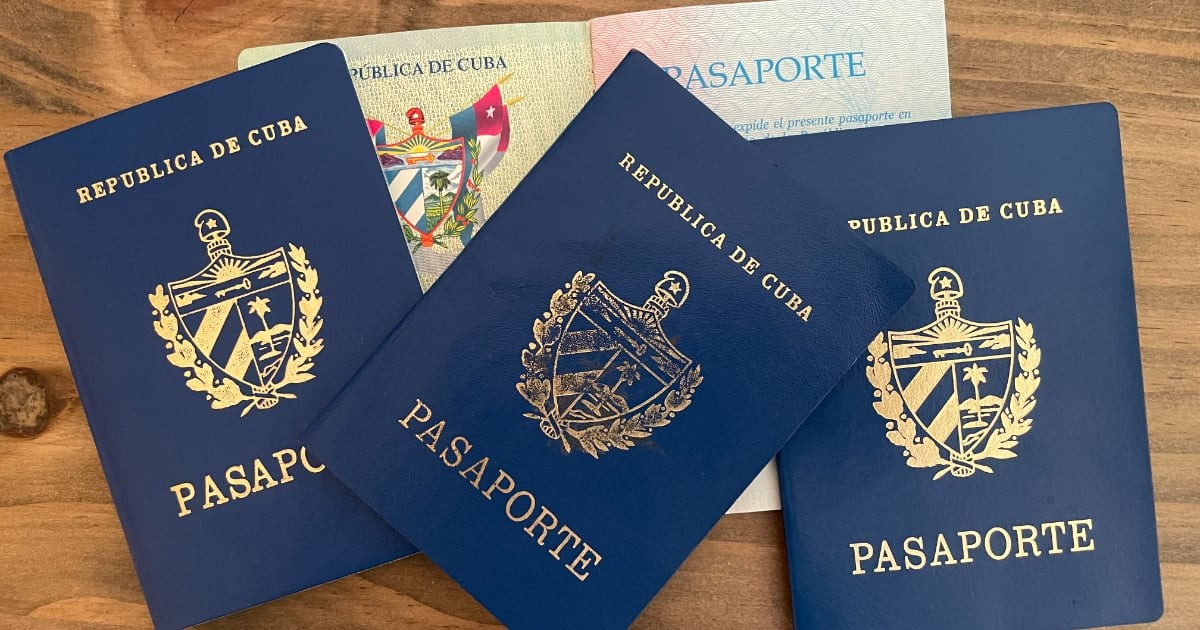
The Official Gazette of Cuba published this Tuesday the Law 172/2024 "Citizenship Law", which for the first time regulates the procedure for renouncing Cuban citizenship, although it leaves the final decision in the hands of the State and not the citizen who requests it.
The new laws on Immigration, Citizenship, and Foreign Affairs were approved by the National Assembly on July 19, 2024, but remained unpublished for nearly two years. They will come into effect 180 days after their publication, approximately in November 2026.
To be able to renounce citizenship, the individual must meet five simultaneous requirements: be over 18 years old, be abroad, prove that they already hold another citizenship, have no debts with the Cuban State, and not be serving a criminal sentence or being pursued for a crime.
The application is submitted to the Cuban consulate in the country of residence, accompanied by a notarized sworn statement, certification of foreign citizenship, certification of residence, and a criminal record certificate from Cuba and the country of residence.
The central point is that the resignation is not effective until it is formally approved by the State.
According to Article 50 of the law, "for the renunciation of Cuban citizenship to be effective, it must be accepted by the competent authority and the corresponding pronouncement must be issued."
Until that moment, the person remains a Cuban citizen for all legal purposes.
The approval corresponds to the President of the Republic when citizenship was granted by presidential decree, and to the Minister of the Interior in other cases.
The law does not establish deadlines for resolution nor objective criteria that compel the approval of the application, leaving considerable room for the regime's discretion.
Colonel Mario Méndez Mayedo, head of the Identification, Immigration, and Foreigners Directorate of MININT, stated in June 2024 that "there is no intention to deny a resignation," but emphasized that "the Cuban state must accept that resignation."
He added, "Once the resignation is approved, the Cuban state has no responsibility towards that person, because they are a foreigner. They visit us as a foreigner."
Whoever manages to have their resignation accepted will be considered a foreigner: they must enter Cuba with a foreign passport, visa, and the appropriate travel documents.
The law also introduces the concept of "effective citizenship": Cubans with dual nationality may only use their Cuban citizenship while in Cuban territory.
Article 15 states that "acts carried out by Cuban citizens using another citizenship to produce effects within the national territory are null and void."
Using a foreign citizenship when entering or leaving Cuba is an offense punishable by a fine of 300 to 500 cuotas.
The law also regulates the deprivation of citizenship, which can be decreed by the President when someone engages in "actions contrary to the high political, economic, and social interests of the Republic of Cuba" from abroad, a broad cause with discretionary application that has generated criticism.
In cases that pose a "serious threat" to national security, deprivation can be imposed summarily, without following the ordinary procedure.
The reinstatement of citizenship is possible only once, after up to five years from the renunciation, loss, or deprivation, and requires new state approval.
The Cuban diaspora, estimated at more than two million people, has historically demanded this right to be able to visit Cuba as foreigners without being subject to Cuban law.
The new legislation formally recognizes it, but subjects it to a process with no defined timelines or guarantees of resolution, which maintains political control over who ceases to be a Cuban citizen.
Filed under: