
Related videos:
The Banco Metropolitano launched this week the Virtual TPV service across its network of branches in Havana, which will allow BPA and BANDEC customers to withdraw cash at its offices for a fee.
According to the official announcement from the bank, "this tool allows holders of magnetic RED cards, issued by the Banco Popular de Ahorro (BPA) and Banco de Crédito y Comercio (BANDEC), to withdraw cash directly at the branches of Banco Metropolitano."
The bank specified that "the service incurs a fee, which is applied according to the official rates of fees and other charges established by the Metropolitan Bank," without specifying the exact percentage that will be charged to users.
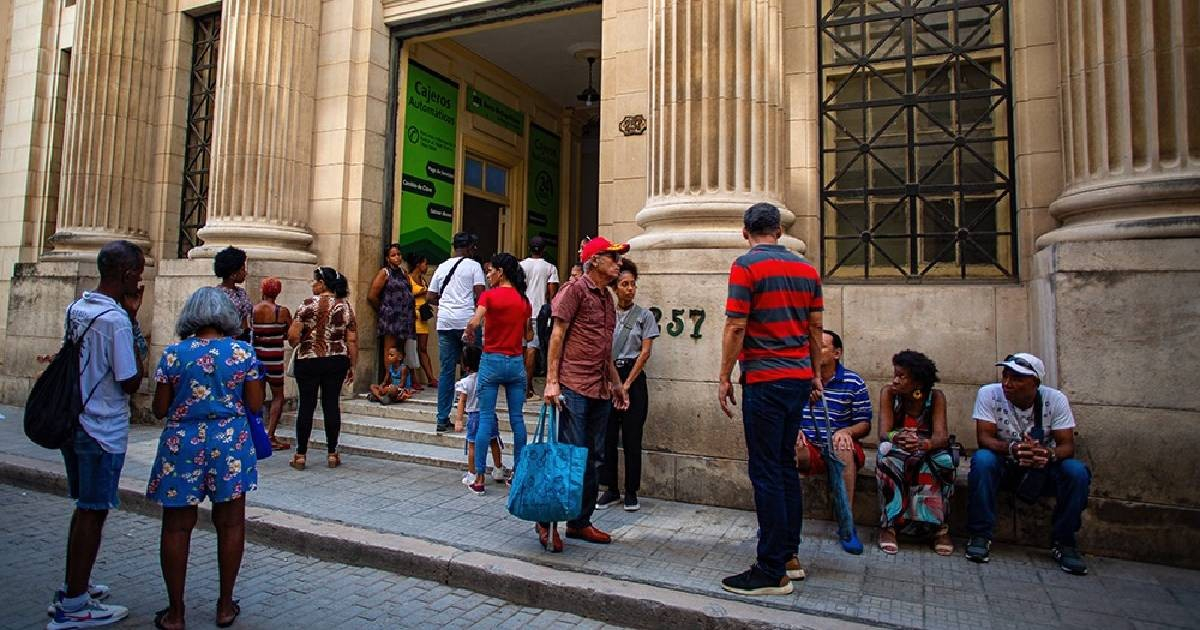
The measure comes at a time when more than 50% of the ATMs in Havana are out of service or depleted, with users reporting waits of up to three days to make withdrawals.
The Central Bank of Cuba acknowledged in April that the economy has experienced a decline of over 15% of GDP since 2020, with an additional fall of 5% projected for 2025, which partially explains the liquidity contraction affecting the banking system.
In the same context, the BPA publicly acknowledged that it cannot provide cash dollars to its clients due to "low availability of freely convertible currencies," an unprecedented admission of the financial precariousness of the Cuban state.
BANDEC simultaneously implemented a mirror service for Virtual POS that accepts cards from BPA and the Metropolitan Bank itself, indicating a coordinated strategy by the state banking system to alleviate the cash shortage.
However, the measure does not eliminate the underlying restrictions: the monthly withdrawal limit remains set at 120,000 Cuban pesos per account, which forces those with large sums deposited to wait months to recover their own money, according to reports from citizens who have accumulated over a million pesos without being able to withdraw them.
The cash shortage has additionally driven informal networks where operators charge up to a 15% commission for converting bank transfers into physical cash. In September 2025, the police arrested two Cubans in Santiago de Cuba for operating one of these networks, seizing over 250,000 pesos and several magnetic cards.
The situation has reached extremes such as retirees sleeping on the streets of Santiago de Cuba to collect their pensions in front of empty ATMs and recurrent failures of the banking system.
The new service from Banco Metropolitano, although officially presented as an expansion of access to cash, adds an additional cost to citizens who are already facing severe restrictions in accessing their money, in a country where the Cuban peso depreciated by 47.8% against the informal dollar between March 2025 and March 2026, rising from 345 to 510 pesos per dollar.
Filed under: