
Related videos:
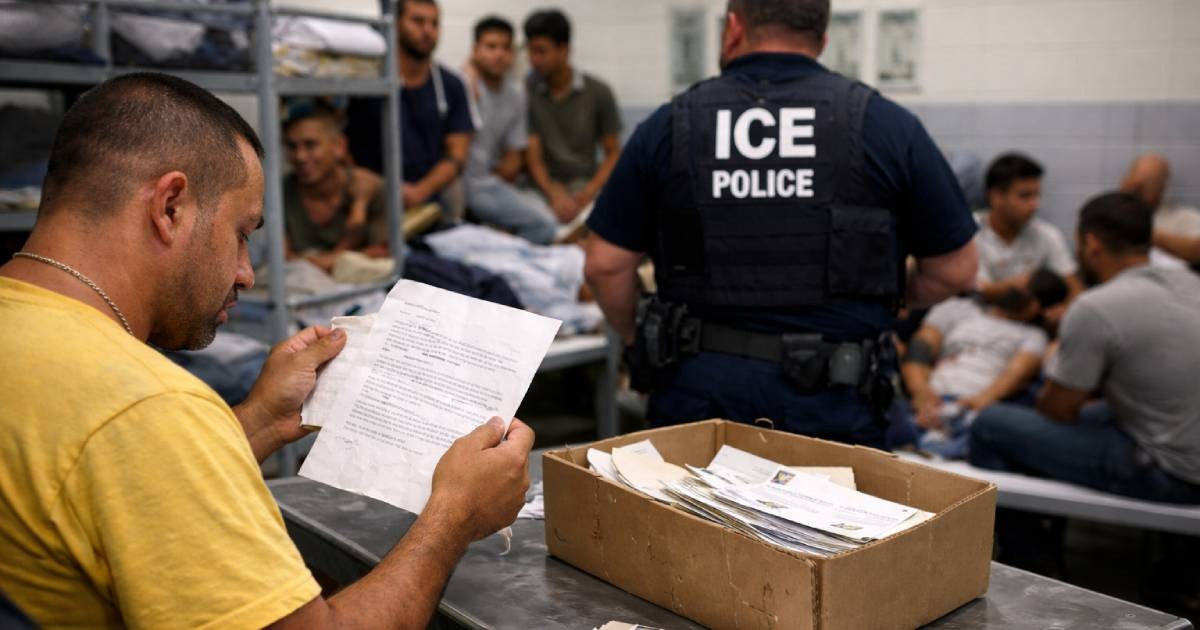
The Eleventh Circuit Court of Appeals in the United States, which covers Florida, Georgia, and Alabama, ruled on Wednesday that migrants in ICE custody have the right to a bond hearing, in a decision that affects tens of thousands of detained individuals.
The court thus rejected the policy of President Donald Trump's administration, which classified all migrants who entered without authorization as "applicants for admission," a category that denied them any possibility of requesting bail before an immigration judge, regardless of how long they had been residing in the country.
The ruling, split 2-1, pertains to the case Hernández Álvarez v. Warden, Federal Detention Center Miami (No. 25-14065), originated by the detention of two Mexican citizens residing in Florida following separate traffic stops in September of last year.
One of them, Fidencio Hernández Álvarez, has two children who are U.S. citizens and did not have any serious criminal records. The other, Ismael Cerro Pérez, has been living in the United States since 2015 and is the father of three children who are citizens.
Both were transferred to federal detention centers in Miami and the Krome Processing Center, respectively, with no opportunity to request bail.
In the majority opinion, the court was emphatic: "In short, the language that Congress has chosen to use does not grant the Executive Branch unlimited authority to detain—without the possibility of bail—any inadmissible foreigner present in the country."
The ruling added that "nowhere in the text, structure, or history of the INA (Immigration and Nationality Act) does that interpretation find a solid foundation."
The only dissenter on the panel was Judge Barbara Lagoa, appointed by Trump himself.
Given the division among circuits, it is expected that the legal battle will reach the Supreme Court of the United States, which will have to definitively decide whether the policy of mandatory detention without bail is constitutional.
The questioned policy was implemented through a memorandum from the acting director of ICE, Todd M. Lyons, signed on July 8, 2025, which ordered that all migrants who entered without inspection be treated as subject to mandatory detention without the possibility of bail, leaving releases solely at the discretion of the Department of Homeland Security.
That measure coincided with a budget allocation of $45 billion for ICE, which increased the daily detention capacity from 50,000 to 100,000 individuals.
The Eleventh Circuit's decision comes amid a deep division among the federal appellate courts in the country. The Fifth Circuit and the Eighth Circuit backed the mandatory detention policy in split rulings of 2-1, while the Second Circuit unanimously rejected it on April 28, labeling it as "the broadest in the country's history for millions of non-citizens."
On that same Wednesday, the Seventh Circuit was deadlocked on the same issue, and the Third Circuit has oral arguments scheduled for next Monday.
The wave of judicial challenges has been historic: more than 30,000 habeas corpus petitions were filed in federal courts by migrants who could not request bail in immigration proceedings. Approximately 420 district judges rejected the government's position; only 47 supported it.
Arrests of migrants without criminal records increased by 770% under the Trump administration until April 2026, according to available data.
Filed under: