
Related videos:
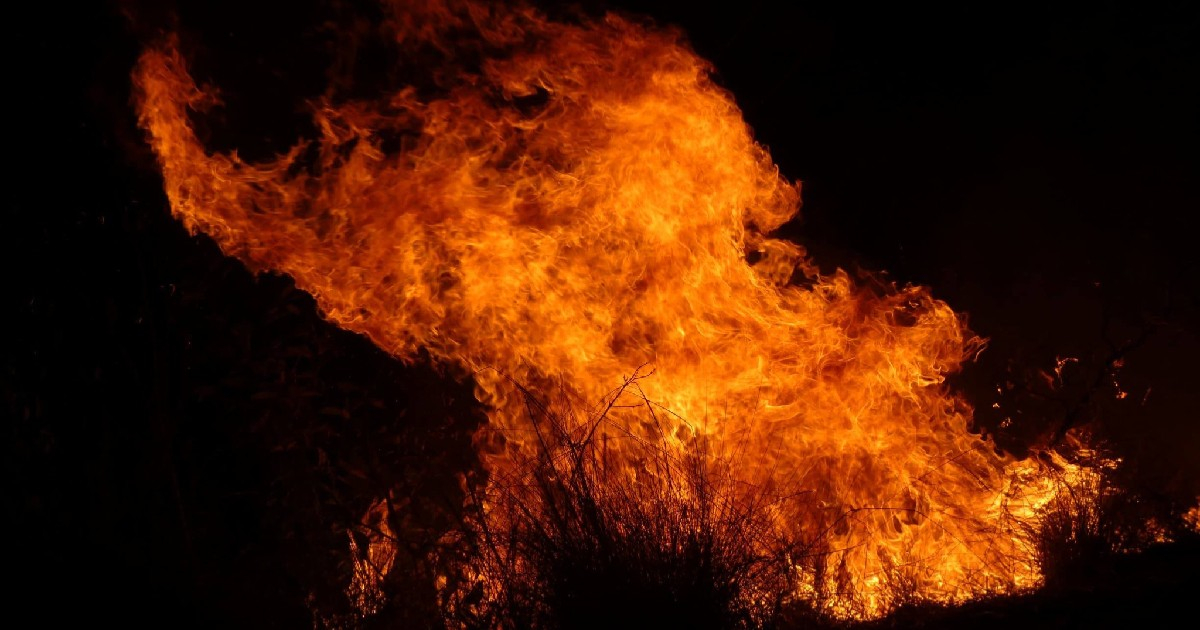
A fire of medium proportions devastated at least 30 hectares of forests in just one day, in the mountainous area of the municipality of La Palma, in Pinar del Río, before being controlled this Monday, according to official sources.
The fire broke out on Sunday afternoon in the area known as El Sitio, which is part of the Mil Cumbres Protected Area of Flora and Fauna, reported the Cuban News Agency (ACN).
Forces of the Forest Rangers Corps (CGB) from the municipalities of Viñales and La Palma, along with workers from the Flora and Fauna company, controlled the fire on Monday, which affected natural pine forests, featuring the varieties pinus caribaea and pinus tropicalis —commonly known as female pine— two species of high ecological value that grow in wild conditions in that mountainous region.
Lieutenant Colonel Alexander Perera Burón, head of the CGB in the province, specified that out of the 30 hectares (ha) of damaged forests, 15 are pine trees and the rest consists of shrub vegetation.
Once the fire was under control, the "ash guard" and patrols began to fully extinguish the flames, Perera noted. Meanwhile, light rain has been recorded in the area this Monday.
In a preliminary report about the incident released by Tele Pinar, it was stated that the brigades of forest rangers and other workers involved created firebreaks — manually cleared pathways in the terrain — as the main method of containment due to the inability to use heavy machinery because of the complexity of the mountainous area.
Between January and April 2026, 111 wildfires were recorded in Cuba, which devastated 3,174.55 hectares of natural and planted forests, according to data from the Forest Rangers Corps.
Four territories accounted for the majority of the disasters and accumulated damage. Pinar del Río topped the list with 46 fires and 2,912.6 hectares devastated—92% of the national total during that period—followed by Matanzas, with 16 fires and 58 hectares affected; then Isla de la Juventud, also with 16 fires but 34.21 hectares damaged; and finally, Artemisa with 14 fires and 67.74 hectares impacted.
The current situation is one of the worst wildfire seasons in Pinar del Río. The most severe incident was in La Lanza, in Minas de Matahambre, which devastated approximately 1,700 hectares of pine forest before being extinguished on April 21, following 12 days of battling with over 200 personnel.
In those days of April, six simultaneous wildfires were reported in Pinar del Río, one of which occurred in El Polvorín, within the municipality of La Palma, affecting 30 hectares.
The loss of natural forests of pinus tropicalis carries particular ecological significance: it is a conifer endemic to Cuba whose natural distribution is almost exclusively limited to Pinar del Río and the Isle of Youth.
According to data from the Food and Agriculture Organization of the United Nations, the natural forests of this species in Pinar del Río decreased from 53,512 hectares in 1983 to just 6,595 in 1996, making each fire in those ecosystems a potentially irreversible loss.
Pinar del Río is the province with the largest forest area in Cuba—411,000 hectares of forests, equivalent to 48% of its total surface—and has 30 protected areas, more than any other province, which also makes it the territory with the highest forest risk on the island.
The official forecast for the January-May 2026 season estimated between 85 and 112 fires and up to 4,000 hectares at risk in the western province.
Filed under: