
Related videos:
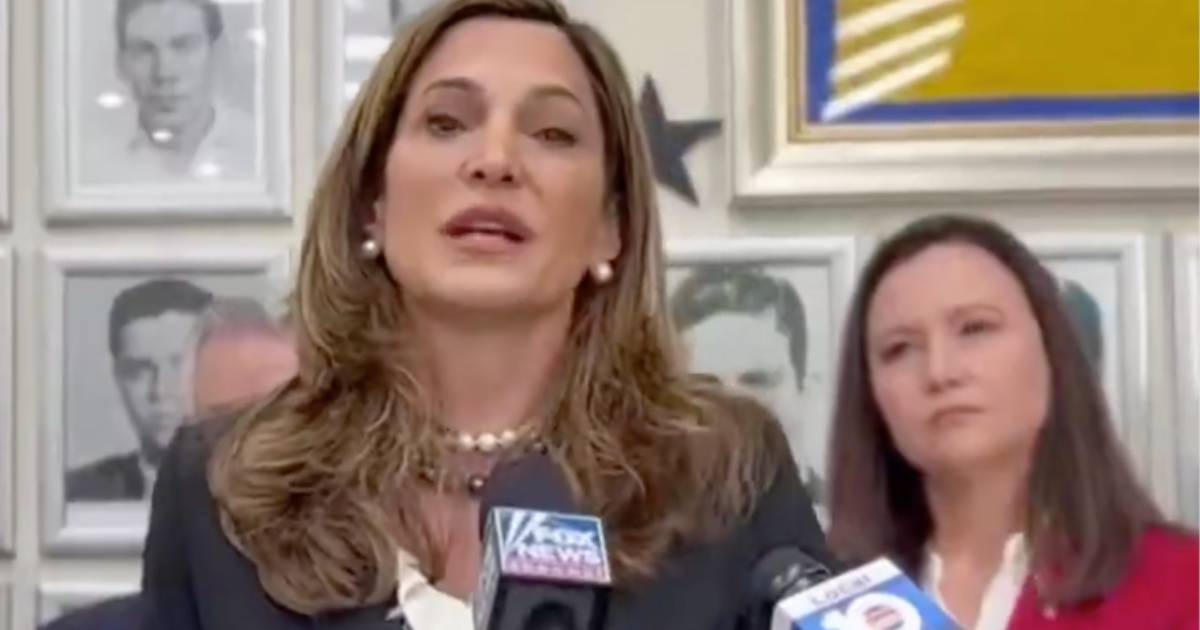
The Republican congresswoman María Elvira Salazar warned this Thursday that the United States cannot continue to ignore the Cuban crisis, describing the regime in Havana as a direct threat to national security, not just a humanitarian disaster.
"United States can no longer pretend that this crisis ends on the shores of Cuba," Salazar wrote on his X account.
"A collapsing dictatorship, aligned with America's enemies, that spreads instability and human suffering just 90 miles from Florida, is not only a humanitarian catastrophe. It is a threat to national security," emphasized the Republican.
The statement arrives at the worst energy moment in Cuba in decades.
Last Tuesday, the electrical deficit reached a record annual high of 2,113 MW, with blackouts lasting up to 22 hours a day in Havana and up to 24 hours in eastern provinces such as Granma and Holguín.
The Cuban Minister of Energy and Mines, Vicente de la O Levy, publicly admitted that Cuba has no reserves of diesel or fuel oil, describing the situation as "acute, critical, and extremely tense."
The tweet from Salazar also comes two days after Secretary of Defense Pete Hegseth confirmed before Congress that Cuba poses a real threat to the U.S., corroborating the use of Cuban ports by the Russian navy — including the nuclear submarine Kazán — and the presence of the Russian intelligence complex in Lourdes, which Hegseth described as "very problematic."
Salazar had already reacted to that appearance on Tuesday: "The truth is finally being revealed. Today we heard it directly from the Secretary of Defense: Cuba is a clear and present threat to the United States."
The political context backs the urgency of the message. On May 7, Secretary of State Marco Rubio announced sanctions against GAESA, the military conglomerate that controls between 40% and 70% of the Cuban economy, with a deadline of June 5 for foreign companies to cease operations with this organization.
The energy crisis worsened after the capture of Nicolás Maduro on January 3, 2026, which cut Venezuela's oil supply by between 25,000 and 30,000 barrels per day, equivalent to two-thirds of Cuba's energy imports.
This was compounded by the suspension of Mexican shipments since January and the depletion of Russian oil by the end of April, leaving the island without any fuel ships between December 2025 and the end of March 2026.
Salazar concluded his message with a clear statement regarding the will of the Cuban people: "Cubans have made their message clear: they want no more repression, no more blackouts, and no more communist misery. They want FREEDOM."
Filed under: