
Related videos:
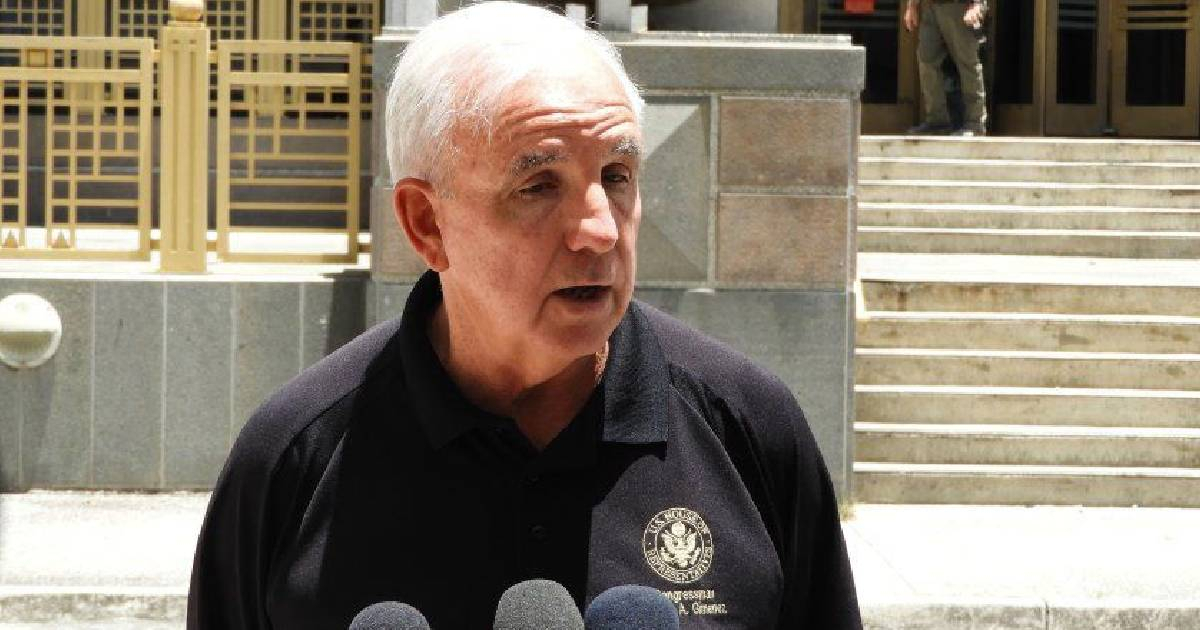
The Republican congressman Carlos A. Giménez reacted strongly this Thursday to the visit of CIA Director John Ratcliffe to Havana, labeling the Cuban regime as a "cynical, despotic junta of thieves" in his first public statement following the announcement of the meeting.
Giménez posted the message on X under the hashtag #SOSCuba just hours after the regime itself confirmed the meeting between Ratcliffe and the Cuban Ministry of Interior, marking one of the highest-level contacts between Washington and Havana in decades.
"The regime in Cuba is a cynical, despotic junta of thieves. These terrorist thugs know that their days are numbered," wrote the legislator, representative of District 28 in Florida and the only federal congressman born in Cuba.
Ratcliffe's visit was confirmed by the regime through an official statement published on the site of the Communist Party of Cuba, which specified that the meeting was requested by Washington and approved by "the Leadership of the Revolution."
The central focus of the meeting was the list of State Sponsors of Terrorism, on which the Trump administration reinstated Cuba in February 2025.
The regime argued to Ratcliffe that "Cuba does not pose a threat to the national security of the U.S., nor are there legitimate reasons to include it on the list," and reiterated that the island "does not harbor, support, finance, or allow terrorist or extremist organizations."
Giménez's reaction contrasts with the more cautious tone of Secretary of State Marco Rubio, who stated that same Thursday to NBC that "it's impossible to change the economic course of Cuba while the current leaders remain in power," although he added, "we have to give it a chance."
A senior official from the State Department also confirmed to NTN24 that Cuba has "a small opportunity to reach an agreement" and that the regime "should stop playing."
The visit of Ratcliffe occurs during a week of intense diplomatic activity. Last Tuesday, Donald Trump posted on Truth Social: "Cuba is asking for help, and we are going to talk!"
Miguel Díaz-Canel declared himself "always willing to engage in dialogue," and on that same Thursday, Foreign Minister Bruno Rodríguez Parrilla softened the Cuban stance on the offer of 100 million dollars in humanitarian aid, indicating that Cuba is "willing to listen to the details of the proposal."
Last Wednesday, Giménez accused the regime of rejecting over 100 million dollars in food offered by the U.S., stating that the dictatorship prefers to seize the aid to resell it.
Ratcliffe had already implemented this model of direct intelligence diplomacy in January 2026, when he traveled to Caracas as part of the negotiations that led to the capture of Nicolás Maduro, making his visit to Havana a signal of the strategic importance that Washington assigns to this process.
Foreign companies linked to the military conglomerate GAESA have until June 5, 2026 to cease operations with sanctioned Cuban entities, a date that marks the next pressure point in negotiations whose outcome remains uncertain.
Filed under: