
Related videos:
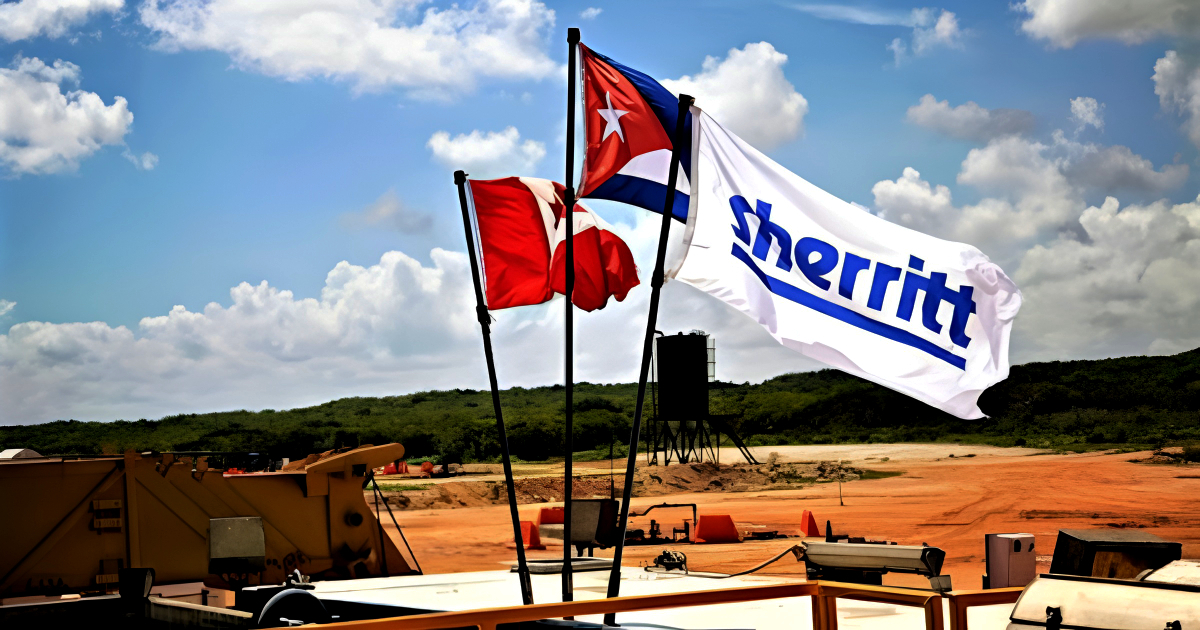
Sherritt International Corporation took an unexpected turn by announcing this Tuesday that it is canceling the dissolution steps regarding its interests in Cuba that it had communicated just four days earlier. However, it continues to suspend its direct participation in operations and admits to facing acute operational, financial, and legal challenges as a result of the sanctions imposed by the Trump administration.
The Canadian mining company announced that it will no longer proceed with the dissolution of its joint venture with General Nickel Company S.A. of Cuba, nor with its application to the Court of the King of Alberta, which was scheduled for hearing today.
The decision was made "following additional consultations with advisors, stakeholders, and relevant government authorities," according to the company's official statement.
Sherritt also revealed that it has received, on a preliminary basis, a "potential value preservation opportunity" that it is evaluating with its advisors, although it cautioned that "there is no guarantee that such a transaction will be finalized, nor that it will occur in a timely manner."
Despite the halt in dissolution, the company acknowledged that it "faces a series of acute operational, financial, and legal difficulties, including the ability to meet its debt agreements."
The crisis was triggered by the Executive Order signed by Donald Trump on May 1, 2026, which expanded sanctions against Cuba and introduced secondary sanctions against foreign financial institutions that conduct business with blocked Cuban entities, a mechanism that directly threatened Sherritt's access to the international banking system.
The Secretary of State Marco Rubio designated under that order GAESA, its executive president Ania Guillermina Lastres Morera, and Moa Nickel S.A., the joint venture of Sherritt with the Cuban state, accusing the mining company of having “exploited Cuba's natural resources to benefit the regime at the expense of the Cuban people”.
The timeline of the crisis has been rapid: on May 7, Sherritt suspended operations and repatriated expatriate employees, leading to the immediate resignation of three board members; on May 12, its external auditor, Deloitte LLP, resigned effective immediately; and on May 15, it announced the formal dissolution that was reversed today.
The company also failed to submit its first-quarter financial statements by the May 15 deadline, which could result in a trading suspension order from the Ontario Securities Commission.
The action of Sherritt was trading around C$0.11 on the Toronto Stock Exchange in mid-May, with a market capitalization of approximately C$77 million.
The uncertainty regarding the future of the company deprives the Cuban regime of its largest foreign mining partner and threatens between 10% and 15% of its independent power generation capacity, operated through Energas S.A. with 506 MW installed.
The Cuban state has accumulated a debt of at least 344 million dollars with Sherritt, of which 277 million directly correspond to General Nickel Company S.A., with no clear prospects for payment.
The Trump sanctions against the Cuban regime have accumulated over 240 designations since January 2026, and foreign companies have until June 5, 2026 to cease operations with GAESA before facing secondary sanctions.
Filed under: