
Related videos:
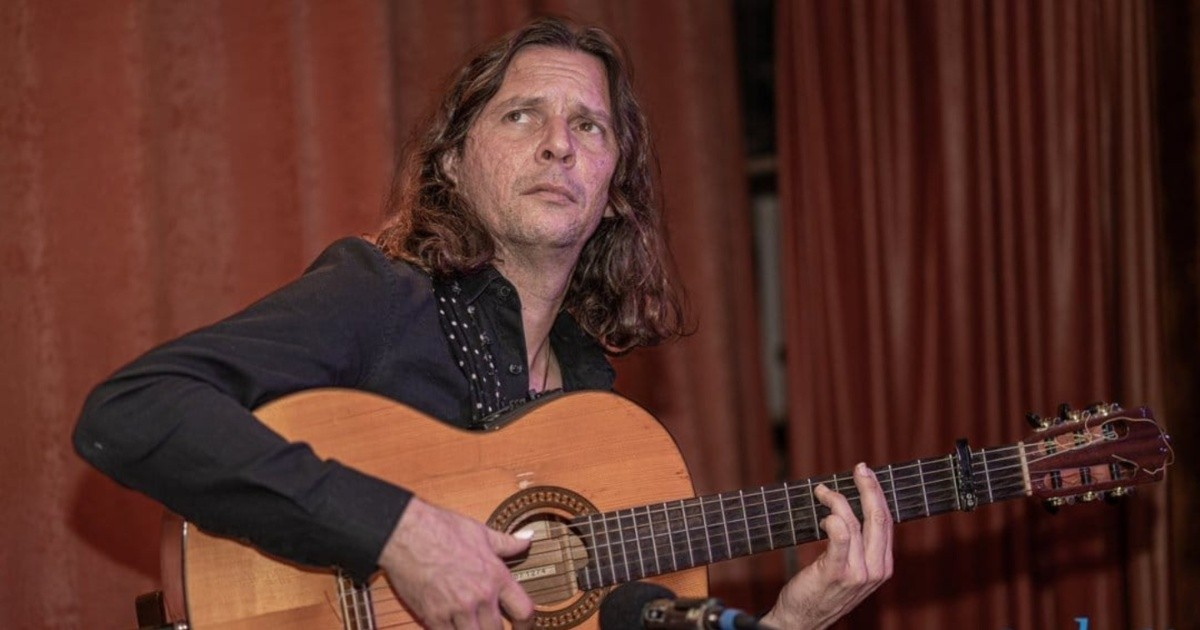
The Cuban guitarist Reynier Mariño, one of the leading figures of flamenco on the island, shared earlier this month his testimony about how alcoholism led him to lose everything —career, family, and health— and how he managed to recover after two hospitalizations at the Psychiatric Hospital of Havana and nine years of uninterrupted sobriety, as he recounted to the media Cubalite.
Mariño, born in Havana on September 20, 1979, built a solid career as a flamenco guitarist, trained in the leading musical centers of Cuba and holding a degree from the Royal Academy of Music in Madrid, studying under renowned figures such as Leo Brouwer, Manolo Sanlúcar, and Tomatito.
In 2003, he released Alma Gitana, regarded as the first flamenco album recorded in Cuba, and in 2006 he emigrated to Spain before settling in Uruguay, where he filled the Zavala Muñiz hall of the Teatro Solís in Montevideo several times.
It was precisely in Uruguay where his relationship with alcohol began, starting with a drink of rum in a bar called El Tartamudo.
"After that first day, I started going to that same place, not because I wanted to play, but for that rum. There came a time when I had to perform at a school where there was no drink, and I felt like I was playing without any enthusiasm," he recounted in the podcast of journalist Indira Román.
What followed was a spiral of self-destruction: he stopped performing in large venues, his family life deteriorated, and he returned to Cuba without finding a solution.
"I decided to return to Cuba to rethink things, and here I met DJ Unic and El Chacal, which led me into the world of reggaeton. The blame is mine because I wanted to continue the cycle," he admitted.
He was admitted to Mazorra for 45 days, but left without rehabilitation and continued drinking.
The breaking point came at the Pazillo Bar: the owner had expressly asked him not to drink, but Mariño arrived drunk, fell, broke a glass, and cut his face.
"Then I saw that I had disappointed my parents, lost the girlfriend I wanted, and ended up without a career," he declared.
He returned to Mazorra for the second time, where he received specialized help, but the real change came when he joined Alcoholics Anonymous after his second discharge.
"What saved me was that I reached a point where I wanted to die. I would go two or three days without eating, and I loved that state of drinking strong rum and feeling it hit me like a dagger," he confessed.
Today, Mariño has been nine years without drinking and has never had a relapse.
His abstinence is strict: he even avoids non-alcoholic drinks such as piña colada, beer, or mojito, and cola soft drinks that remind him of Cuba Libre.
Within Alcoholics Anonymous, he is an active member and gives talks to people with addictions, drawing from his own story.
"The only person that an alcoholic believes is another alcoholic. That’s why many believe in me, because of my story," he stated.
Mariño also explained the genetic component of his addiction: his father, Manuel Mariño, was an alcoholic, although he managed to recover without medical assistance, and he was unaware that he could inherit that predisposition.
"In my case, it was worse because I inherited it from him, something I never thought could happen," she stated.
"I am an alcoholic who hasn't drunk in many years, but I am still an alcoholic. Alcoholism cannot be cured," he concluded, with the message he now shares with those who are facing the same battle.
Filed under: