
Related videos:
Without massive private investment, Cuba could become a "dangerously impoverished and ungovernable" country, warns an analysis from Politico published this Monday, at a time when the Trump administration is intensifying economic pressure on the regime of Miguel Díaz-Canel through sanctions, an energy blockade, and the possibility of military action.
The article, signed by Daniel Desrochers and Nahal Toosi, notes that rebuilding Cuba would be even more challenging than Venezuela, where Trump managed to depose Nicolás Maduro in January 2026, because the island lacks a dominant industry like Venezuela's oil and has decades of deterioration in basic infrastructure.
The Secretary of State Marco Rubio delivered this week in a video message to the Cuban people to "build a better future," but the analysis warns that this promise requires private sector investment that is not willing to come at this time.
“You're talking about a country that absolutely, one hundred percent, needs to be rebuilt,” said Horacio Garcia Jr., Cuban-American business leader of the Cuba Freedom Council.
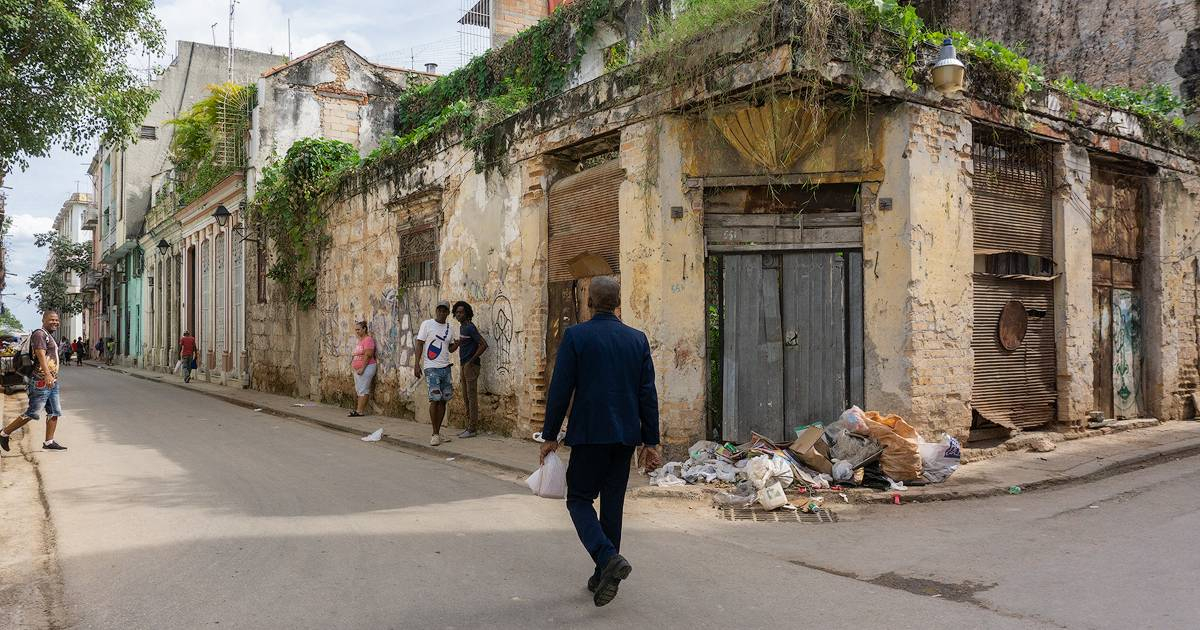
"There is no infrastructure for anything: water, electricity, nothing. There is no fair banking system. Everything has to be built from scratch. You are talking about a country in ruins," he emphasized.
Trump himself acknowledged the magnitude of the problem last Thursday: "It's a failed country, everyone knows it. They have no electricity, no money, they really have nothing. We're going to help them."
The Republican senator from Florida Rick Scott was more straightforward about the conditions demanded by private capital: “I have built businesses my whole life, I have invested my whole life. You’re not going to invest in risk unless you’re an idiot. Clear democracy and a clear rule of law will be necessary. People are not going to put up money. Not in any significant amount.”
U.S. companies also face a significant legal hurdle: a 1996 law allows for lawsuits against any company profiting from properties confiscated after the Cuban revolution.
The Supreme Court ruled last Thursday that a U.S.-owned port off the coast of Cuba can sue four cruise ships that used its docks between 2016 and 2019, and is awaiting another case in which Exxon Mobil seeks to sue for confiscated oil and gas assets.
The instability of Sherritt International from Canada and the pressure on Spanish companies doing business on the island highlight the impact of the secondary sanctions that Trump signed on May 1 through Executive Order 14404, which allows foreign companies linked to GAESA until June 5 to cease operations.
Mark Entwistle, former Canadian ambassador to Cuba, warned that modernizing the island’s infrastructure—water, electricity, internet—will cost billions of dollars, and that the Cuban regime is more cohesive than the Venezuelan one: "Unless there's a real war, when it comes down to it, you will have to deal with the Cuban government."
The humanitarian crisis worsens the situation: power outages in Cuba exceed 18 hours daily in several provinces, and Paul Johnson, president of the U.S. Agricultural Coalition for Cuba, warned of an imminent food crisis following the drastic reduction of pig and poultry herds.
John Kavulich, president of the U.S.-Cuba Economic Trade Council, summarized the mood of the business sector: "We are at a peak of interest, but in a valley when it comes to taking action. There is a tremendous amount of knowledge, attention, and interest right now regarding what will happen with Cuba, but since that is the question — what is going to happen? — no one is doing anything."
Filed under: