
Related videos:
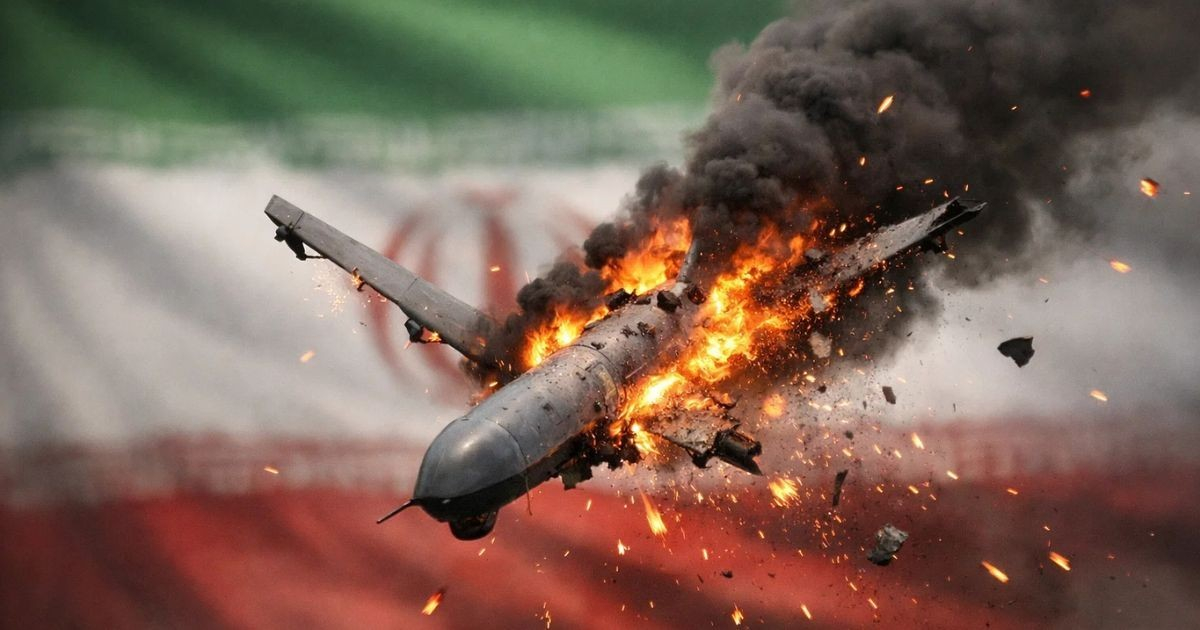
The Islamic Revolutionary Guard announced this Tuesday that its forces shot down an American MQ-9 drone and fired at an F-35 fighter jet and another RQ-4 drone after they violated Iranian airspace in the Persian Gulf region, according to a statement released by the Tasnim agency.
"The air defense units of the Revolutionary Guard, defending the territorial space of our country and following precise intelligence monitoring, identified and shot down an MQ-9 drone," stated the public relations department of the elite Iranian military body.
According to the same text, the F-35 and the RQ-4 fled after Iranian forces fired upon them. The U.S. has not independently confirmed the downing or the shots fired.
The events occur in direct response to attacks launched by the United States Central Command (CENTCOM) in the early hours of Monday to Tuesday against positions in southern Iran, in the province of Hormozgan.
The CENTCOM described the operation as "self-defense" attacks targeting missile launch sites and Iranian vessels attempting to lay mines, reported EFE.
Iran accused the U.S. of violating the ceasefire in effect since April 8 and described the attacks as proof of Washington's "bad faith" amid peace negotiations.
The Revolutionary Guard warned that it considers its right to a reciprocal response to any new violation of the ceasefire to be "legitimate and definitive."
The incident occurs at a time of heightened diplomatic tension.
Iran's chief negotiator, Mohamad Baqer Qalibaf, and Foreign Minister Abás Araqchí are in Qatar to finalize the details of a peace agreement that, according to leaks to the press, would include the reopening of the Strait of Hormuz and the lifting of sanctions on Iran, leaving the nuclear issue for a later phase.
Secretary of State Marco Rubio stated that resolving the discrepancies in the draft could take "a couple of days" and that the Strait of Hormuz must remain "open, unobstructed, and toll-free."
Qatar, for its part, denied having offered $12 billion to Iran to finalize the deal; spokesperson Majed al Ansari described those reports as "completely false" and condemned attempts to "sabotage" ongoing diplomatic efforts.
Trump had warned on his social media that negotiations with Iran would be "a great deal for everyone or no deal at all: back to the battlefield", and then added the demand that Iranian enriched uranium be handed over to the U.S. or destroyed under international supervision.
From Tehran, the supreme leader Mojtaba Jamenei—appointed in March following the death of his father Ali Jamenei on the first day of the conflict—issued a message on the occasion of the annual pilgrimage to Mecca in which he stated that the U.S. "is drifting further away from its former position" in the Middle East day by day and predicted that Israel "is nearing its end."
It is the first known communication from the new supreme leader since his appointment as the successor to Ali Jamenei, as he has not appeared in public or in images since then.
The conflict originates from Operation "Epic Fury," launched on February 28, 2026, by the U.S. and Israel against Iranian nuclear facilities, which led to the blockage of the Strait of Hormuz and caused oil prices to surge above 120 dollars per barrel.
This Tuesday, Texas crude oil fell by 4.06% to $92.68 at the market open.
Filed under: