
Related videos:
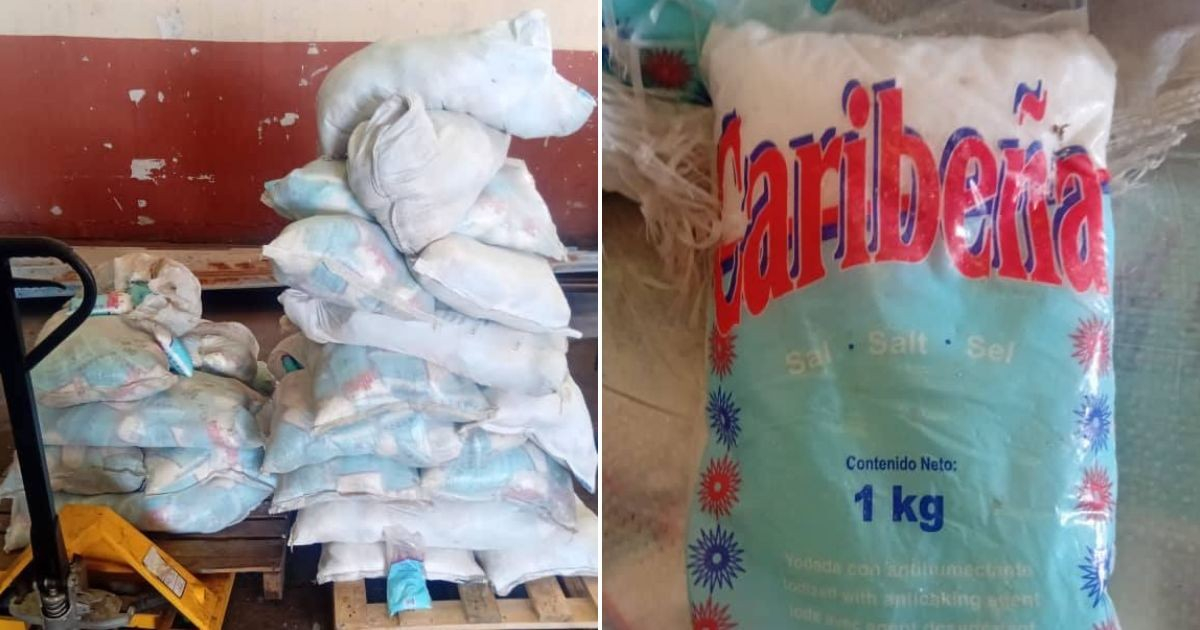
Cuban authorities confiscated 1,402 packages of salt weighing one kilogram each from Mipyme LuZoo SURL, located in the warehouses of the La Jupiña soft drink factory in Pinar del Río, as reported by the Facebook profile "De Canallas y sus Canalladas," identified as a spokesperson for the Ministry of the Interior (MININT).
The operation was carried out jointly by specialized forces from the MININT and Commerce Inspectors from the province. During the intervention, 35 bags of common salt from the brand "Caribeña" —iodized salt for basic consumption— were seized, which, according to the authorities, had been illegally purchased from a state market in Havana to be resold to the public.
The owner of the Mipyme received a fine of 84,000 Cuban pesos and the transport operator involved received one of 16,000 pesos.
The seized salt was delivered to the León Cuervo Rubio Provincial Hospital, the Abel Santamaría Cuadrado Hospital, and the Provincial Nursing Home of Pinar del Río.
What the MININT statement portrays as a moral victory for the State overlooks the context that explains why these cases occur: salt has disappeared from Cuban state markets, and the distribution system for the basic basket delivers it only every three months—just one package for households of up to four people, with none provided for families of two or fewer.
This structural scarcity is precisely what caused the price of salt to soar to 300 Cuban pesos per bag in the informal market of Pinar del Río, creating an incentive for players with access to wholesale channels, such as the Mipymes, to acquire basic products for resale at a profit.
The regime criminalizes intermediaries but does not address the root causes of the shortages that create them.
The profile "Of Scoundrels and Their Outrageous Acts" circulated the operation using a language rich in slogans and Cuban flags, glorifying citizen denunciation as a civic virtue.
"This fact demonstrates that it is indeed possible to take action against illegalities when there is public denunciation and the will to confront abuses," states the text, which also calls on Cubans to have "greater awareness, more honesty, and more social responsibility," noted the regime's spokesperson.
This type of publication aims to present the State as a protector of the people against "speculators," while silencing the fact that the scarcity fueling that speculation is a direct result of 67 years of policies implemented by the regime itself.
This is not the first time that similar cases have been documented.
In July 2023, a network of workers was arrested for stealing essential food items —including salt— from state warehouses to sell them in the informal market.
This month, another similar operation involved a Mipyme in Bauta that transported beef, lobsters, and fish to the same market.
While the regime intensifies confiscation operations and fines, the distribution system that creates the scarcity remains intact.
Filed under: