
Related videos:
The independent observatory Food Monitor Program (FMP) presented a report to the UN Special Rapporteur on the Right to Food in which it directly holds Grupo de Administración Empresarial S.A. (GAESA) responsible for worsening the food crisis in Cuba through its monopoly on foreign currency, imports, and food distribution chains.
The document states that the military conglomerate—controlled by the Revolutionary Armed Forces (FAR)—operates under what FMP refers to as "administrative capitalism," a model designed to benefit the Cuban military elite at the expense of the people.
According to the 2024 Food Security Survey by FMP, 96% of Cubans have lost their capacity to purchase food. The situation worsened in 2025: 33.9% of households had at least one member who went to bed hungry in the last 30 days, compared to 24.6% recorded the previous year.
The reasons why GAESA is accused of exacerbating hunger
Monopoly on foreign currency, imports, and distribution. GAESA controls between 40% and 70% of the Cuban economy and 95% of financial transactions in foreign currency. This dominance allows it to determine what enters the country, how it is distributed, at what price, and in what currency, leaving the population without alternatives.
Export of food resources while the population suffers from shortages. Companies under your direction, such as Flora y Fauna S.A., centralize access to meats, fruits, seafood, and charcoal, exporting them to competitive markets while Cubans cannot access them.
Digitalization of food access aimed at capturing remittances. FMP indicates that GAESA has moved the food marketing to digital platforms, using the Cuban diaspora as a captive market, prioritizing the extraction of foreign currency over the right to food for the resident population.
Disincentive to national agricultural production. Agricultural production has recorded a 67% decline in the last five years. Currently, Cuba imports 80% of the food it consumes. The rent-seeking logic of the military elite prefers to import — and control that importation — rather than foster internal production that would benefit the enrichment of farmers and merchants.
Systematic repression against independent producers. FMP documented the confiscation of land from farmers, operations against prominent farming families, and the persecution of other producers due to their political beliefs. The report classifies these measures as "exemplary punishments" that discourage any independent organization attempting to develop.
Total lack of accountability. GAESA operates without oversight from the Central Bank or the General Comptroller, does not publish financial statements, and does not pay taxes. The economist Pavel Vidal defines it as "an economy within another."
Public investment diverted towards tourism. Between 2021 and 2023, 36% of all Cuban government investment went to hotel construction, compared to 1.9% allocated to health and 1.3% to education. «The business is in building the hotel, not in having tourists. It doesn't matter if the hotel never opens,» warned the Asturian businessman Coque Yustas on this matter.
A system designed to exclude the people
The testimonies gathered by FMP illustrate structural exclusion. "It is not fair that we, who live and work the land, do not have control over what we produce, how we do it, or to whom we sell it," a farmer told the organization.
Leaked internal documents to the Miami Herald reveal that GAESA controlled assets of at least $17.894 billion in March 2024, while the Cuban people suffer from extreme shortages.
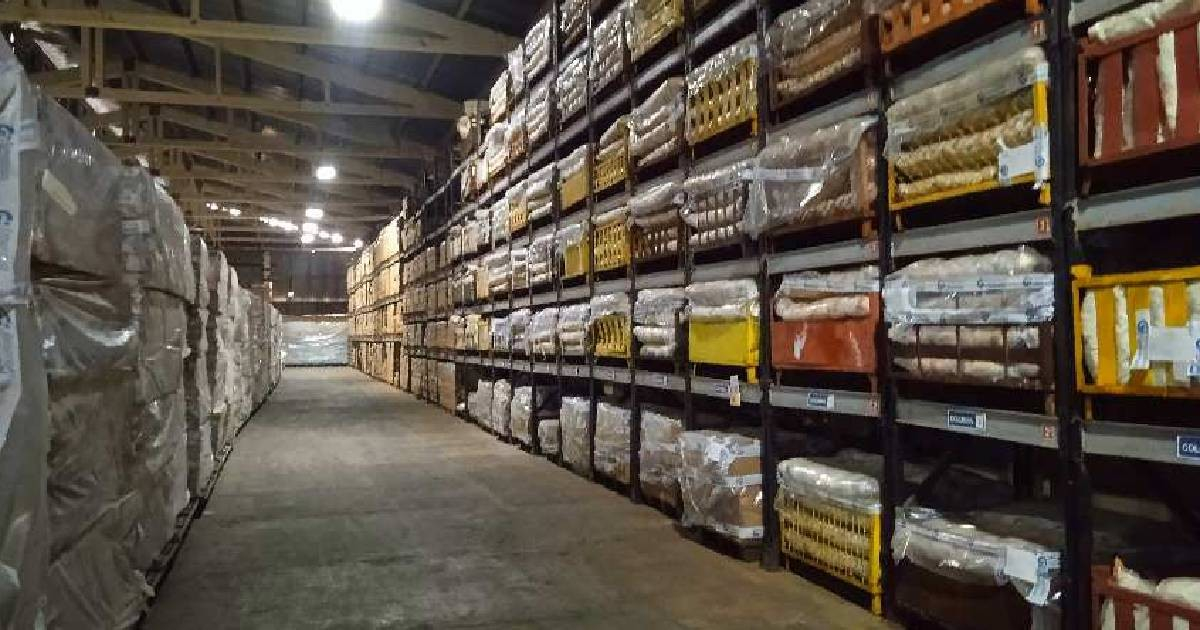
In April 2026, leaked images showed warehouses attributed to GAESA filled with mattresses and hygiene products inaccessible to most Cubans.
On May 7, 2026, the U.S. Department of the Treasury formally sanctioned GAESA, its CEO Ania Guillermina Lastres Morera, and the mining company Moa Nickel S.A., internationally recognizing the conglomerate's role as an instrument of economic repression against the Cuban people.
Filed under: