
Related videos:
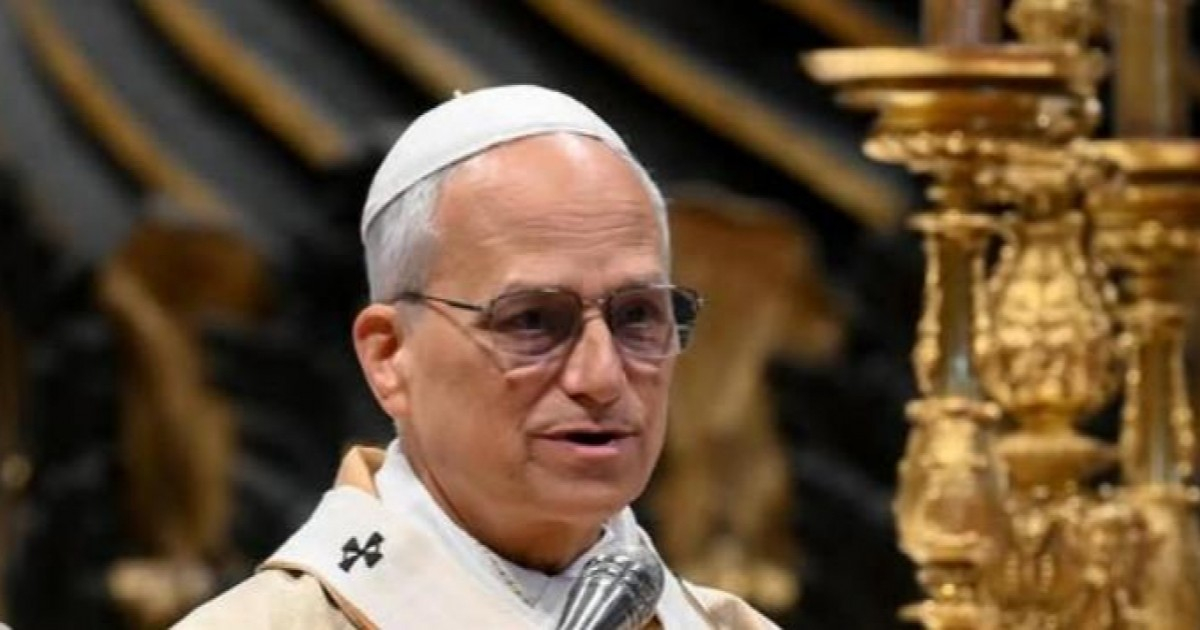
The Pope Leo XIV presented in the Synod Hall of the Vatican his first encyclical, "Magnifica Humanitas", the first papal document entirely dedicated to artificial intelligence, in which he issued an unprecedented philosophical and moral warning: machines lack consciousness and will never be able to replace the human being.
In a thread of posts on X, the Pontiff summarized the core of the document with a sharp statement: "Artificial intelligences do not live an experience, do not have a body, do not go through joy and pain, do not mature in relationships, and do not understand from within what love, work, friendship, and responsibility mean."
He added, "They also lack a moral conscience: they do not judge right from wrong, do not grasp the ultimate meaning of situations, nor do they bear the weight of consequences. They can imitate, they can simulate, but they do not understand what they produce."
The encyclical, signed on May 15 at the Vatican -exactly 135 years after "Rerum novarum" by Leo XIII-, positions the revolution of AI as the new social challenge equivalent to the first industrial revolution, and calls upon "men and women of goodwill" to act in the face of a historical crossroads.
The Pope also warned about the risk that AI systems can create a false impression of objectivity: "The impression of objectivity that the responses of these systems can evoke may lead us to forget that they reflect the cultural parameters of those who have designed and trained them."
Another highlighted danger is the "appearance of a relationship" with machines, especially in contexts of loneliness and emotional scarcity: "The artificial imitation of positive human communication can be gratifying, but it can also lead to deception and create the false impression of being in a relationship with a genuine personal agent," he emphasized.
In labor matters, the encyclical is equally demanding: "Any introduction of automation should be accompanied by verifiable measures for job protection, retraining, and worker participation," the document states.
León XIV also called to "disarm AI," declaring the traditional doctrine of just war obsolete in light of the advancement of autonomous weapons and stating that "no algorithm can make war morally acceptable."
The presentation event featured the participation of Christopher Olah, co-founder of the AI company Anthropic, who acknowledged before the Vatican that in advanced AI models they continue to find "mysterious, even unsettling things" and that AI labs operate under incentives that can conflict with "doing the right thing."
The encyclical also warns against what the Pope refers to as "technofascism": the concentration of technological power in the hands of a few transnational corporations that control patents, algorithms, platforms, and infrastructures, with the caution that "whoever controls AI will impose their moral vision."
Since his election on May 8, 2025, as the first American pope in history, Leo XIV had linked artificial intelligence to a new industrial revolution and announced that the Church would respond with its Social Doctrine.
The Pontiff concluded his appeal with a vision that balances warning with hope: "The era of artificial intelligence could be a step in which the Spirit helps to mature the civilization of love in our lives."
Filed under: