
Related videos:
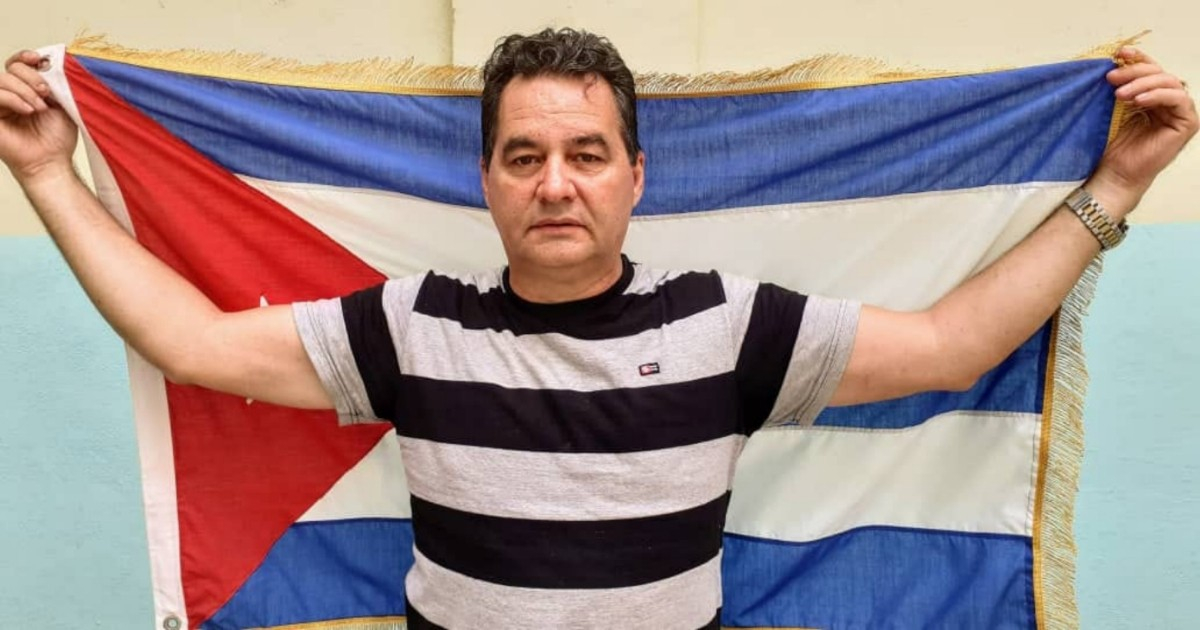
The writer and former political prisoner Ángel Santiesteban Prats reported this Tuesday that Cuban authorities have brought charges against him and imposed house arrest as a precautionary measure, accusing him of having exchanged 200 dollars in the informal market, which were donated to the National Masonic Shelter Llansó, a charitable institution managed by the Masonic Patronage.
According to a statement made to Cubanet, the accusation arose after an audit of the accounting books related to donations sent by Freemasons, primarily from Miami, to cover the needs of the shelter.
Santiesteban categorically denies the accusation. "I haven't made a statement to the police yet, but I did not exchange the dollars. What I did was substitute money," he stated.
According to his account, the 200 dollars were initially intended for the purchase of milk for the shelter, and at the request of the donors, he exchanged that amount and its equivalent in local currency between two different funds of the shelter itself, without any transaction involving third parties.
The writer emphasized that the auditors —with the participation of the Technical Research Department of the Ministry of the Interior, Public Health, and the Registry of Associations of the Ministry of Justice— found no discrepancies. "Not a single penny has ever been missing," he said.
The current Cuban Penal Code penalizes foreign currency exchange operations conducted outside state channels with a sentence of two to five years of imprisonment, a fine, or both. Santiesteban insists that his case does not fall under that category. "I never committed the crime they claim," he stated.
The writer directly links the process to the state's offensive against sectors of the Cuban Freemasonry that have denounced the regime's interference in their internal affairs, and asserts that the true objective of the authorities is to target José Ramón Viñas Alonso, Sovereign Grand Commander of the Supreme Council of the 33rd Degree for the Republic of Cuba and president of the asylum's board.
Santiesteban attributes the investigation to reprisals for the letter that Viñas Alonso sent to Miguel Díaz-Canel following the protests on July 11, 2021, in which he rejected "his position and leadership of the country for calling, inciting, and ordering a violent confrontation with the Cuban people."
The tension between the regime and the Freemasonry has persisted since then. In May 2025, the Ministry of Justice dismissed Viñas Alonso and imposed a new leader, threatening to freeze the fraternity's funds. In August 2025, the State Security interrogated Viñas Alonso and opened a criminal case against him for "currency trafficking," based on two internal exchanges of 100 dollars among Freemasons for the expenses of the asylum.
In September 2025, Santiesteban himself was arrested in Havana during a citywide blackout and found himself under siege by State Security. The writer claims that this agency is also overseeing the current case from Villa Marista.
It is not the first time that Santiesteban has faced a criminal process that international organizations deem fabricated. In 2013, he was sentenced to five years in prison in a trial that Reporters Without Borders, PEN America, and other entities condemned as arbitrary and politically motivated. He was released in July 2015 after international pressure. PEN America keeps him on its list of writers at risk and documents a sustained history of harassment due to his opposition to the regime.
"Here, it's not even necessary to commit the crime; they manufacture it," said Santiesteban. "And now they intend to fabricate something again to imprison the sovereign and me," he added.
Filed under: