
Related videos:
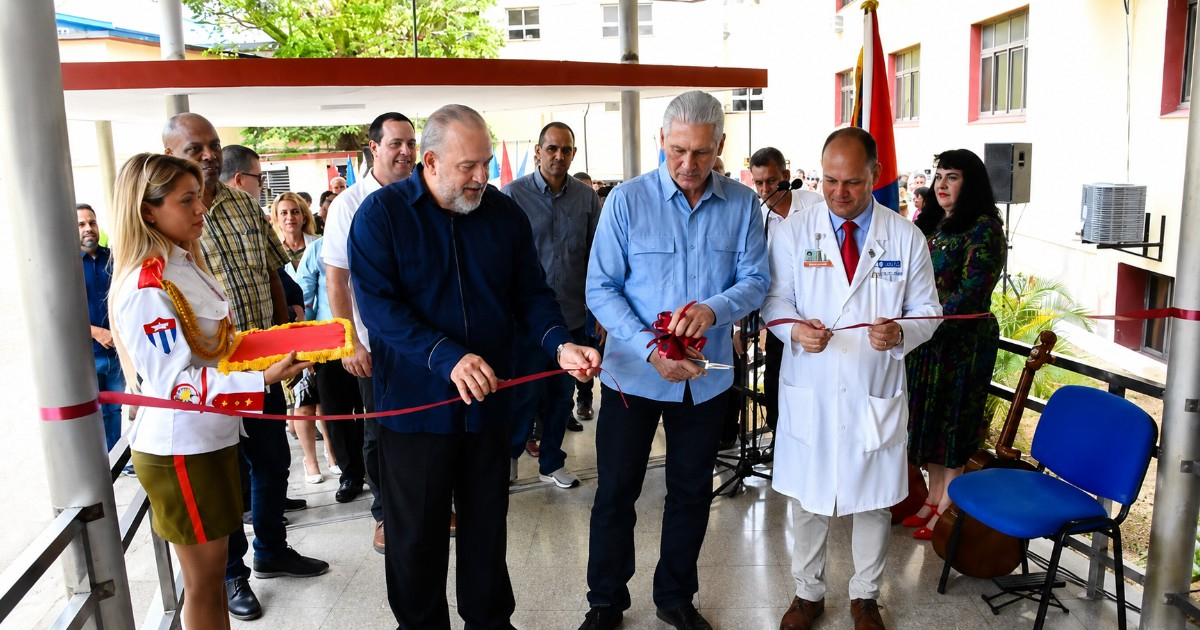
President Miguel Díaz-Canel and Prime Minister Manuel Marrero Cruz inaugurated the Outpatient Oncology Treatment Unit of the Institute of Oncology and Radiobiology (INOR), located in the Plaza de la Revolución municipality of Havana.
Specifically, they did not build a new hospital or a new institute. What they inaugurated was a specialized room for oncology patients receiving treatment without the need for hospitalization at INOR.
However, the event was carefully orchestrated as a political propaganda exercise: it took place on the very day of Raúl Castro's 95th birthday, in the year marking the centenary of Fidel Castro's birth and the 60th anniversary of the founding of INOR.
The director of the institute, Doctor Luis Eduardo Martín Rodríguez, opened the ceremony with an audio recording of the former dictator stating that "life is a constant struggle."
That same day, Havana registered protests with pot-banging for Raúl Castro's birthday, who is considered a fugitive from international justice.
The director of INOR himself acknowledged the contradiction of the moment: "We are doing this in a difficult context, marked by the intensification of the blockade, the energy siege, and the threats of military intervention from the United States government."
The new unit is named after Dr. María del Carmen Barroso, who initiated outpatient chemotherapy in Cuba in the 1980s, and will have the capacity to serve between 90 and 120 patients daily with chemotherapy, immunotherapy, and supportive treatments.
The pattern of medical inaugurations as a propaganda tool is recurrent in the regime. In December 2025, Díaz-Canel showcased hospitals also amidst the widespread health crisis.
The inauguration starkly contrasts with the reality faced by Cuban cancer patients. In October 2025, cancer patients reported being unable to receive treatment due to a lack of medications and basic supplies.
According to data from the WHO and the UN as of May 2026, more than 100,000 patients are awaiting postponed surgeries in Cuba, including over 11,000 children, and around five million people with chronic illnesses —including cancer patients— are facing interruptions in their treatments.
cancer is the second leading cause of death in Cuba, with nearly 27,000 fatalities in 2021. Between 30,000 and 36,000 new cases are diagnosed each year, 60% of which require radiotherapy, but the existing infrastructure can only accommodate around 9,000 patients annually.
There is a "practically total" shortage of medications in Cuban pharmacies. This has a severe impact on patients with chronic diseases. In addition, the Pan American Health Organization reported 385 damaged health facilities in the country.
The director of INOR assured that the new unit "meets the standards of any top-tier oncology treatment facility in the world," and added that the staff, despite experiencing "long blackouts" and "various daily issues," must put on "a suit at the hospital that has nothing to do with the one they left at home."
Filed under: