
Related videos:
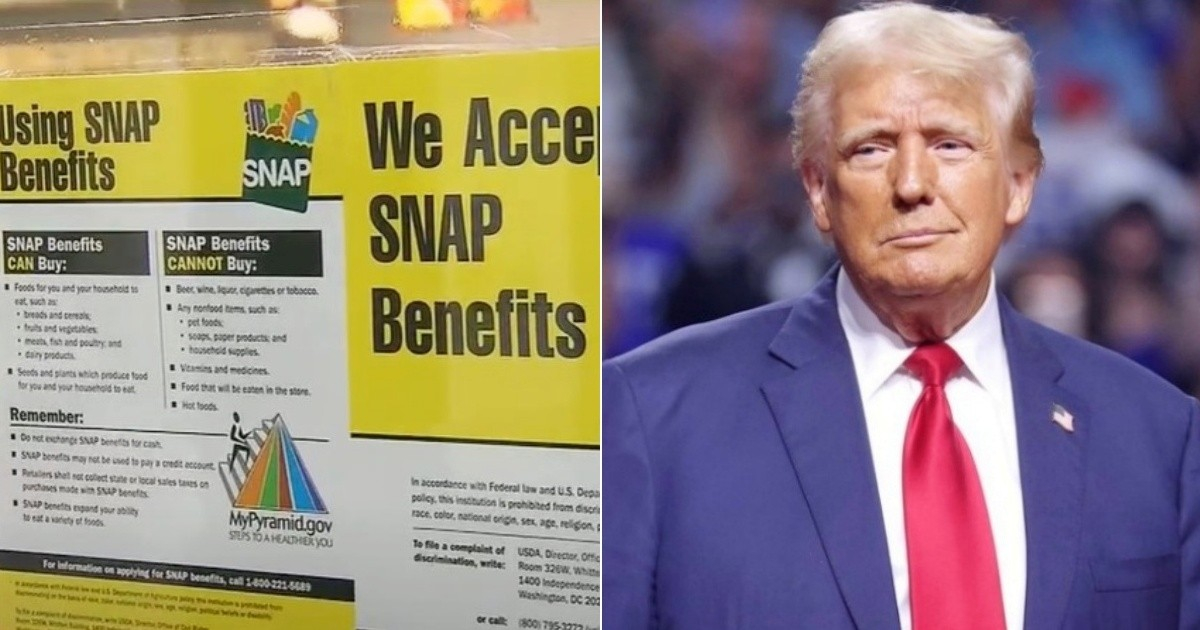
A federal judge blocked on Friday the Trump administration's attempts to impose new conditions on states to receive billions of dollars in funding from the food assistance program SNAP, popularly known as Food Stamps.
Judge Myong Joun of the District of Massachusetts granted a preliminary injunction in favor of a coalition of 20 Democratic-majority states plus the District of Columbia, which argued that the conditions imposed by the Department of Agriculture (USDA) were unconstitutional and illegal.
The contested conditions
The blocked conditions, known as the "Conditions 2026," were issued by the USDA at the end of 2025 through an administrative directive.
They demanded that states certify their compliance with the administration's policies regarding "gender ideology," "fair sports opportunities for women and girls," anti-discrimination policies, and immigration, as a requirement to receive all USDA funds, not just those from SNAP.
This meant that programs such as school lunches and WIC were also at risk of losing federal funding.
According to the complaint filed by the states on March 23, 2026, the new conditions include "a vague set of funding conditions related to the alleged anti-discrimination policies of the USDA, 'gender ideology,' 'fair sports opportunities' for women and girls, and immigration."
The suing states also argued that the USDA had placed "unconstitutional and illegal barriers between the programs created by Congress and the states that depend on them, threatening critical nutritional assistance, vital agricultural research, and the security of our national food supply and our communities."
Federal attorneys, for their part, defended the new conditions as a tool to enhance oversight of fund usage, arguing that "these new conditions would improve the oversight of funding," according to The Washington Times.
Judge Joun announced that he would issue a subsequent memorandum explaining the grounds for his decision.
A context of historical cuts
This judicial decision is part of a broader offensive by the Trump administration against the SNAP program.
The "One Big Beautiful Bill" (H.R. 1), enacted on July 4, 2025, introduced the largest cuts in the history of the program: approximately $186 billion over a decade.
Among its most controversial measures are the expansion of work requirements for adults aged 18 to 64 without children under 14, the elimination of eligibility for refugees and asylum seekers, and the obligation for states to cover up to 15% of the costs of benefits.
The impact is already visible: more than three million people lost access to SNAP between July 2025 and January 2026, the steepest decline in decades according to the Center on Budget and Policy Priorities (CBPP).
The impact in Florida
In Florida, nearly 300,000 residents lost access to the program, including seniors, veterans, and individuals with disabilities, a number that nearly doubled the initial projections from the state's Department of Children and Families.
Approximately 55,000 of those affected are adults aged 55 to 64 years.
The state channels over $7 billion annually in SNAP for nearly 2.9 million beneficiaries, which is equivalent to 13% of the state’s population.
In March 2026, the Florida Senate approved bill SB 1758, which introduces additional changes to the state program, including enhanced beneficiary verification and the possibility of EBT cards with photos.
Since April 20, 2026, a federal pilot program also prohibits SNAP beneficiaries in Florida from purchasing soft drinks, energy drinks, sweets, and ultra-processed desserts.
Rob Ranieri, executive director of the organization House of Hope, summarized the cumulative impact on the most vulnerable families: "Many clients have seen their benefits reduced twice in the last 12 to 14 months."
The legal battle over the "2026 Conditions" adds to a series of judicial confrontations between the Trump administration and Democratic states regarding social assistance policies, at a time when the Trump administration clarifies who is exempt from some of the new program requirements.
Filed under: