
Related videos:
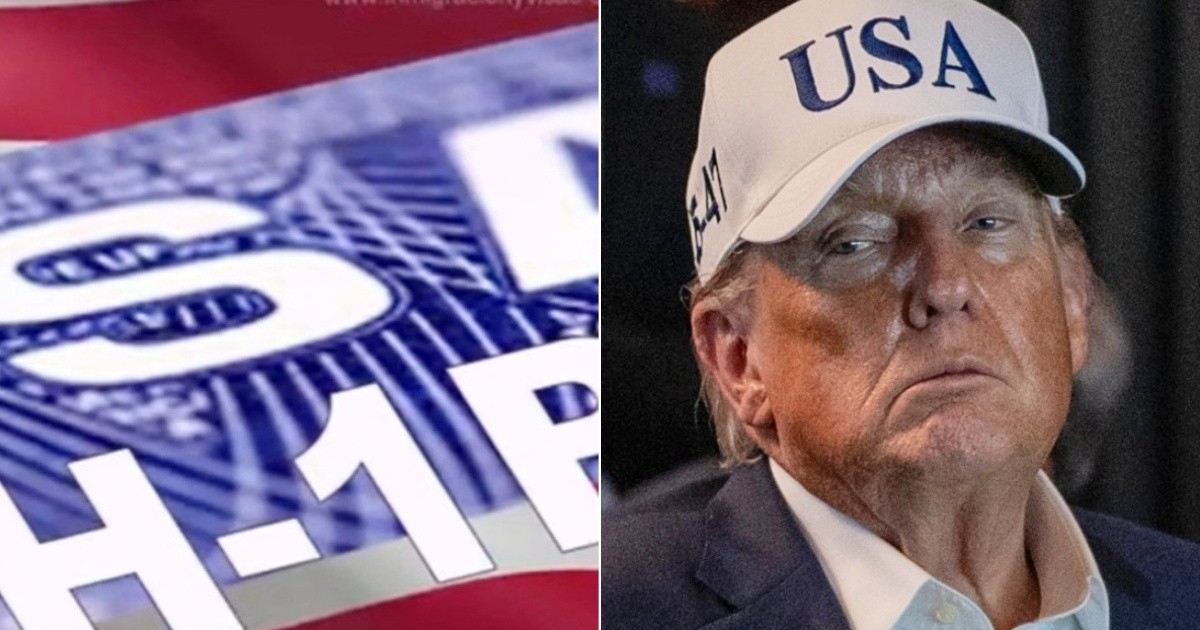
A federal judge overturned on Monday the $100,000 fee that the Trump administration had imposed for applying for H-1B visas, in a ruling that represents a significant blow to the restrictive immigration policy of the president's second term.
The district judge, Leo Sorokin, based in Boston and appointed by former President Barack Obama, issued a 42-page ruling that completely overturned the policy imposed by the White House in September 2025.
Sorokin determined that the fee functions as a tax, and that the president lacks the authority to impose it without the approval of Congress, also violating the Administrative Procedure Act.
“The president did not have the power or delegated authority to impose a tax on H-1B petitions”, the judge wrote in his ruling.
The magistrate also referenced the Supreme Court's decision from February 2026, which overturned Trump's massive tariffs, to conclude that the executive cannot impose tax burdens without legislative authorization.
From $5,000 to $100,000: The Impact of the Fee
Before Trump's measure, companies paid between $2,000 and $5,000 to apply for an H-1B visa.
The presidential proclamation signed in September 2025 raised that cost to over $100,000, arguing that the program “has been deliberately exploited to replace, rather than complement, American workers with lower-paid and less skilled foreign labor.”
The deterrent effect was immediate and extreme: by mid-February 2026, the United States Citizenship and Immigration Services (USCIS) had only received 85 payments of the fee, according to a court file from March 2026.
The measure generated panic among employers, students, and workers, and led to multiple lawsuits in various circuits across the country.
Who filed the lawsuit and what did they argue?
The case was presented in December 2025 by a coalition of 20 Democratic state attorneys general, co-led by New York Attorney General Letitia James and California Attorney General Rob Bonta.
The states argued that the fee hindered their ability to hire teachers, university staff, academic researchers, and medical workers.
“Today, a court put an end to this administration's illegal attempt to dismantle this critical program and the many jobs it makes possible,” James stated after the ruling was announced.
Bonta, for his part, described the rate as “an attack on the ability of the United States to attract and retain highly skilled talent that strengthens our economy.”
The president of the American Medical Association, Bobby Mukkamala, celebrated the decision as "a victory for patients," noting that international medical graduates are essential in rural and underserved areas.
The response of the Trump administration
The White House spokesperson, Taylor Rogers, announced that the administration will appeal the ruling.
“President Trump has clear legal authority to restrict the entry of any class of foreigners that he determines is not in the best interest of the United States, and that is exactly what he did,” Rogers stated.
The Department of Homeland Security (DHS) described the decision as "outrageous judicial activism" that undermines the president's immigration reform efforts.
A divided legal landscape
Sorokin's ruling contradicts a previous decision by the federal court in Washington D.C., which in December 2025 had approved the fee and kept it in effect until September 2026, when it was scheduled to expire.
There is also a third pending lawsuit in San Francisco, filed by religious groups and labor unions, which opens the possibility of split rulings across three different appellate circuits.
The H-1B program grants 65,000 annual visas for highly skilled workers, plus an additional 20,000 for postgraduates, and is primarily used by the tech sector, with nearly three-quarters of approvals going to workers from India.
Filed under: