
Related videos:
The referee Omar Abdulkadir Artan was excluded from the after U.S. immigration authorities denied him entry into the country, preventing him from becoming the first Somali to officiate a match in the history of the World Cup.
Artan arrived at Miami International Airport last Saturday on a flight from Istanbul to join the tournament as a referee appointed by FIFA.
A spokesperson for the U.S. Customs and Border Protection (CBP) indicated that the individual was "deemed inadmissible due to issues in the background check process and was denied entry," without providing further public details on the specific reasons.
After the U.S. authorities' refusal, FIFA excluded him from the tournament, confirming that he will not be able to train or officiate in any matches of the championship.
The case falls within the immigration policy of President Donald Trump, who, through a presidential proclamation on June 4, 2025, completely suspended entry to the U.S.—for both immigrants and non-immigrants—from nationals of 12 countries, including Somalia, Afghanistan, Iran, Libya, and Yemen.
The proclamation does not provide automatic exceptions for sports officials or for those accredited by international organizations such as FIFA, leaving Artan without an immediate recourse.
The Somali government described the situation as "deplorable" and announced diplomatic efforts to seek explanations.
"It is unfortunate that such treatment seems to have occurred, and the Ministry is closely monitoring the situation," stated the Somali Ministry of Youth and Sports, which also mentioned that it is "engaging with the relevant authorities in the U.S. and FIFA to obtain a clear explanation regarding this matter."
The Somali organization highlighted that Artan "has represented his country, his profession, and Somali sports with distinction" and that "his participation at the international level is a source of pride and honor for all Somalis."
FIFA, for its part, distanced itself from the matter by stating that the organization "does not participate in the immigration processes of the host country," including the granting of visas.
Artan was a figure of great importance for African football: in 2025 he was named Male Referee of the Year by the African Football Confederation (CAF) and has accumulated international experience since 2018 in competitions such as the CAF Champions League and FIFA youth tournaments.
The referee himself issued a statement expressing gratitude for the messages of support received and assured that he would maintain a positive attitude regarding the events that occurred.
"Despite the circumstances, I maintain a positive attitude and am focused on the upcoming challenges in my career as a referee. I want to thank FIFA and CAF for all their support, and I am committed to maintaining my refereeing level while focusing on the future," he emphasized.
The incident involving Artan is the first high-profile case in which U.S. immigration policy prevents a FIFA-appointed official from participating in the tournament, sparking international criticism regarding the country's suitability as a host for a global event.
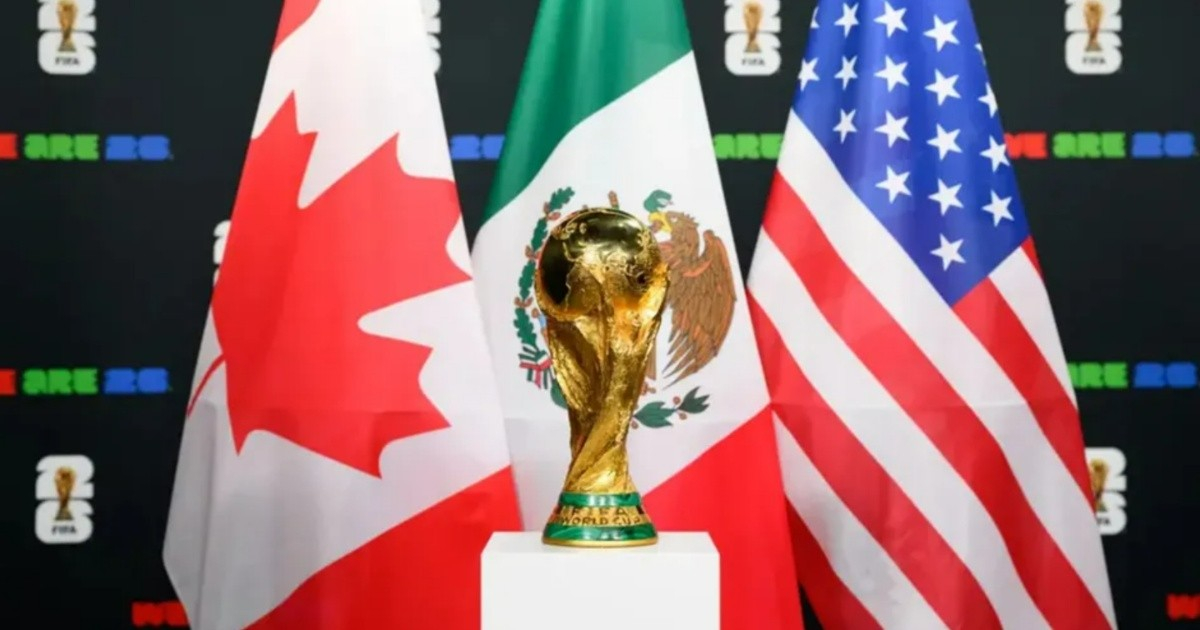
The 2026 World Cup kicks off next Thursday with the opening match between Mexico and South Africa at the Estadio Azteca, in a tournament being held for the first time in three countries: the United States, Mexico, and Canada.
Filed under: