
Related videos:
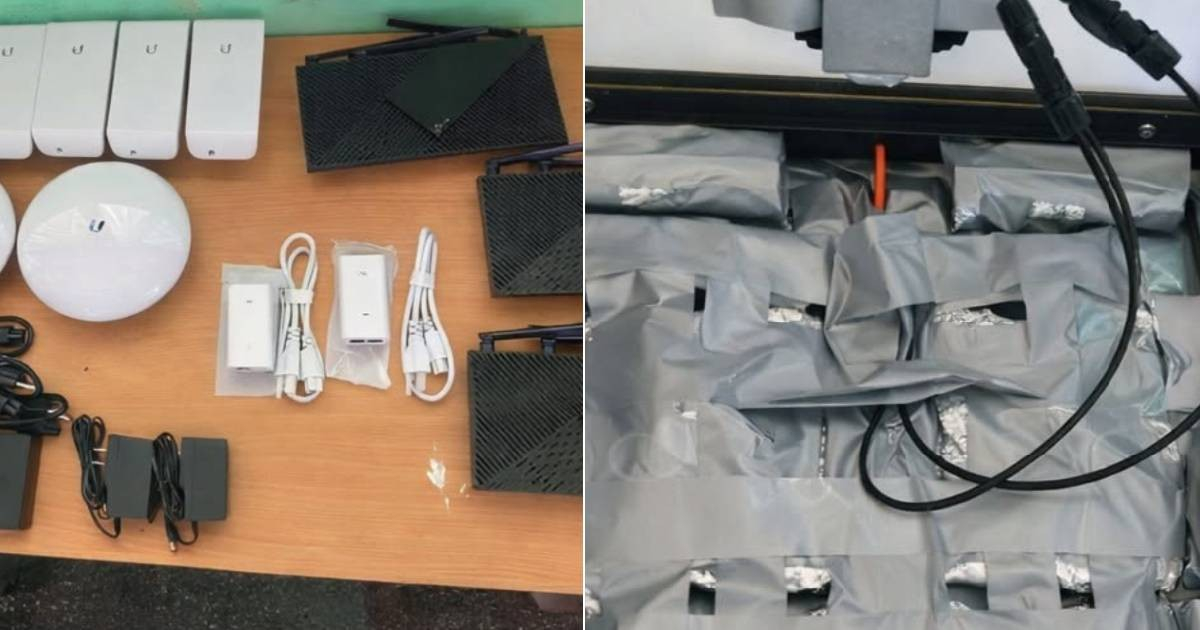
The Cuban Customs at the Jaime González de Cienfuegos airport has seized four shipments of Starlink antennas coming from Miami during 2026, according to a post by the official Facebook profile “Las Cosas de Fernanda 2”, linked to the MININT.
The profile, which has over 22,000 followers on the mentioned social network, presented the seizures using a language of war and national sovereignty, describing the antennas as potential "ground guidance systems" in the event of a military invasion.
The four seizures occurred on the following dates: on March 28, concealed in two boxes of monitors; on May 16, inside a monitor; on May 23, disguised as a welding machine; and on June 2, hidden in a sound system.
All shipments had the same origin: Miami, Florida, and the declared final destinations were the provinces of Artemisa, Holguín, and Las Tunas.
The equipment was detected using radiographic scanners. According to the official publication, "the radiographic scanners revealed what appeared harmless at first glance: boxes of monitors, welding machines, music equipment. Inside, cleverly concealed, were Starlink antennas."
The regime warns that importing communication equipment without authorization "not only results in immediate confiscation but also carries criminal consequences under Cuban Penal Law," threatening legal action against those who attempt to introduce these devices.
The narrative of the official profile goes beyond the legal framework and presents each confiscated antenna as "a victory against technological penetration," describing it as a "systematic battle against external aggression and the threat of military invasion."
This militaristic rhetoric reflects the regime's strategy of criminalizing access to independent internet and portraying it as an act of betrayal, amidst a context in which Cuba is experiencing serious connectivity crises and power outages that have boosted the demand for satellite alternatives among the population.
The seizures in Cienfuegos are part of a systematic campaign that the regime has been conducting since 2025. In April and May of that year, the Customs seized more than 85 routers and 20 Starlink devices at the José Martí International Airport in Havana, as well as seven hidden Starlink antennas at that same airport and three devices concealed within televisions in Holguín.
The legal framework supporting the confiscations was strengthened in May 2026, when the Ministry of Communications published the Resolution 1/2026, which prohibits the import of equipment to access telecommunications networks "without authorization." Starlink operates completely outside of this framework as it has no agreement with the Cuban government.
While the regime celebrates every seizure as a defense of sovereignty, millions of Cubans remain without access to reliable internet, subjected to frequent outages and one of the most restricted connectivity situations in the hemisphere.
Filed under: