
Related videos:
At least 33 collectible books were stolen from Ediciones Vigía, the renowned artisanal publishing house in Matanzas, and more than a month after the incident, the perpetrator remains unidentified and unarrested, according to a public complaint shared on Facebook by journalist and cultural activist Yirmara Torres Hernández.
Agustina Ponce Valdés, director of the publishing house since 1998, confirmed that there is "not the slightest indication of anything" regarding the whereabouts of the books or the thief. "They stole from Vigía, they stole our books, and the thief is still walking our streets," Ponce stated in a post shared on the occasion of Archive Day.
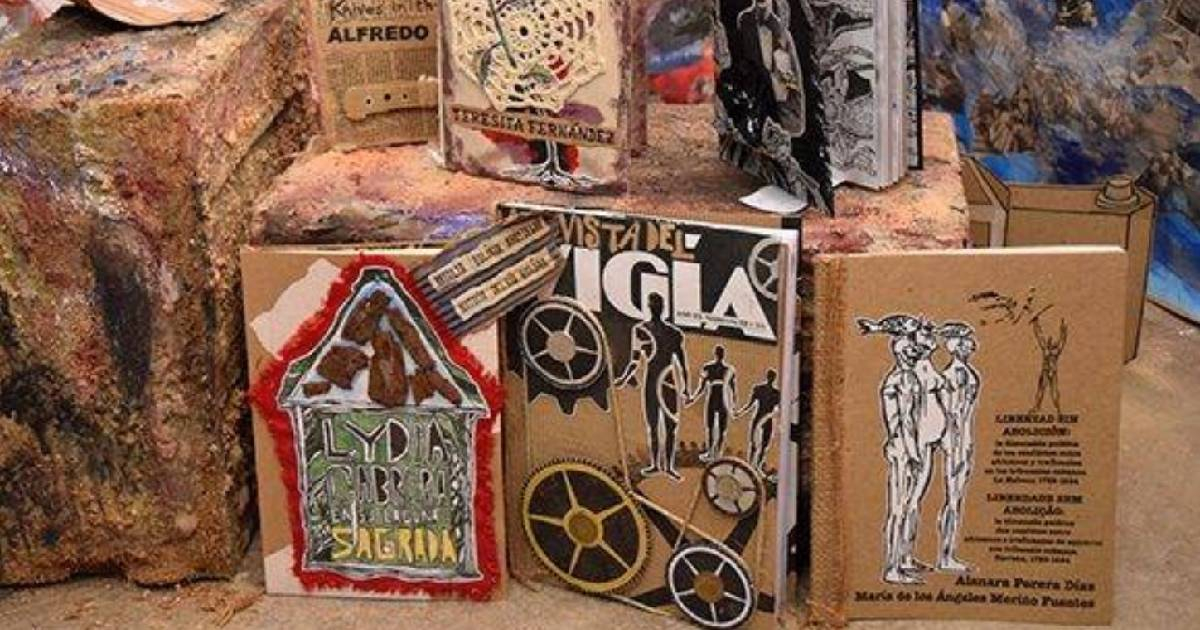
What was stolen is not ordinary books. Each copy of Vigía is a unique piece of art, handcrafted entirely from recycled materials: cardboard, fabrics, threads, and watercolors. The 33 stolen books were created by the founder of the publishing house, Alfredo Zaldívar, known as Estévez, and his disciples: Marialva, Elizabeth, Héctor, Frank David, Adrián, Sancho, and Nelson.
Ponce was unequivocal in her assessment of the incident: "They didn't steal books; they took them, they assaulted, they violated the heritage of a country."
The outrage is exacerbated by the circumstances of the theft. Torres Hernández pointed out that the robbery took place in a central location in Matanzas, with nighttime security: “How can one steal with impunity in such a central place, especially with nighttime security?”
Ediciones Vigía is located in the Plaza de la Vigía, the historical center of Matanzas, whose Historic Center was declared a National Monument in 2013.
In that same square, you will find the Teatro Sauto, the Art Gallery, the Conservator's Office, and the Firefighters Museum, all of which are first-rate heritage institutions.
The publishing house, founded on April 25, 1985, is regarded as the most collected Cuban publisher in the world.
Their works are part of collections at the Museum of Modern Art (MoMA) and the Metropolitan Museum of Art in New York, the Library of Congress in the United States, the British Library in London, and the Ibero-American Institute in Berlin, as well as at dozens of universities in the United States and Europe.
The vandalism against cultural institutions in Cuba is not an isolated incident. The gap between the legal norms and their actual enforcement is a constant concern raised by the artistic and cultural community on the island. The Cuban Penal Code classifies the damage and illegal trafficking of cultural heritage goods as a crime, with penalties ranging from two to five years of imprisonment, but the effective enforcement is inconsistent.
Torres Hernández warned about the risk faced by other neighboring institutions: "If they stole from Vigía, what will be next: Sauto, the Art Gallery, the Office of the Conservator, the Firefighters' Museum?"
Ponce concluded his complaint with a question that encapsulates the frustration of an entire cultural community: "How sad is this archivist's day without any news about the whereabouts of these art books!"
Filed under: