
Related videos:
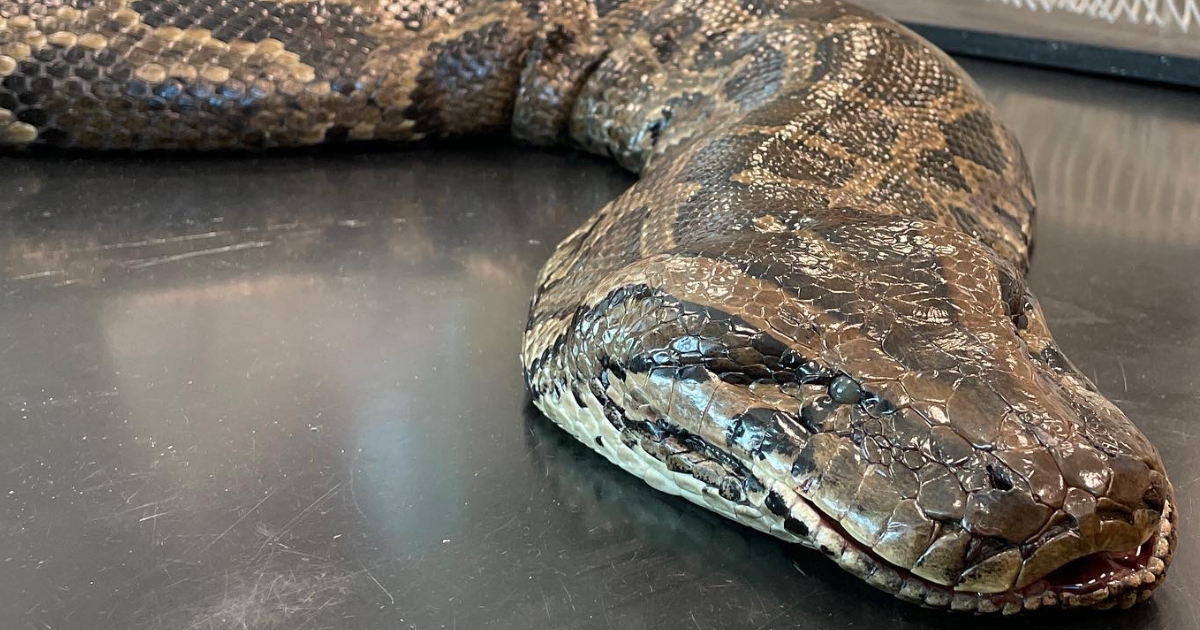
The conservation entity of Southwest Florida announced this Wednesday a new historical record in its invasive species control program: its biologists removed 177 Burmese pythons, with a combined weight of 8,080 pounds, during the mating season from November 2025 to April 2026, surpassing the previous record by nearly 2,000 pounds.
The previous record, set in the 2025 season, was 6,300 pounds. This is the first time in the program's history that over four tons have been removed in a single season.
The success is largely attributed to the use of radiotelemetry and to 40 male pythons marked with transmitters, known as "exploratory snakes."
During the breeding season, these tracked males led biologists to spawning females in the deep areas of the landscape, before they could lay their eggs.
"This was our first season of removing four tons. Our marked exploration snakes helped us locate large breeding snakes deep in the landscape before they had a chance to lay eggs," stated Ian Bartoszek, a wildlife biologist and scientific project manager at the Conservancy, who pioneered the program.
"These science-based management efforts are suppressing the local breeding of pythons. With continuous pressure, we expect to see these removal numbers decrease over time," Bartoszek added.
In addition to the 177 snakes, the team removed 4,100 Burmese python eggs from the ecosystem during this season.
The average weight of the removed females was 95 pounds. The largest one captured weighed 153 pounds and measured 17 feet long.
On average, each female carried around 70 eggs, and a quarter of them contained remains of white-tailed deer inside, highlighting the impact of these snakes on native wildlife.
Since the program began in 2013, the Conservancy has removed a total of 1,750 pythons weighing over 53,000 pounds in an area of approximately 200 square miles in southwest Florida.
Burmese pythons are native to Southeast Asia and arrived in Florida mainly through the exotic pet trade. Today, they are established from the southern part of Lake Okeechobee to Key Largo and have caused reductions of up to 90% in populations of medium-sized mammals such as raccoons, opossums, and rabbits in infested areas of the Everglades.
The State of Florida complements these efforts with the Florida Python Challenge 2026, a competition open to the public that will take place from July 10 to 19, offering a grand prize of $10,000 for the person who captures the most snakes.
The registration for the event costs 25 dollars and includes a mandatory online training for all participants.
Filed under: