
Related videos:
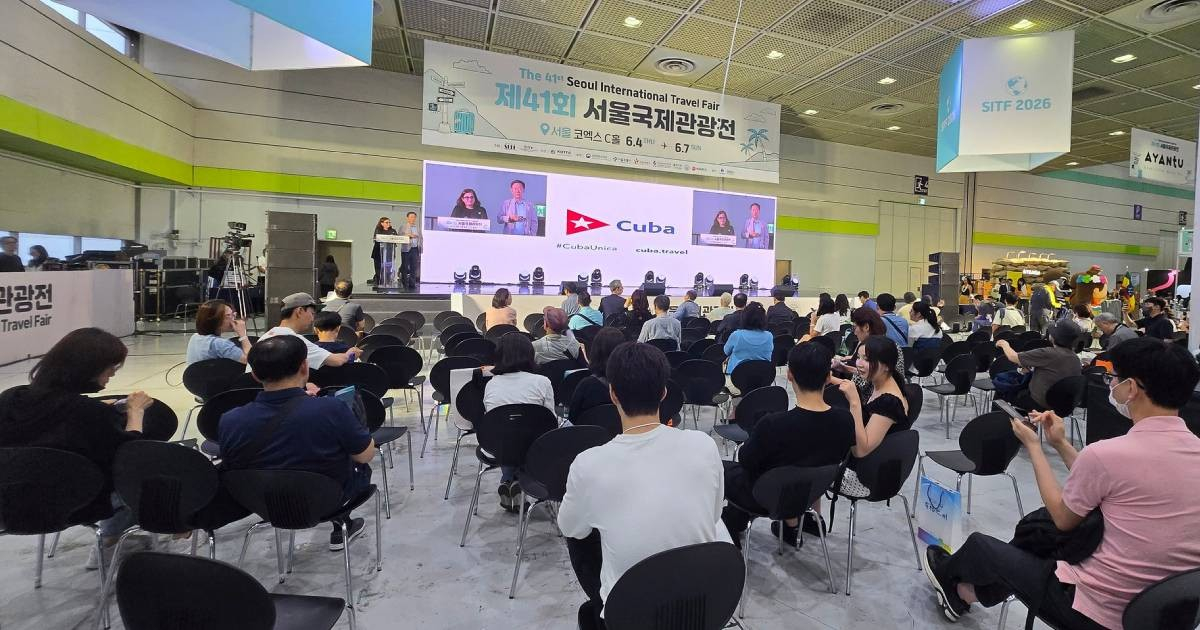
While the Cuban regime desperately seeks new sources of investment to alleviate the profound economic crisis facing the island, businesspeople and officials from South Korea received the official message from Havana with caution during a forum held this Thursday in Seoul.
Under the title "Business Opportunities in Cuba," the event brought together representatives from the Cuban government and the South Korean business sector just two years after diplomatic relations were reestablished between the two countries. However, the optimism expressed by the Cuban delegation clashed with warnings about the financial and logistical risks involved in operating on the island.
According to a report by The Korea Herald, the Cuban ambassador to South Korea, Claudio Monzón Baeza, acknowledged the challenges the country is facing but insisted on presenting the island as an attractive destination for business.
"The political and economic pressure on Cuba is increasing as the United States continues to impose new economic sanctions. However, this does not mean that Cuba lacks opportunities. Cuba remains a land of opportunities and possibilities," he stated during the opening of the meeting.
The Cuban delegation was led by Antonio Carricarte Corona, president of the Chamber of Commerce of Cuba, who sought to persuade potential investors of the advantages in sectors such as renewable energy, biotechnology, the pharmaceutical industry, agriculture, tourism, logistics, and mining.
Carricarte also emphasized the growth of the private sector authorized by the regime in recent years, stating that over 10,000 private companies have emerged since the partial liberalization of the economy and that they play a significant role in the distribution of goods and imports.
In terms of energy, the official stated that Cuba currently generates about 15% of its electricity from renewable sources, with the goal of increasing that figure to 25% by 2030 and 40% by 2035. His statements contrast with the daily reality of millions of Cubans, who continue to endure power outages lasting over 20 hours a day in numerous locations across the country.
Caution signals came from the South Korean counterpart.
Lee Myung-joon, director of the Korea Trade-Investment Promotion Agency (KOTRA) office in Havana, acknowledged that there are potential opportunities but warned about the consequences that companies with interests in the United States might face.
"Korean companies with assets or financial ties in the United States must exercise a high degree of caution," he warned.
Another official from KOTRA was even more explicit in stating that Cuba cannot be treated as a conventional market.
"Cuba is not a market where companies can simply apply the standards they use for ordinary trade with other countries. Finance and logistics are the areas that require special caution," he noted.
The South Korean agency identified multiple obstacles for any business project on the island, including difficulties in processing remittances and international payments, a shortage of foreign currency, issues with fuel supply, and the reduction of operations by various international shipping companies due to fears of U.S. secondary sanctions.
The forum took place against a particularly complex backdrop for the Cuban economy. The island is experiencing a severe contraction in tourism, one of its main income-generating sectors. From January to April 2026, only 328,608 international visitors arrived, a decline of 55.8% compared to the same period the previous year.
This is compounded by the sanctions imposed by the Donald Trump administration against regime figures and entities controlled by the military, including the GAESA conglomerate, as well as the closure or reduction of operations of several international hotel chains.
Despite this context, Havana continues to seek new economic partners. Relations between Cuba and South Korea were restored in February 2024 after more than six decades without formal diplomatic ties, although trade exchanges remain limited. According to data from KOTRA, bilateral trade barely reached 21 million dollars in 2022.
At the close of the forum, Carricarte summarized the regime's expectations with a phrase directed at the attending business leaders: "South Korea is a country we hope to add to our network of economic partners."
South Korean trade authorities, however, recommended that companies analyze each project with extreme caution, seek specialized legal advice, and evaluate payment mechanisms outside the U.S. financial system before committing investments on the island.
Filed under: