
Related videos:
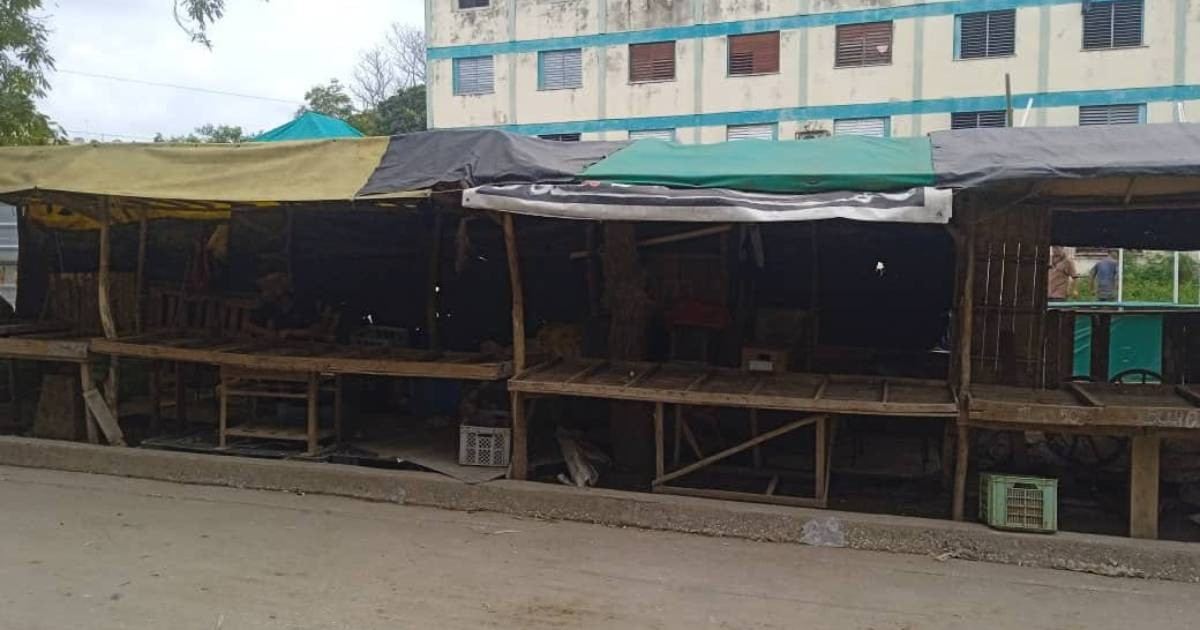
The authorities' decision to evict the market known as "Los Chinos" in the Reparto Lenin neighborhood of Holguín this Thursday has raised concerns among hundreds of residents who fear losing one of the main access points to food in the province during the worst supply crisis Cuba has faced in decades.
Images shared by the Facebook page Holguín Memories show empty stalls, makeshift structures being dismantled, and spaces that until just a few days ago were bustling with private vendors, street sellers, and small private businesses dedicated to food sales.
For many residents of Holguín, the closure represents much more than the disappearance of an informal market.
"Nothing changes; the most affected, as always, is the people because thanks to the mipymes, regardless of their prices, we are able to feed ourselves, as the basic basket no longer exists. So, what will we live on?" questioned a resident on social media after the measure was announced.
The citizens' reaction has been marked by mixed feelings.
For years, residents in the area reported the sanitary conditions of the place. Among the main complaints were the accumulation of garbage, wastewater, unpleasant odors, alcohol consumption in the vicinity, and frequent disturbances of public order.
"Those who say it’s bad only go on Sundays and don’t suffer the daily consequences: trash and filth everywhere, people urinating in the corners of the children's playground, fights with knives—it's just a horror," wrote a neighbor.
It was even reported that the Carlos Manuel de Céspedes basic secondary school, located in the area, had lost part of its sports facilities due to the haphazard growth of the market.
However, even among those who acknowledge the hygiene issues, there is still concern about the economic consequences of the measure.
"Today we complain about the lack of hygiene, rightly so, but tomorrow we will complain about the higher prices of food and the absence that all those people will leave in that place," commented a neighbor who claims to have lived his whole life in Reparto Lenin.
Others questioned the timing chosen to carry out the eviction.
"I agree that it was a constant mess, but they had so much time to do that and they choose the worst moment we’re experiencing to do it," wrote another citizen.
According to reports from local residents, the authorities plan to relocate vendors to new kiosks built near the stadium, in the Feliú area, and on Cuba Street.
However, numerous comments express doubts about the viability of that alternative. Some users claim that the new locations would have costs close to two million pesos, a figure that many merchants would hardly be able to absorb without passing that expense on to the final price of the products.
The concern is significant.
The closure of "Los Chinos" occurs in the context of a deep food crisis. National food production has experienced a significant decline in recent years, and the country relies heavily on imports to meet domestic consumption.
At the beginning of June, the Minister of Food Industry himself acknowledged that basic products like oil, chicken, and yogurt had not been distributed through the rationing booklet throughout 2026, an admission that reflected the deterioration of the state supply system.
For many residents, markets like "Los Chinos" had become an indispensable alternative in the face of growing difficulties in finding food through traditional means.
The conflict also did not arise suddenly. Weeks before the final eviction, workers from the market reported that more than 350 people had been unable to engage in their economic activities for almost two weeks due to restrictions imposed on the location.
The measure comes in a context of increasing pressure on the private sector, which in recent months has faced greater controls and regulations from the authorities.
As the dismantling works progress in Reparto Lenin, the main uncertainty for many people in Holguín remains the same: where to buy food in a province where it is becoming increasingly difficult to find.
Filed under: