
Related videos:
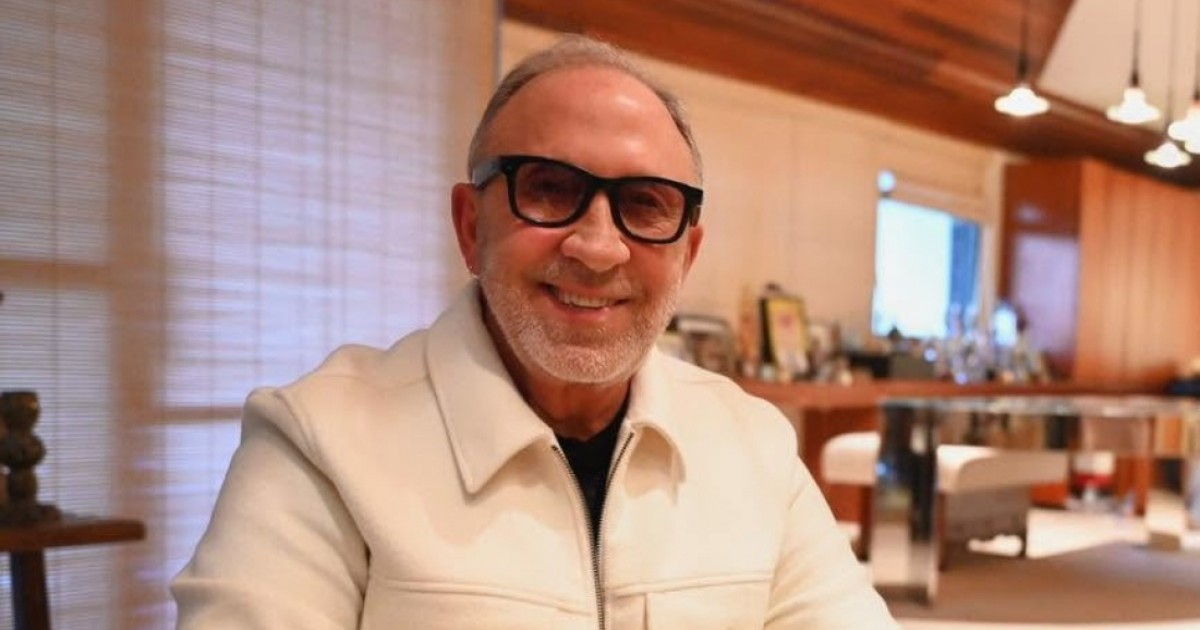
The Cuban-American music producer Emilio Estefan made it clear that he has no interest in investing or doing business in Cuba if a political transition occurs on the Island, and that his only desire is to bring hope to the Cuban people.
"I don't want anything from Cuba, I only want to give," said in an exclusive interview with journalist Gloria Ordaz for Telemundo 51.
The statements come at a time when pressure from Washington on the Cuban regime is increasing, and speculation is growing about what a post-Castro Cuba might look like, with many entrepreneurs looking at potential investment opportunities on the Island.
When asked whether he and Gloria Estefan would be part of the country's economic recovery, Estefan was emphatic: "In Cuba, we shouldn’t look for business; we need to help them during these times to restore their faith."
The producer also warned about the risks of a poorly managed transition, using Venezuela as a cautionary example. "You can't negotiate with communists, and if negotiations do occur, they must be in favor of what the United States stands for," he stated.
For Estefan, the change in Cuba must be generational and profound. "Cuba needs to hand over its future to a new generation, with new ideas, eager to work," he affirmed, a stance he has consistently maintained throughout 2026.
In March, in an Instagram message, Estefan called for the departure of all regime leaders and expressed confidence in Secretary of State Marco Rubio: "The good thing is that we have Marco Rubio, one of our own, who knows the pain firsthand."
On June 6, at a FIFA event in Miami, he reiterated his faith in the new generations of Cubans: "I do have a lot of faith in the youth of Cuba."
Instead of business plans, their dream for a free Cuba is cultural: a large mass concert featuring artists from the exile community, including Willy Chirino.
When describing where she would like to celebrate it, she replied without hesitation: "In a very large place where people can dance, where a different sun can be seen, and where I can see a child with hope on the street, walking with shining eyes."
Esefan and Gloria have a long history of activism for Cuba from exile.
They participated in the concert for the Cuban rafters at the Guantanamo Naval Base in 1995 and personally called for the massive march for the Ladies in White on Calle Ocho in Miami in March 2010. Gloria also sang in front of Pope John Paul II and took the opportunity to call for freedom for Cuba.
For Emilio, the role of exile in a future transition should not focus on politics or business, but on unity. "The main thing is that the exile must be very united. Here, it cannot be a political issue. It cannot be Democrat or Republican," he emphasized.
The backdrop is a Cuba in deep crisis: blackouts lasting up to 20-22 hours a day, over 1,245 recorded protests in March—the highest monthly figure since July 11, 2021—and a 23% decline in GDP since 2019, worsened by the cut in Venezuelan oil supplies following Nicolás Maduro's downfall.
"There has been so much suffering and pain experienced by the Cuban exile," Estefan reflected, summarizing in one sentence the reason why, while others make economic plans for the future of the Island, he insists that his mission is much simpler: to give, not to receive.
Filed under: