
Related videos:
The Florida Agriculture Commissioner, Wilton Simpson, has extended a temporary moratorium on the importation of warm-blooded animals from parts of Texas and New Mexico, following new detections of the destructive New World screwworm in both states.
The initial emergency order was issued on June 5, after the U.S. Department of Agriculture (USDA) confirmed the first case in a three-week-old calf in Zavala County, Texas, marking the first reintroduction of the parasite to the continental United States in decades.
By June 8, the USDA had confirmed a total of six domestic cases: four cattle, one goat, and one dog, with detections extending to the counties of La Salle and Gillespie in Texas, and one case in a dog in Lea County, New Mexico.
The updated emergency rule establishes "infested zones" that include any county with confirmed detection and its neighboring counties, and prohibits the importation of rescue and shelter dogs and cats from the affected states until further notice.
All warm-blooded animals coming from high-risk areas must present a valid Official Veterinary Inspection Certificate for five days, which explicitly certifies that the animals are free from parasite larvae.
Animals coming from a county with confirmed detection or its surrounding counties will also require a state transport certificate and proof of preventive treatment.
Until now, no cases of the burrowing worm have been detected in Florida.
Simpson also obtained the approval of Governor Ron DeSantis to amend an existing executive order and maximize state resources in response to the threat.
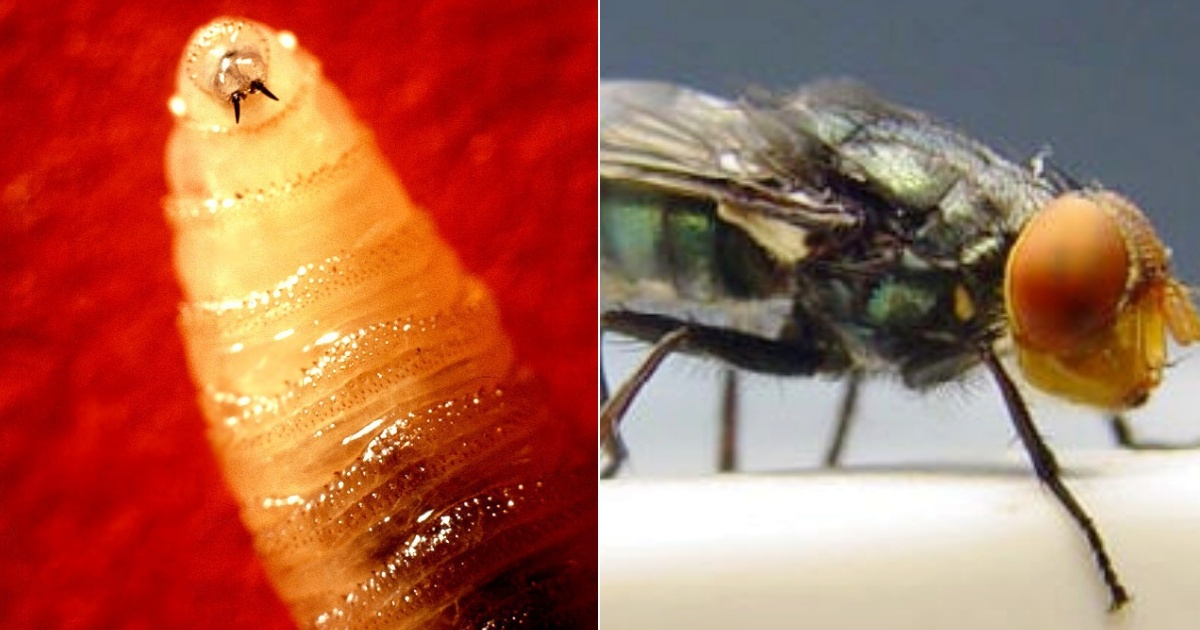
The New World screwworm is a parasitic fly whose larvae feed on the living tissue of warm-blooded animals, causing severe and potentially fatal wounds.
Authorities emphasized that the parasite does not affect the food chain: it does not infest meat, fruits, or vegetables.
The parasite was eradicated from the continental United States in 1966 through the USDA's sterile insect technique program, which involves releasing irradiated sterile males to interrupt reproduction.
The only recent precedent in the country was an outbreak in the Florida Keys in 2016-2017 that resulted in the death of 135 Key deer and required the release of 188 million sterile flies for its eradication.
The current re-entry is linked to the expansion of the parasite in Mexico since late 2024, with over 5,000 reported cases by August 2025 in states such as Chiapas, Tabasco, Oaxaca, and Veracruz, and an accelerated spread northward.
State authorities are urging veterinarians, livestock owners, and animal shelters to monitor slow-healing wounds that contain larvae.
"The New World screw-worm continues to be a rapidly changing situation, and Florida's response will continue to evolve as the facts on the ground change," stated Simpson.
"We will continue to be the most aggressive state in the country in protecting our livestock, pets, wildlife, people, and agricultural economy against this threat," he emphasized.
Filed under: