
Related videos:
After nearly 65 years of waiting, 44 Cuban workers and their families finally received the retirement funds they had accumulated in the United States before the embargo imposed on Cuba in 1960 cut off their access to that money.
The Board of Pensions of the Presbyterian Church (USA) announced this Wednesday from Philadelphia the completion of the process, bringing an end to a situation that for decades had left the retirement benefits of dozens of Cubans who had worked within the framework of that religious denomination frozen.
The beneficiaries had accumulated pension credits while being part of the New Jersey Synod until 1967, within the church's Defined Benefit Pension Plan. However, when the U.S. embargo went into effect, the payments were deposited in U.S. bank accounts that retirees residing in Cuba could not access.
What seemed like a temporary issue ended up lasting for generations.
Over the years, the Pension Board explored various avenues to deliver the funds to their recipients. It applied for special licenses from federal agencies, consulted with the Department of the Treasury, and worked with U.S. lawmakers in search of legal mechanisms to facilitate the transfers.
The obstacles, far from diminishing, increased over time. In 2019, financial operations to Cuba became more complex, and two years later, the organization's main banking partner permanently suspended money transfers to the island.
The situation began to change in 2024 thanks to the collaboration with Cuba Partners Network, a network linked to the World Mission office of the Presbyterian Church. The initiative made it possible to locate beneficiaries and their families, verify pending documentation, and overcome difficulties related to communication and technological infrastructure in Cuba.
"Shortly after those conversations, we began to receive the documentation we needed. It allowed us to move forward in a way that hadn't been possible before," explained Callie Sterkenburg, Deputy Director of Finance for the Board.
During the final stage of the process, Wender Ozuna, a member of the Operations team of the Plan, played a key role as a translator and liaison with the beneficiaries. Many of the communications were conducted through mobile messaging applications due to connectivity limitations on the island.
"They felt forgotten. Being able to tell them that we were still committed to them, and actually fulfilling that, meant a lot," stated Ozuna.
According to the organization, once the project is reactivated in 2024, each case could be resolved within a period of up to five months, although the total effort to unlock the payments extended over approximately three years.
The story traces back to the close ties that the Presbyterian churches of Cuba and the United States maintained for decades. In 1967, the Cuban congregation formally gained independence and became the Presbyterian-Reformed Church of Cuba. However, the retirement rights acquired prior to that separation remained in effect under the American system.
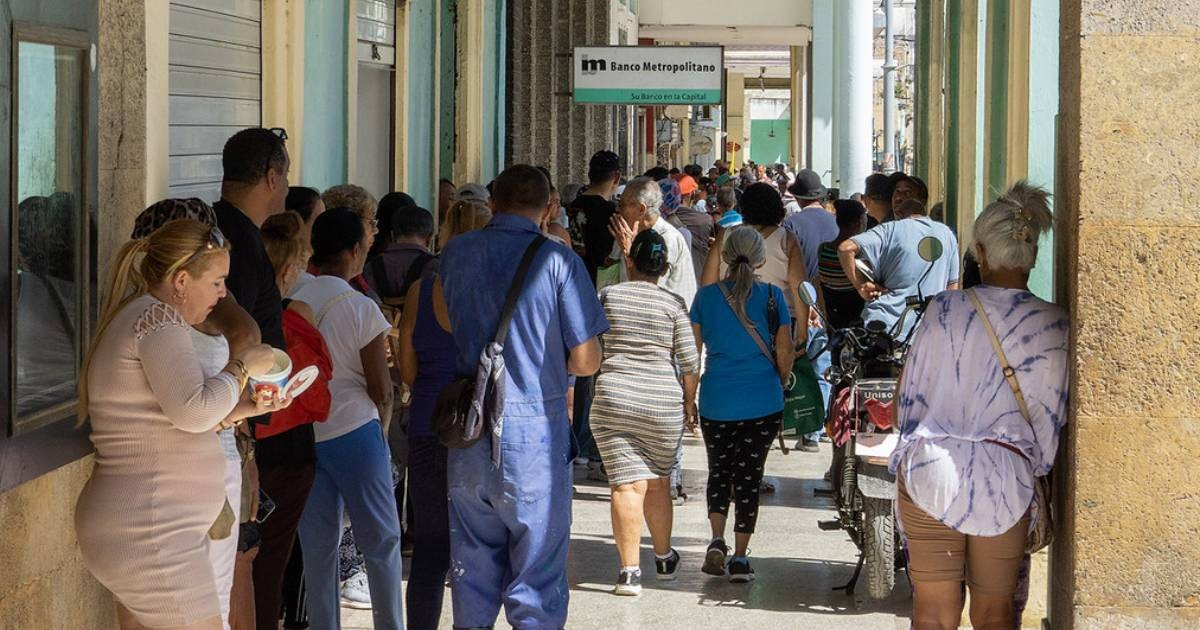
The delivery of these funds occurs at a particularly challenging time for Cuban retirees. This Wednesday, authorities from the province of Granma acknowledged the difficulties in ensuring the payment of pensions for the month, while thousands of retirees across the country are facing serious challenges in covering basic expenses.
Since September 2025, the minimum pension in Cuba is set at 4,000 pesos per month, an amount that amounts to barely a few dollars in the informal market and is insufficient to cover food, medications, and other essential expenses, according to various studies and surveys conducted on the island.
For the Pension Board, the definitive closure of this process represents much more than just an administrative task.
"This resolution closes the door on decades of perseverance by the Board’s employees. Our staff saw it as a matter of justice and stood firm to ensure that these individuals and their families received what they rightfully deserved," said Vivian D. Wesson, Executive Vice President and General Counsel of the organization.
Filed under: