
Related videos:
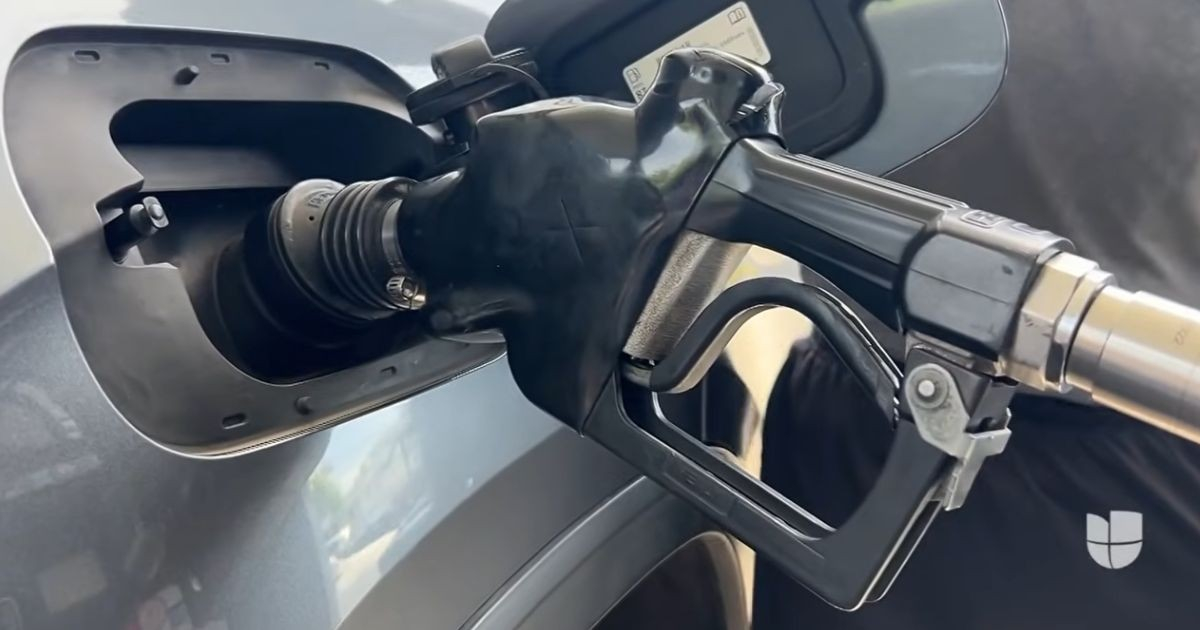
The average price of gasoline in the United States fell below 4 dollars per gallon this Thursday for the first time since March, providing direct relief for consumers just hours after President Donald Trump signed an agreement with Iran.
According to the American Automobile Association (AAA), the price of a gallon of regular gasoline is now $3.999 nationwide, following a 15% drop in the price of U.S. crude oil during June.
The agreement between Washington and Tehran requires Iran to reduce its stockpile of highly enriched uranium and lifts the sanctions backed by the United States.
The agreement, mediated by Pakistani Prime Minister Shehbaz Sharif, establishes a definitive ceasefire and initiates a 60-day period to negotiate the future of Iran's nuclear program, although Trump left the door open to resuming attacks if Iran fails to comply.
The drop at the pumps contrasts with the peaks recorded during the conflict: on May 21, 2026, a gallon reached the price of 4.56 dollars, and crude oil surpassed 125 dollars per barrel.
On Monday, the U.S. benchmark barrel was priced around 80 dollars, compared to 67 dollars before the war.
Despite the relief, prices remain about 25% higher than a year ago, when the gallon averaged $3.18, according to data from AAA collected by Axios.
The differences between states are significant. California records the highest price in the country at $5.64 per gallon, while South Carolina has the lowest at $3.58. Diesel remains above $5 per gallon nationwide.
Analysts warn that the full recovery of the energy market will be gradual.
The Strait of Hormuz —which before the conflict transported one-fifth of the world's crude oil— will take weeks or months to return to normal operations, with hundreds of ships still stranded in the Persian Gulf.
Gulf producers who cut their production will need time to reactivate it, and the refineries, which pay for crude oil a month or more in advance, will not immediately process cheaper products.
Expert Patrick De Haan from GasBuddy estimated that a third of the increase could be reversed in one to three months, another third in three to six months, and that returning to pre-war levels could take until early or mid-2027.
The conflict with Iran has not only impacted the energy market: the fighting in the Strait of Hormuz has also disrupted supply chains for fertilizers, food, and footwear, and companies expect high costs to persist for some time.
In political terms, the drop in prices offers some relief to Trump, whose rhetoric during the conflict—including the phrase “I’m not thinking about the financial situation of Americans”—resulted in a significant electoral cost ahead of the midterm elections.
According to Axios, the University of Michigan's consumer confidence index rose to 48.9 in June, marking its first improvement in five months, partly driven by relief in fuel prices.
Filed under: