
Related videos:
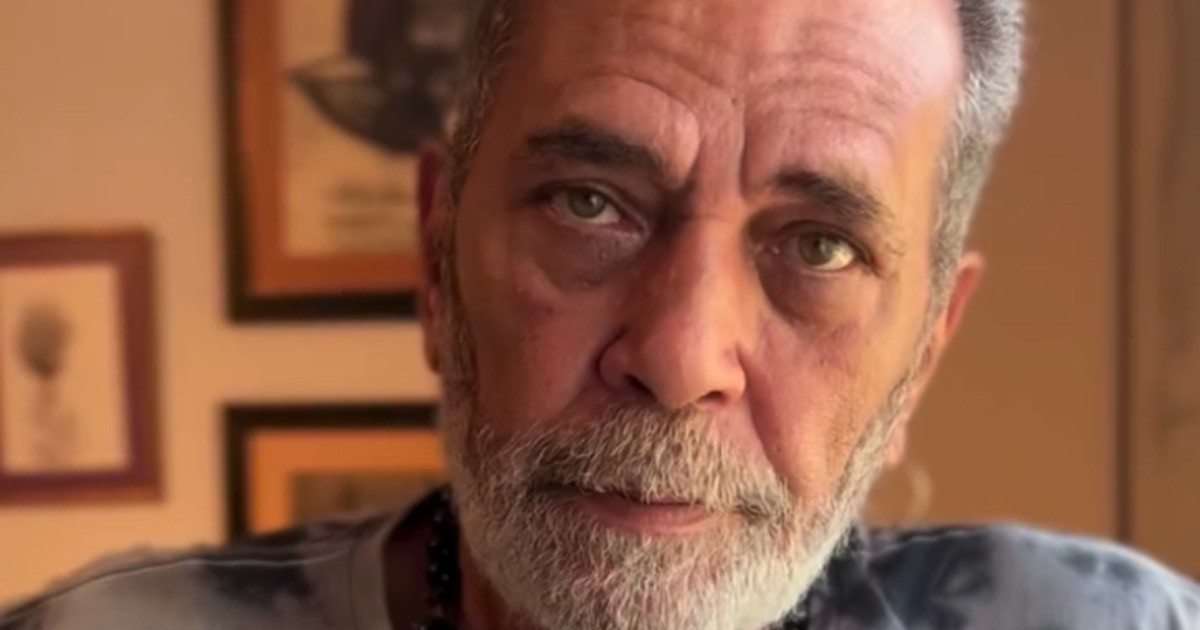
The actor Luis Alberto García reacted this Friday to the package of 176 economic measures announced by the National Assembly with an extensive text on Facebook written, as he himself warned at the beginning, “in the dark, with heat, mosquitoes, and a bad mood… you can’t imagine” — a description that straightforwardly summarizes the everyday reality of millions of Cubans.
The focus of his reflection is not the content of the measures, but the question that precedes them: why so late? García builds his argument on the idea of foresight as a fundamental political virtue and concludes that the Cuban government has systematically ignored it for decades.
"It was and will forever be a monumental oversight," he writes, listing the decisions he views as historical mistakes with no chance of correction: the dismantling of the sugar industry, the disappearance of the fishing fleet, the abandonment of salt and coffee production, and above all, the focus on building hotels while the electrical system crumbled. "True sovereignty lies in the ability to generate electricity in order to create wealth," he asserts.
The actor points out that over forty years ago, the world began transitioning towards renewable energies, while Cuba "was wearied by other matters that today yield and contribute nothing or almost nothing" to the quality of life of those residing on the island. He also questions whether the government has ever had advisors capable of warning about the fragility of its external support: first the Soviet bloc, then Venezuelan oil. "Do they have them today? Are they good? Or are they more obedient in their advice than courageous and realistic?" he asks.
About the reforms announced by Prime Minister Manuel Marrero —which include private banking for the first time since 1959, private currency exchanges, foreign franchises, and a gradual introduction of VAT— García is clear in his skepticism: "I do not believe that the upcoming measures, which are certainly not pleasant for them (as has been stated), will have the effect they seek. Out of time, under various pressures, without starting by publicly acknowledging long-standing injustices and errors or apologizing to an entire population both resident and non-resident within the national territory, along with a dysfunctional country, they will encounter obstacles built from negligence, stubbornness, and too much mistrust."
The actor recalls that similar proposals have been rejected for decades. He mentions the dismissal of Humberto Pérez and his team from the Central Planning Board for daring to propose reforms "that were considerably less conciliatory than those arriving tomorrow," and he recalls that the Varela Project also contained similar ideas. Those who defended them from civil society were precisely labeled: "They called us centrists. They tagged us as fifth columnists. They cataloged us as traitors in the making."
García also warns about what he calls an "incommensurable anthropological damage": the normalization of theft as a means of survival, double standards, fear of expressing opinions, and a bureaucratic policy that "promotes the most obedient rather than the most qualified." Repairing that damage, he writes, "will be a titanic task and will take a long time."
It also casts doubt on the confidence these measures can instill among potential investors: “Having seen and heard a political commissioner telling this people on National Television in a admonitory tone that the Party is the superior force that stands above the Constitution… can anyone with two brain cells trust investing here?”
The actor concludes his statement with a position he defines clearly: "I am not a pessimist. Cautious, yes. More than the eastern river. And I have been skeptical for quite a while." This reflection comes days after García publicly demanded that Cuban leaders experience the same hardships as the people: hunger, blackouts, and lack of medicine.
Filed under: