
Related videos:
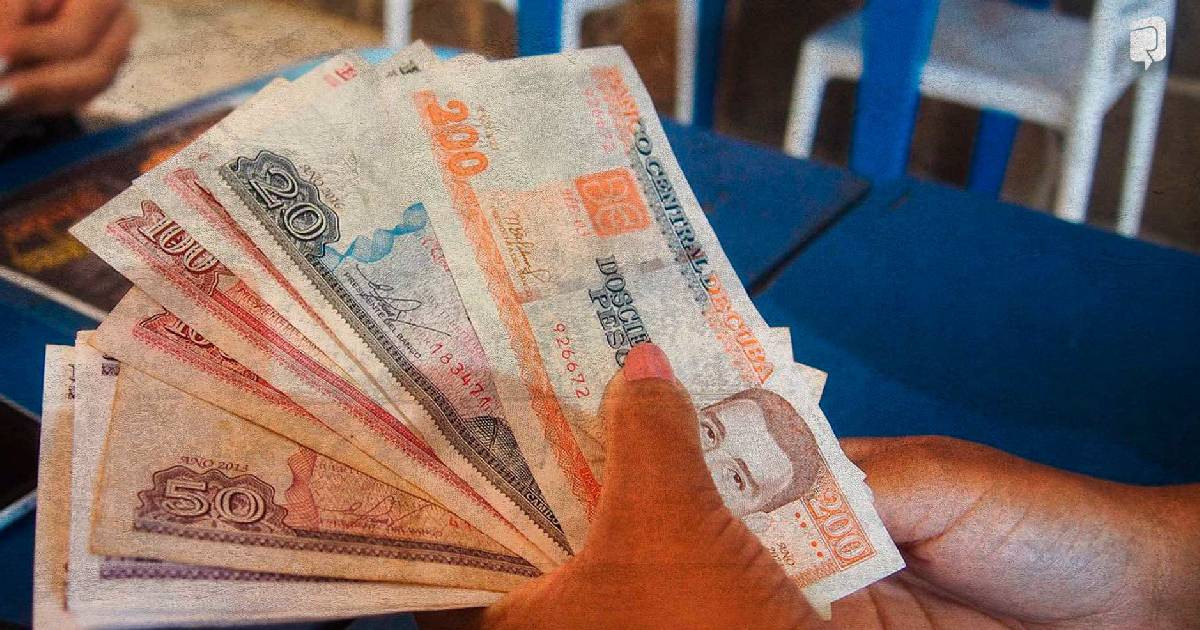
The announcement by the Cuban regime to raise the minimum wage to 3,210 pesos starting in July has sparked a wave of criticism on social media, where thousands of Cubans agreed that this amount is insufficient even to buy the most basic food items in the island's informal market.
The citizen reaction was triggered by a post this Saturday from the official profile Razones de Cuba that presented the increase from 2,100 to 3,210 pesos (53%) as "the most profound labor reform in decades."
Instead of generating enthusiasm, the comments reflected sarcasm, resignation, and disbelief.
"The salary reform means nothing without price control due to hyperinflation. As the dollar rises, so do prices. How is a solution to this reality expected to be provided?" wrote a user.
Another was more direct: "If the minimum wage is increased by 1,100 CUP, it would mean an increase of 1 USD per worker; the question is how significant this is."
The most frequently mentioned reference in the comments was the carton of eggs, which in the informal market ranges between 3,000 and 4,000 pesos; that is to say, it can cost more than the entire minimum wage.
"Congratulations, now they can even buy a dozen eggs, just that they might go up a little in price due to inflation. They'll be coming out with more papers for the street and will bring back one more empty bag," another commentator quipped.
Distrust in the Cuban peso was another central issue. "Don't talk to me about millions of pesos; we know our currency is worthless. That salary increase is just CENTS," declared a user.
On the current informal exchange rate this Saturday, of 695 pesos per dollar, the new minimum wage amounts to only 4.65 dollars per month.
The situation of doctors and teachers garnered a significant amount of outrage. “In any country in the world, a doctor is among the highest earners, except here. If this doesn't get fixed, we won’t have doctors,” warned a commentator.
Another added: "It will never be enough as long as prices keep rising because even a professional earns what a package of chicken costs; so how are we supposed to eat chicken?"
Retirees also voiced their dissatisfaction. A veterinarian with nearly 50 years of experience described how his pension of 520 pesos, established before the 2021 Reform, has become outdated. He pointed out that the new measures do not take into account those who contributed under the previous scheme. "At 76 years old, I have little time left in this world," he wrote.
Skepticism about the sustainability of the increase was widespread. "They raise wages and inflation will rise even more; opportunists will raise the prices of essential goods," warned one user.
Another pointed to the root of the problem: "The issue isn't about raising salaries, but about lowering the prices of basic goods; this has been proven in history and economics."
Several commentators pointed out that the state sector will continue to empty. "A sector that will be left empty to transition to non-state management methods," wrote a user.
Another described how the tax burdens imposed by the regime on state-owned enterprises—10% monthly and 35% quarterly on profits—make it unfeasible to retain workers.
The Prime Minister Manuel Marrero Cruz himself acknowledged before the National Assembly that the new salary "is still insufficient, but it is a first step based on real possibilities."
The economist Javier Pérez Capdevila estimated that a person needs approximately 96,060 pesos per month to cover basic expenses —30 times the new minimum wage— of which 70,070 are solely for food.
Filed under: