
Related videos:
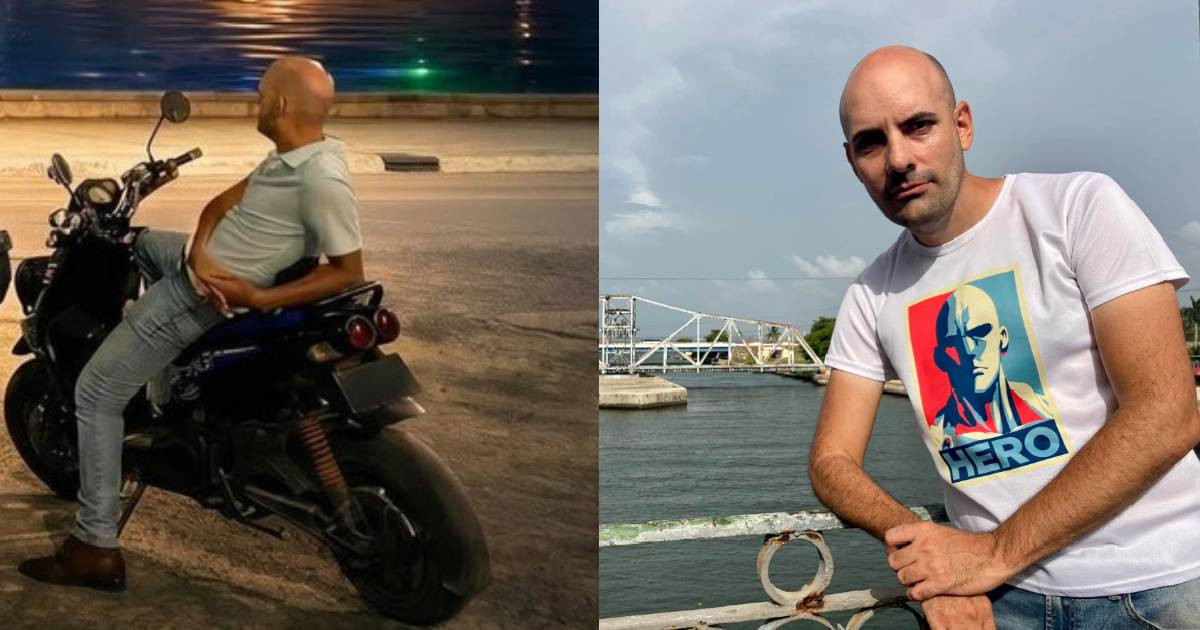
The singer Liliam Ojeda proposed on Saturday the idea of starting a public fundraising campaign to help the Cuban cyberworker Javier Bobadilla, whose motorcycle was stolen from the garage where he kept it, leaving him without his main source of income as a messenger.
Ojeda narrated the case on his Facebook profile with a direct call for solidarity: "My partner Javier Bobadilla had his motorcycle stolen. From the same garage, tucked away; one day it was there and the next it was gone. No one knows what happened."
The stolen vehicle was not a dispensable asset; it was the livelihood of their home.
"The motorcycle that was stolen from him was his livelihood; in Javier's gao, they eat thanks to the delivery service," Ojeda wrote, while emphasizing that Bobadilla, despite his well-known presence on social media as a writer of sharp reflections on Cuban reality, has to work to make a living.
The fundraiser aims to gather the remaining $300 that Bobadilla needs to complete the payment for a bike that a contact would arrange and send from abroad.
"I don't know how crowdfunding works. I know that my partner Javier deserves my support, and that's what this effort is about: helping someone regain the means to keep putting food on the table," explained Ojeda, who also published the card number to receive donations.
Javier Alejandro Bobadilla Díaz was born in Havana in 1979. He holds a degree in Cybernetics and is a writer with a solid track record of activism on social media, where he addresses political and social issues in Cuba with particular insight.
The theft is part of a rising wave of motorcycle robberies on the island, driven by the economic crisis and the collapse of public transportation.
The Cuban Civil Audit Observatory documented 2,833 verified crimes in 2025, a 115% increase compared to 2024 and a 337% rise from 2023, with thefts being the most common offense, registering 1,536 cases.
Given the slow response of the police, Cubans have developed two parallel responses: direct civic action and solidarity through networks.
A few days ago, neighbors of Vedado captured a man who attacked a young woman to steal her electric motorcycle and handed him over to the National Revolutionary Police.
In April, a young person with a disability from Centro Habana also publicly reported the theft of his adapted motorcycle for individuals with reduced mobility, his only means of transportation.
And in May, another Cuban reported on social media the theft of his motorcycle shortly after having acquired it with great effort, in a pattern that is increasingly recurring on the island.
Electric motorcycles have become one of the most sought-after assets by criminals in Cuba due to their high value in the informal market, in a context where they serve as tools for work and survival for thousands of families.
Filed under: