
Related videos:
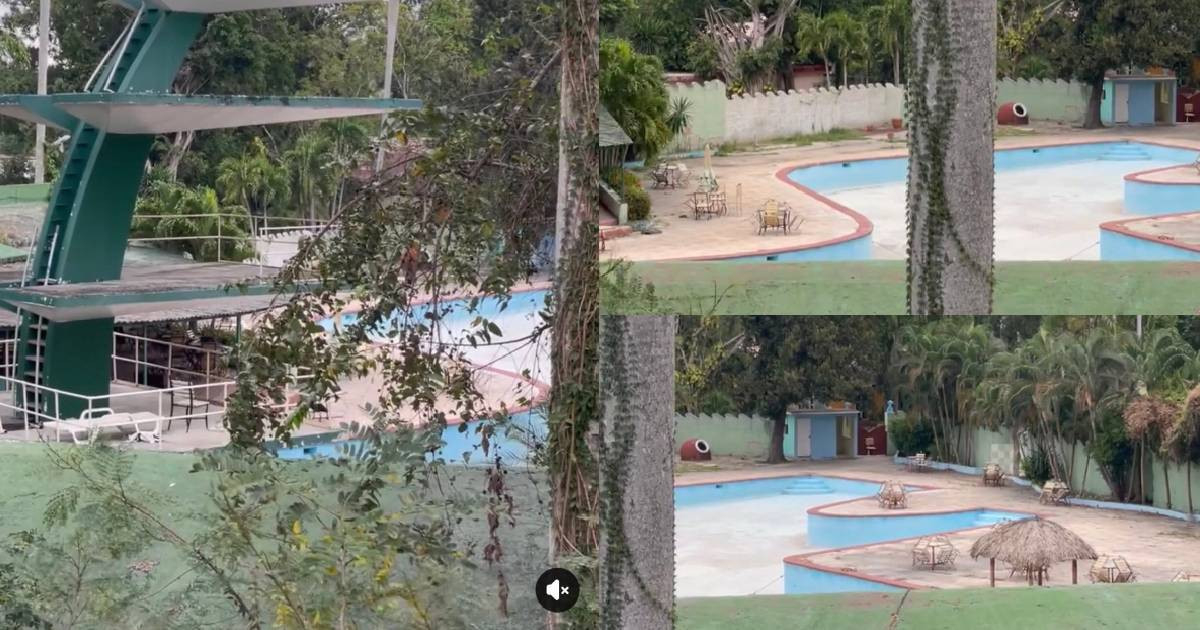
Images circulated on social media show the Río Cristal Complex in the Boyeros municipality of the capital, transformed into a space of complete neglect, with empty pools, sports courts overgrown with vegetation, and rusty diving towers that are unused.
The snapshots shared on Thursday by the user Santiago Miguel Díaz Herrera on his Facebook profile reveal a deterioration that brutally contrasts with the million-dollar renovation that the regime itself financed less than a decade ago.
In August 2017, the complex was reopened after an investment of 6.8 million pesos, featuring a restaurant for 140 diners, a swimming pool, a dance area, a WiFi park, a children's space, and entertainment rooms. Today, the place looks unrecognizable.
The citizen reaction on social media was immediate. "Neither River. Nor Crystal. Nor Rocks. Nor Nature. It's TOTAL Abandonment. CUBA is INJURED. With a lot of PAIN," wrote a user.
Another recalled nostalgically: "What a pain. How I used to go to that place full of Life. And Nature. Today it is Sadness."
The outrage also highlighted the contradictions of the system. "But you try to rent it to invest, and everything is a problem; it's better to have it in ruins," pointed out a commentator, referring to the bureaucratic obstacles that hinder private management.
Another user was more direct: "Let a retired general handle it now so they can see."
"Cuba is completely destroyed," summarized a citizen in the comments, in a phrase that encapsulates what the images from Río Cristal once again confirm.
The contrast with the official discourse is striking. In July 2025, the official newspaper Tribuna de La Habana highlighted that Río Cristal is "making progress in its comprehensive recovery," a claim that the images shared on social media completely contradict.
The case is not isolated. A few days ago, the historic Lincoln Hotel was reported in a state of complete abandonment, closed and without windows, just two years after its reopening.
The Raúl Díaz Argüelles Sports Complex, built for the 1991 Pan American Games, has been documented with rust, weeds, and flooded pathways.
In April, historian Fabio Fernández stated that the XI Festival de Alamar cinema reached "total collapse", with rusted seats and vegetation growing among the debris.
The pattern repeats throughout the Island: remodeled facilities funded by public money that fall back into neglect within a few years, while tourism collapses.
In the first quarter of this year, Cuba received 328,608 international visitors, a decrease of 55.8% compared to the same period in 2025, with a hotel occupancy rate of just 21.5%.
Filed under: