
Related videos:
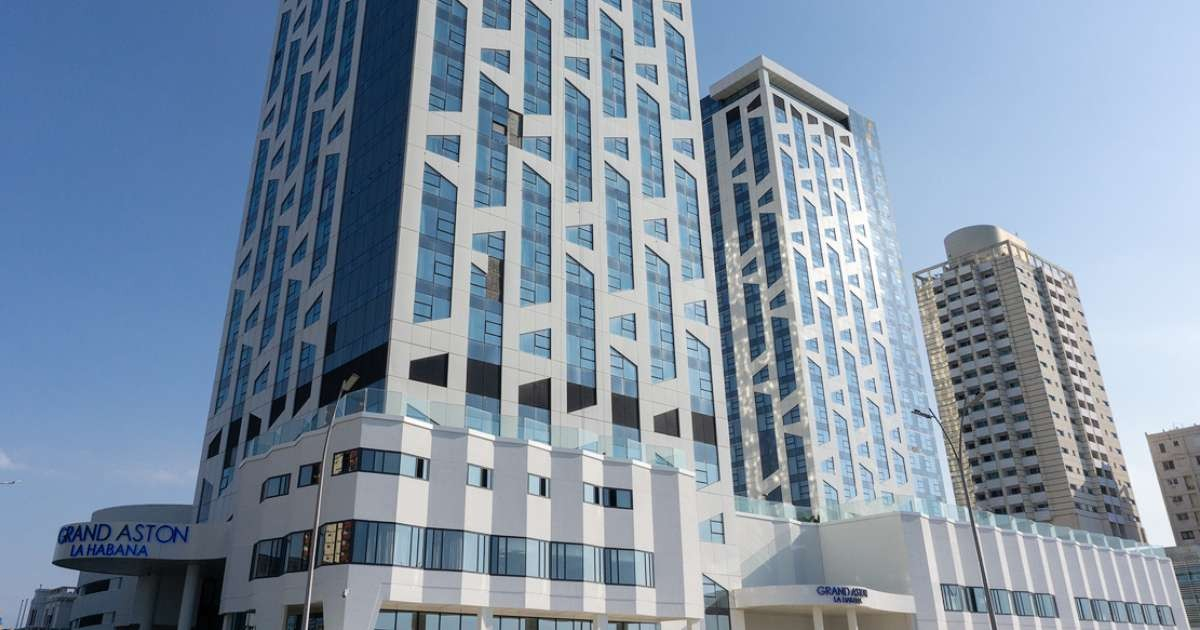
The Grand Aston La Habana hotel, one of the most iconic tourist establishments in the Cuban capital, has temporarily closed its doors due to a lack of fuel, as confirmed to CubaNet by a staff member who requested to remain anonymous to avoid retaliation.
The fountain outlined red ribbons at the entrances to the building and the evacuation of guests who were staying there.
"Outside, there are the red tape barriers. They evacuated the guests, and the management has stated that it will be temporarily closed until the situation improves," he reported.
Those who approached the hotel this Tuesday to inquire about its services received a uniform response: "We are closed due to lack of fuel."
The worker also pointed out that the facility is not among those prioritized by the Ministry of Tourism to receive electricity generator supply.
"Other hotels operate with generators, but the Aston has not been one of the prioritized ones," he stated.
The Grand Aston, located facing the Havana Malecón in El Vedado, opened in March 2022 with 600 rooms and was presented by official media as a milestone of Cuban tourism.
The official Cubadebate then promoted it as "a new hotel, with three event halls" and "an infinity pool that seems to merge with the sea."
The closure comes after a series of blows that have shaken the hotel in recent months.
In May 2026, images of the completely deserted Grand Aston exterior, with no taxis or visitors, circulated on social media.
In December 2025, the facility was reported for the massive waste of food while millions of Cubans faced a food crisis.
At the operational level, Archipelago International, the Indonesian group managing the Grand Aston and five other hotels under the Aston brand in Cuba, announced its departure on May 30, 2026.
The company withdrew to avoid the secondary sanctions imposed by Executive Order 14404, signed by Donald Trump on May 1, 2026, which penalizes foreign companies with business ties to GAESA, the Cuban military conglomerate that controls the island's tourism sector.
The deadline for divestment expired on June 5.
The exit of Archipelago adds to that of other chains such as Meliá, Iberostar, and Blue Diamond Resorts, which also left Cuba following U.S. sanctions.
Visa and Mastercard suspended transactions on the island starting June 6, after severing ties with Fincimex, an entity linked to GAESA.
The result is that almost 100 tourist facilities were left without an international operator.
The overall outlook for Cuban tourism is devastating. Only 30,883 tourists arrived in Cuba in May 2026, the lowest monthly figure in years, with a cumulative decline of 58.4% in the first five months of the year.
Hotel occupancy does not exceed 10%, and the government has implemented a "tourist consolidation" strategy since February, resulting in the closure of dozens of hotels across the country.
The Spanish chain Barceló, which still operates on the island, has already indicated its intention to leave: "We do not want to take any risks," the company stated when announcing that it plans to exit Cuba in 2027.
Filed under: