
Related videos:
Last night, around eleven o'clock, I spoke with a source in a unit of the Ministry of Interior in Western Cuba. What they told me is scandalous but very representative of an extremely hypocritical and immoral regime.
According to this source, heads of their unit remarked that the earthquake in Venezuela provided them with a breather, just as the war between the United States and Israel against the fundamentalists in Iran had done before. The explanation is stark: the Venezuelan tragedy could delay the process of democratic transition in that country and distance or postpone any potential U.S. action against the Castro-communist dictatorship.
I have no evidence to claim that this is the official position of the higher-ups, but I don't dismiss it either. Those of us who understand the nature of the system know that its logic has always been to convert the suffering of others, certain “noble causes,” and international solidarity into propaganda tools to maintain its monopoly on power.
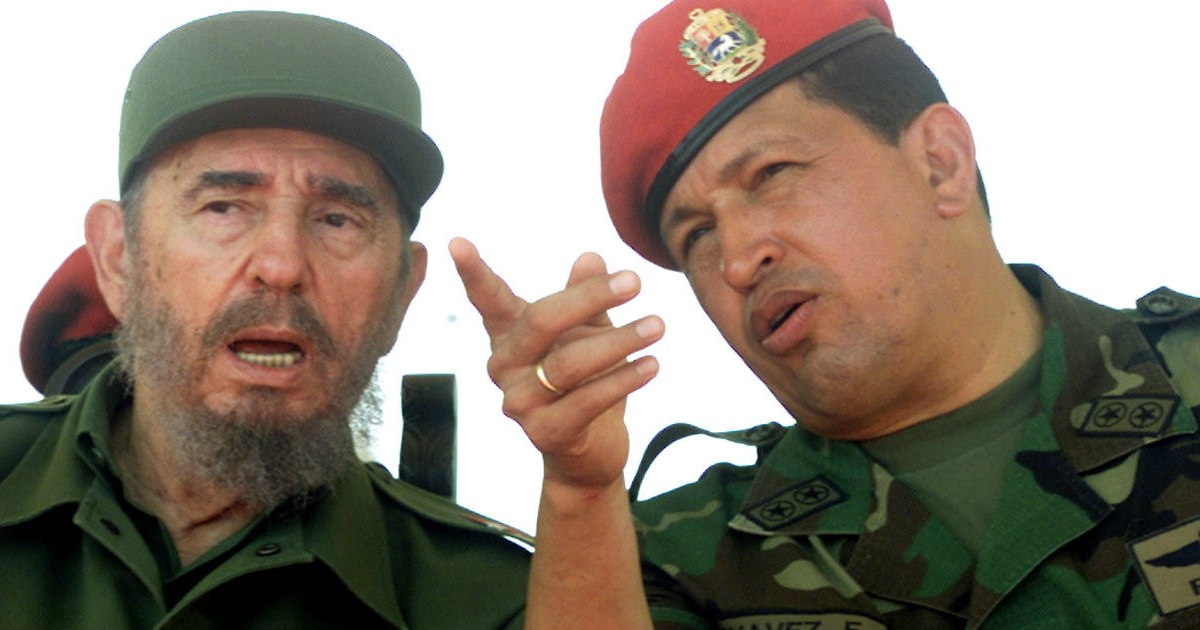
The alleged “deep,” “sincere,” “selfless,” and “eternal” friendship between Fidel Castro and Hugo Chávez had, from the very beginning, a side that was far from romantic. While both proclaimed brotherhood between nations, cooperative solidarity, and revolutionary unity, numerous testimonies from Cuban doctors described a system of pressures to inflate consultations, hospital admissions, treatments, and care statistics.
The Inter-American Commission on Human Rights has received reports of healthcare personnel being forced to meet targets tied to the economic objectives of missions. When there weren’t enough patients, some reported that they had to invent them; when the required numbers of admissions or procedures were not met, records were manipulated. In summary, a false image of medical activity was created, exceeding the actual level.
Doctors subjected to such pressures should not be blamed. Many have been victims of a repressive apparatus that could sanction them, repatriate them, affect their families, or take away the few material opportunities they found outside of Cuba. The responsibility lies with the mission leaders, political supervisors, and state structures that turn medicine into a tool for propaganda and profit.
The mechanism was clear: the greater the number of consultations, admissions, medications, and reported procedures, the greater the perceived "success" of the Cuban mission in Venezuela. This fiction justified the massive presence of Cuban personnel —including many intelligence agents— the cooperation agreements, the sale of services, and the substantial benefits received by Havana, all primarily supported by Venezuelan oil.
It is therefore particularly disturbing that, amid a human tragedy like that of Venezuela, certain sectors within the Cuban repressive structures view the earthquake as a strategic opportunity. While Venezuelan families search for the missing, bury their dead, and lose their homes, Cuban officials may be calculating how much additional time their dictatorship gains.
It would not be the first time that the Cuban regime sacrifices its proclaimed “principles” for the sake of its survival. In 1968, Fidel Castro acknowledged that the Soviet invasion of Czechoslovakia violated national sovereignty, but he justified it because, in his view, the socialist bloc had the right to prevent a country from leaving its orbit. He also supported the invasion of Afghanistan while he was presiding over the Non-Aligned Movement.
The lesson is clear: for Castroism, sovereignty is sacred when it protects its dictatorship; when it obstructs its allies or interests, it is relativized, reinterpreted, or crushed.
His campaigns in favor of "oppressed" peoples, his speeches against "imperialism," and his calls for solidarity have deceived many and still retain supporters. Stalin, Hitler, and especially Mao Zedong, the greatest criminals of contemporary history, have their followers as well. "There is nothing new under the sun," says Ecclesiastes.
While the United States —the most supportive country in the world—, El Salvador and Argentina, governments often defamed by Castro-Chavist propaganda, along with other nations, send rescue teams and humanitarian aid to Venezuela, the Castros and Díaz-Canel are calculating how to profit from the tragedy. And what is most outrageous is that, all too often, they end up reaping abundant benefits from the suffering of others.
Filed under:
Opinion article: Las declaraciones y opiniones expresadas en este artículo son de exclusiva responsabilidad de su autor y no representan necesariamente el punto de vista de CiberCuba.