
Related videos:
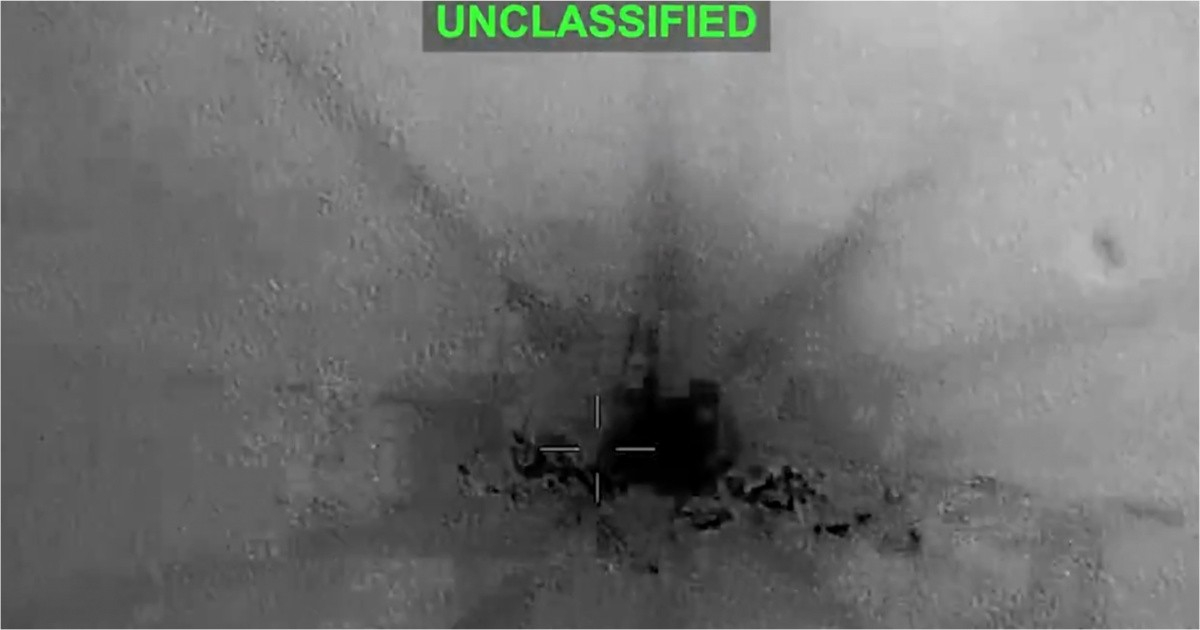
U.S. forces carried out new airstrikes on missile and drone storage facilities, coastal radars, and Iranian air defense installations near the Strait of Hormuz on Saturday, in response to a drone attack launched by Iran on Thursday against commercial vessels in the same area.
The United States Central Command (CENTCOM) described the action as "a powerful response to yesterday's attack on a commercial vessel passing through the Strait of Hormuz" and warned that "the unnecessary aggression against maritime commerce by Iranian forces clearly violated the ceasefire."
President Donald Trump accused Iran of having launched "at least four one-way attack drones" against merchant vessels in the Strait of Hormuz on Thursday, June 25, which he considers a direct violation of the Memorandum of Understanding from Islamabad, signed only on June 17 and 19 with mediation from Pakistan and Qatar.
One of those drones struck the upper deck of the M/V Ever Lovely, a Singapore-flagged vessel, causing material damage to the bridge. The other three projectiles were intercepted. The crew did not suffer any casualties, and the ship continued on its route.
Iran did not take long to respond. The Islamic Revolutionary Guard Corps (IRGC) described its reaction as "swift and decisive" and claimed to have launched four missiles against U.S. military facilities in the region, including Camp Arifjan in Kuwait, which is described as a crucial hub for U.S. operations in the Middle East.
Bahrain also reported being targeted by Iranian drones in what was interpreted as an additional reprisal for the U.S. bombings, while the Iranian Ministry of Foreign Affairs labeled the U.S. military as "terrorist."
At the same time, Iran claimed to have attacked U.S. military positions at various locations in the region, extending the geographical scope of the conflict beyond the Persian Gulf.
The Joint Maritime Information Center raised the regional threat level for navigation in the Strait of Hormuz, a route through which approximately 20% of the world's oil passes. Ship escort operations through the strait had been temporarily paused by the International Maritime Organization on Thursday following reports of an attack on the Ever Lovely.
Trump also revealed that U.S. forces have destroyed Iranian vessels used to lay mines in the area. While the military confirmed the elimination of 16 of those ships, the president raised the figure before reporters in Cincinnati, Ohio: “They’ve hit 28 mine vessels up to this point.”
Israel, for its part, continued its attacks against Hezbollah infrastructure in southern Beirut and other areas of Lebanon, in a parallel conflict that by June 26 had resulted in more than 4,230 dead and 12,179 injured Lebanese, with over one million displaced.
Amid the escalation, the U.S., Lebanon, and Israel reached a new trilateral agreement in Washington to reconfigure security arrangements along the Lebanese border, a sign that diplomacy has not ceased despite the ongoing clashes.
The Islamabad Memorandum, which established a ceasefire and a 60-day deadline to negotiate a definitive agreement on the Iranian nuclear program—along with the release of approximately 12 billion dollars in frozen assets—now faces its most severe test, just a week after its signing.
Filed under: