
Related videos:
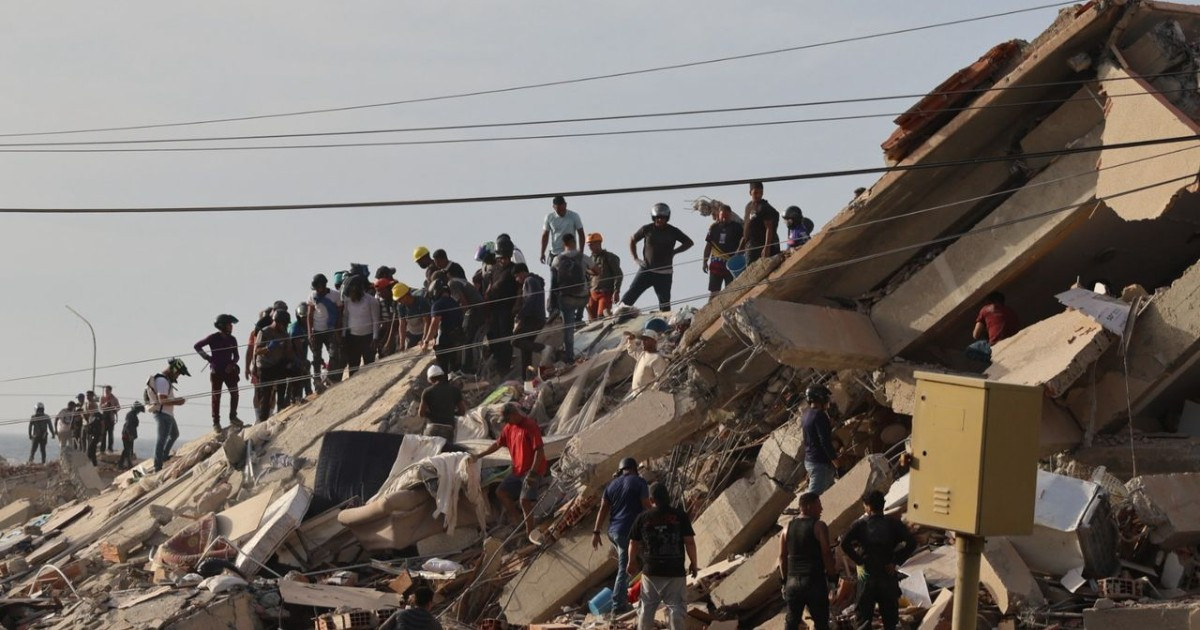
The UN Refugee Agency (UNHCR) warned this Tuesday that the humanitarian situation in the Venezuelan areas devastated by the earthquakes on June 24 is deteriorating at an alarming rate, with food shortages, collapse of basic services, and thousands of people sleeping on the streets and in public spaces.
"The humanitarian situation in the affected areas has rapidly deteriorated," stated Carlotta Wolf, spokesperson for UNHCR, during a press conference at the Palace of Nations in Geneva.
The field assessments conducted on June 26 and 27 in five states —La Guaira, Distrito Capital, Miranda, Aragua, and Carabobo— revealed data that reflect the magnitude of the disaster: 75% of respondents reported injuries in their communities, and 56% confirmed fatalities.
The housing situation is critical. According to Wolf, "half of the assessed individuals are seeking refuge in the homes of family or neighbors, while 39 percent remain on the streets and in public spaces, and the rest are in churches, schools, or makeshift facilities that do not meet minimum standards of protection, privacy, or hygiene."
One of the most concerning statistics is the situation concerning children: 17% of respondents reported the presence of unaccompanied minors or those separated from their families in their communities. The Protection Cluster led by UNHCR has launched a campaign for identification, search, and family reunification to address this emergency within the emergency.
The official toll of victims, announced by Jorge Rodríguez, president of the Venezuelan National Assembly, stood as of June 29 at 1,719 dead, at least 5,034 injured, and 15,866 affected. However, these figures contrast sharply with international estimates: the UN reports a figure of up to 50,000 missing, while the citizen platform Encuéntralos recorded between 55,000 and 60,000 people unaccounted for.
The IOM estimated that 6.76 million people were affected by the earthquakes, including approximately two million residents of Caracas. The material damages are equally devastating: 189 structures completely collapsed, and an additional 666 experienced partial collapses or severe damage.
The crisis is worsening in a Venezuela that was already facing a severe humanitarian situation before the earthquakes, with 7.9 million people in need of assistance, 56% of the population living in extreme poverty, and decades of infrastructure deterioration under the chavista regime. Tom Fletcher, the UN Humanitarian Affairs Coordinator, had described the situation as "truly terrifying devastation."
To address the emergency, UNHCR strengthens its response on the ground by transferring supplies from its warehouse in Táchira to La Guaira and mobilizing over twenty tons of humanitarian aid items from its global reserves in Panama. Caritas, a partner of UNHCR, has also established a donation reception and storage center at the facilities of the Episcopal Conference.
The agency estimates that it needs 14.85 million dollars to ensure protection services, essentials, and temporary housing for 30,000 people over six months, a figure that illustrates the scale of the effort needed to stabilize a situation that, according to the UN itself, is deteriorating every hour.
Filed under: