
Related videos:
Civil engineers and construction specialists are demanding an urgent audit of the public housing that remains standing after the earthquakes of June 24 from the Venezuelan government, warning that decades of negligence and corruption under the administrations of Hugo Chávez and Nicolás Maduro have likely exacerbated the number of victims of the disaster, according to a report by Reuters.
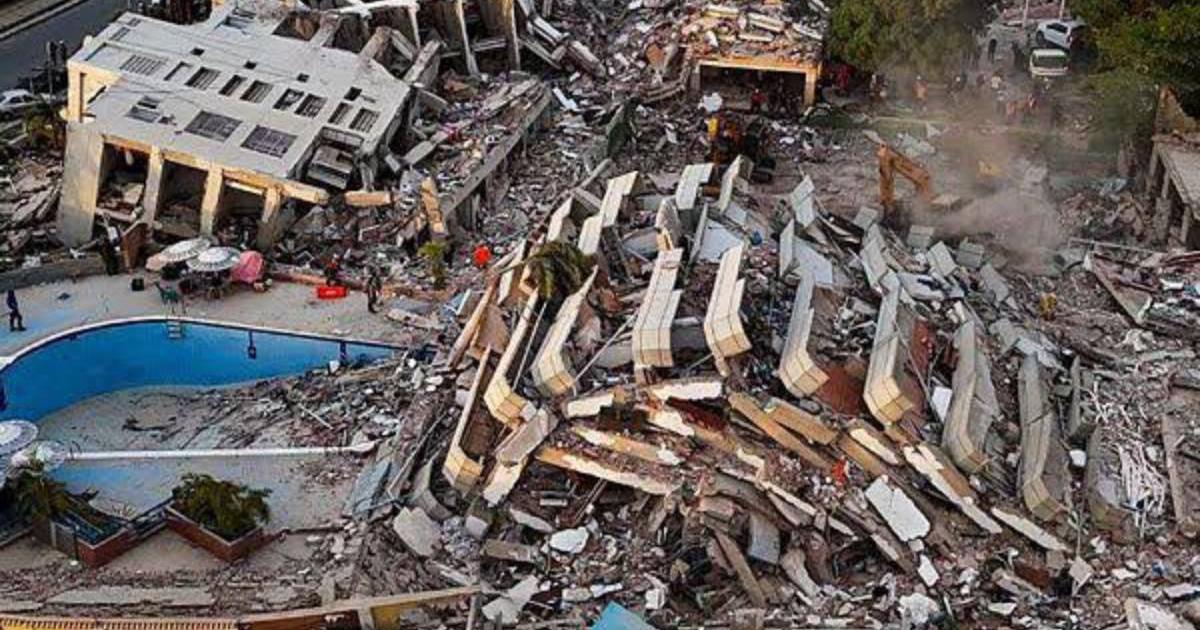
On June 29, two consecutive earthquakes destroyed parts of a complex of 1,100 public housing units, adding more devastation to a country that already reported, as of this Wednesday, at least 2,295 deceased, over 10,571 injured, and more than 54,000 missing.
Experts directly point to the constructive legacy of chavismo as an exacerbating factor in the disaster.
"The history of Chávez's public housing is one of corruption and low-quality constructions built without supervision, inspection, or adherence to specific codes in many cases," declared Casanova, one of the specialists consulted by Reuters.
The Great Mission Housing Venezuela (GMVV), a program that between 2011 and 2017 built more than 1.3 million housing units for low-income families, has come under intense criticism. Several of its buildings were constructed in geologically hazardous areas, with pre-existing cracks and fissures, and without adhering to seismic-resistant standards.
Professionals indicate that the lack of enforcement of building codes, soil instability, and faulty licensing practices under both governments "likely exacerbated the human cost of the disaster," although they acknowledge that it is still too early to accurately determine why specific buildings collapsed.
As rescue teams continue to search for survivors among the ruins—by June 30, they had rescued 6,461 people and another 13,400 managed to escape on their own—engineers fear that other structures remain vulnerable.
Facing that looming threat, architect and civil engineer Glennys González coordinates dozens of volunteer professionals who provide assessments directly to citizens, in response to the government's inaction.
"The initial evaluation of our group suggests that the codes were not adhered to in many cases, but studies need to be conducted to determine why some structures withstood the impact while others completely collapsed," explained González.
The structural situation is alarming: approximately 63,000 buildings were damaged nationwide, 434 buildings completely collapsed just in Catia La Mar —30% of the constructions in that area— and 750 show severe structural damage in the Capital, La Guaira, and Carabobo districts.
Maduro's government has faced criticism for its slow response to technical support offers. Although it has held meetings with the country's leading professional engineering association, it has not initiated formal assessments.
On Sunday, June 29, the interim president Delcy Rodríguez announced the creation of a commission to review the damaged structures, but did not specify when the work would begin, which has led to increasing frustration among specialists.
The economic losses resulting from the disaster are estimated at 6.7 billion dollars according to a satellite assessment by the United Nations Development Programme (UNDP), a figure that reflects the cost of years of construction without regulations in one of the most seismically active areas of South America.
Filed under: