
Related videos:
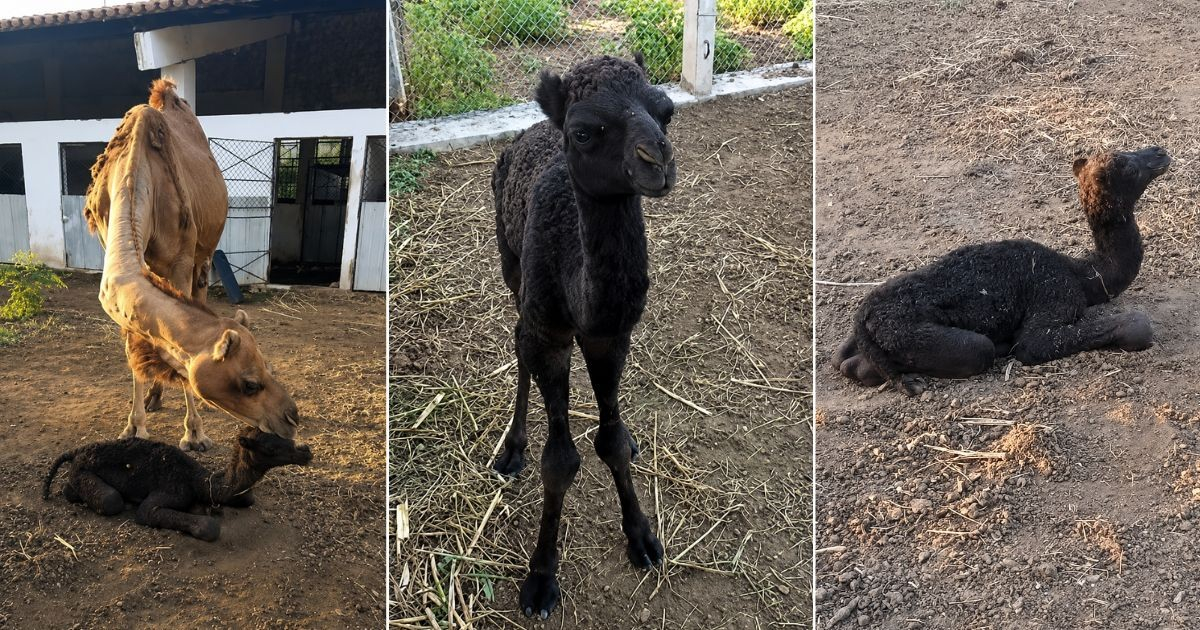
The National Zoo of Cuba recorded the birth of a camel (Camelus dromedarius) this July, the first in approximately three decades, as announced by the Cuban Zoological Company through its official Facebook page.
"After 30 years, a Dromedary (Camelus dromedarius) has been born at the National Zoo of Cuba. It is in perfect condition under the care of its mother and the technicians in the area," the institution stated in its announcement.
The photos published alongside the announcement show the cub with a striking dark black coat, a coloration that is very rare in the species, whose individuals usually exhibit beige, light brown, or sandy tones.
The images also show the mother leaning over her newborn, providing the typical postpartum care, while the baby rests on the dirt and straw floor of the enclosure.
The birth represents a milestone for the institution, given that the reproduction of the dromedary in captivity is particularly complex: gestation lasts between 13 and 15 months, each delivery typically produces a single offspring, and the mother does not separate from it during the first week of life.
Although it may seem surprising, the dromedary is a species that has been considered extinct in the wild for approximately 2,000 to 3,000 years; all the specimens that exist in the world are domestic or live in controlled environments.
The young of this species are born able to stand on their first day, and nursing can last between one to two years.
The zoo, located in Calabazar, Boyeros municipality, in Havana, was inaugurated in March 1984 and covers 340 hectares with over a hundred species, including Cuban native wildlife and exotic animals.
In recent years, the institution has been pivotal in the notable births of species that are difficult to breed in captivity.
In March 2021, four Bengal tigers were born via natural birth, and in June 2022, a male calf of a white rhinoceros entered the world, followed by another Bengal tiger in August of that same year.
The birth of the dromedary adds to that trend of reproductive achievements and solidifies the park as one of the most active ex situ conservation areas in the Caribbean.
Filed under: