
Related videos:
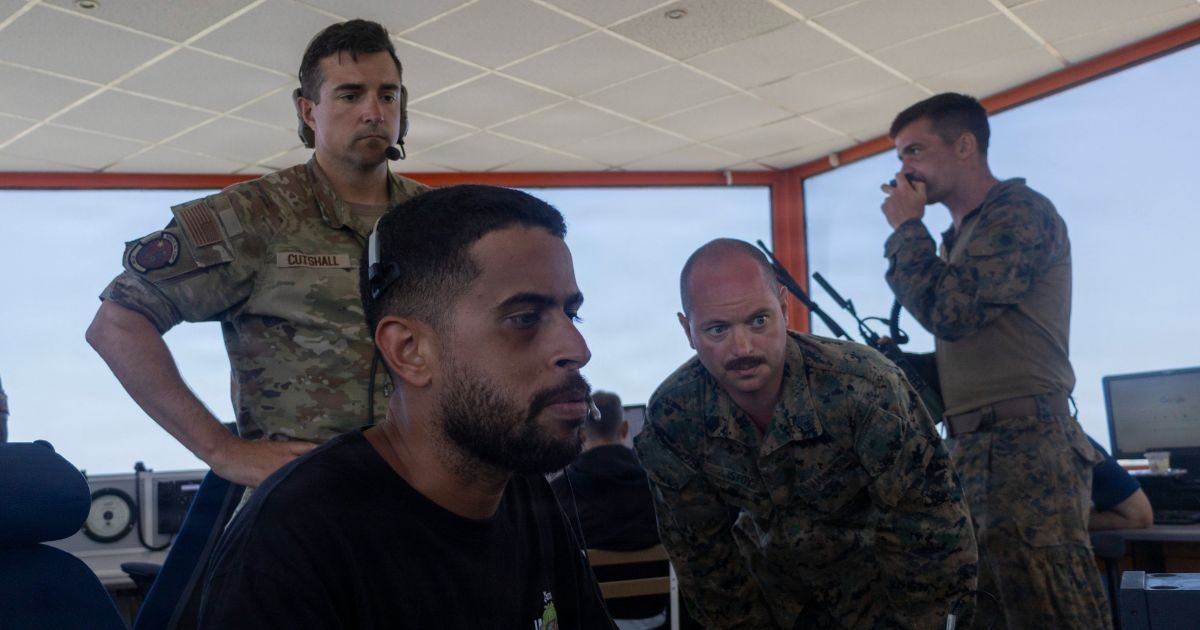
U.S. Marines and aviators took operational control of the air traffic control tower at Maiquetía Simón Bolívar International Airport, working alongside Venezuelan controllers since July 1, 2026, as confirmed by U.S. Southern Command (SOUTHCOM).
The deployment is in response to the devastating earthquakes of magnitudes 7.2 and 7.5 that struck Venezuela on June 24, leaving at least 2,954 dead and over 16,592 injured as of July 4, according to official figures.
The earthquake destroyed critical infrastructure at the airport: sunken roofs, cracked runways, and the collapse of the Area Control Center paralyzed the flow of international humanitarian aid to the country.
To reverse that situation, the 621st Contingency Response Wing of the U.S. Air Force deployed 110 specialized airmen who took over the management of tower and ground operations, restoring air traffic for humanitarian cargo.
According to SOUTHCOM, the intervention "has helped to clear logistical bottlenecks, ensuring that vital supplies, heavy equipment, and aid personnel reach the front lines."
The operation is executed under the direction of the State Department as part of the U.S. government's humanitarian response, in a coordination that SOUTHCOM described as direct support for operations led by civilian diplomacy.
The images shared by the Southern Command show military personnel in MultiCam and MARPAT uniforms — Air Force and Marines, respectively — working side by side with Venezuelan civilian controllers at the radar and communications consoles in the tower.
The U.S. raised its financial commitment to over 300 million dollars in aid, after President Donald Trump authorized an initial allocation of 150 million on June 25.
The military operation includes over 1,300 marines from the 24th Marine Expeditionary Unit, C-17, C-130, MV-22 Osprey, CH-47 Chinook aircraft, and UH-60 Blackhawk helicopters, in addition to the USS Fort Lauderdale operating in the Port of La Guaira with amphibious vessels.
The UN estimated up to 50,000 missing persons and more than 6.7 million people affected, while NASA assessed via satellite that 58,870 buildings were damaged or destroyed and over 1.2 million tons of debris were generated just in La Guaira.
The economic damages from the disaster are estimated at $6.7 billion, according to international sources, marking the worst seismic disaster in the recent history of Venezuela.
This is an unprecedented operation in terms of direct military cooperation between the U.S. and Venezuela, two countries that have not had full diplomatic relations for years, and that now share personnel in the control tower of Venezuela's main airport.
Filed under: