
Related videos:
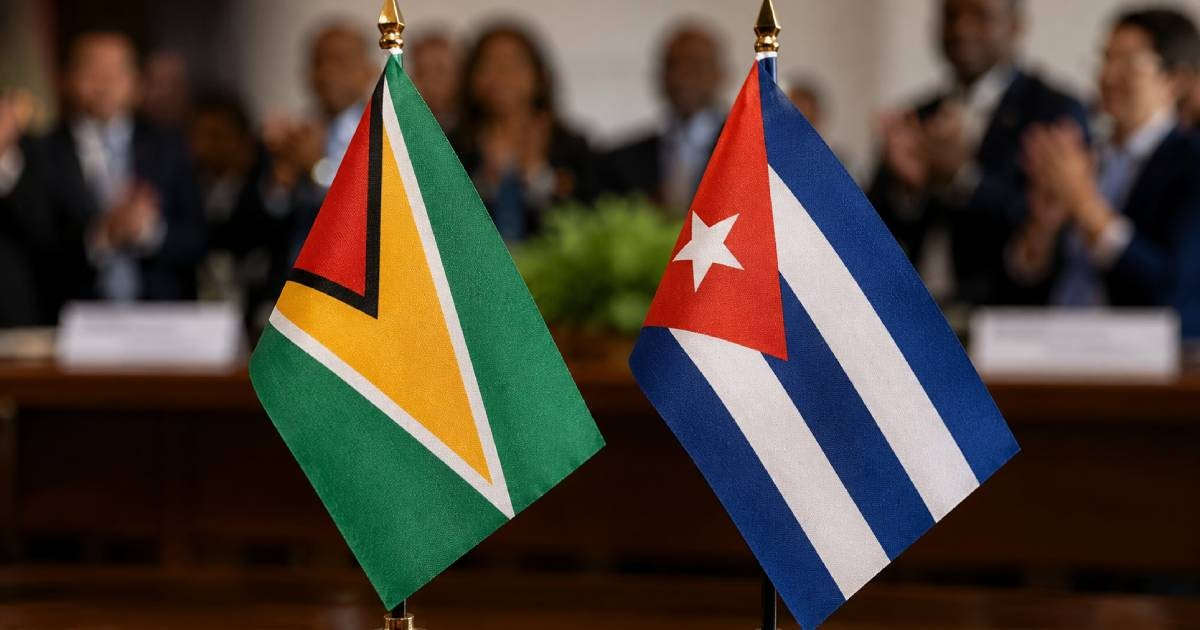
The Latin American Chamber of Commerce of Guyana (LAGCC) supported the Guyanese government's position on the Cuban crisis this Sunday, joining the official call for the future of the island to be determined through free and fair elections, while additionally advocating for market-oriented economic reforms as a means to stimulate the country's development.
The statement comes just two days after the Ministry of Foreign Affairs of Guyana released a statement asserting that "the solution to the current situation must be based on the will of the Cuban people and grounded in universal values, the rule of law, humanitarian rights, transparency, and good governance," according to information from the agency Efe.
In a statement released this Sunday and shared by Guyana Chronicle, the LAGCC expressed its support for the stance taken by President Irfaan Ali's government and stated that economic openness, accompanied by strong institutions and respect for the rule of law, is a key element for sustainable growth.
"Economic liberalization, when combined with the rule of law, transparency, good governance, and strong institutions, has consistently demonstrated its ability to attract investment, drive innovation, expand productive sectors, create jobs, and improve the quality of life of citizens," stated the chairman of the Chamber's Board of Directors, Dr. Youni Anthony Abdul.
The organization also highlighted Cuba's economic potential if structural changes are promoted.
"Expanding economic opportunities through market-oriented reforms, increased trade participation, and greater integration into international trade can unleash that potential and promote sustainable and inclusive economic growth," the statement notes.
Guyana maintains its pressure on Havana
The position expressed by Georgetown on Friday is not an isolated incident. In May of this year, during the Summit of the Americas organized by President Donald Trump, Irfaan Ali advocated for the need for a transition that would allow Cubans to access higher levels of prosperity and democracy.
"There must be dialogue, but these changes should lead to the improvement of the Cuban people. They should lead to better conditions for the people of Cuba, they should lead to a society in which the rule of law is celebrated, in which democracy is celebrated, in which freedom is celebrated," he stated during an interview with Fox News.
Guyana has not been the only Caribbean country to adopt a critical stance regarding the Cuban political system. The Prime Minister of Trinidad and Tobago, Kamla Persad-Bissessar, stated last February that she would not support "a dictatorship in Cuba... or anywhere else", during her participation in the same regional forum.
A debate that divides the Caribbean
The statements from Guyana and Trinidad and Tobago contrast with the traditional position of the Caribbean Community (Caricom), the regional bloc that both countries are part of, which has historically advocated for the lifting of the U.S. embargo against Cuba.
This difference was once again evident this weekend when the Regional Executive Committee of the Assembly of Caribbean Peoples urged Caricom leaders to call for an end to the embargo during the summit of heads of government that began this Sunday in Saint Lucia and will run until July 8.
The support of the main Latin American business organization in Guyana adds a new dimension to the regional debate on Cuba by combining the call for free elections with the advocacy for market economic reforms as part of a potential transformation of the island.
Filed under: