
Related videos:
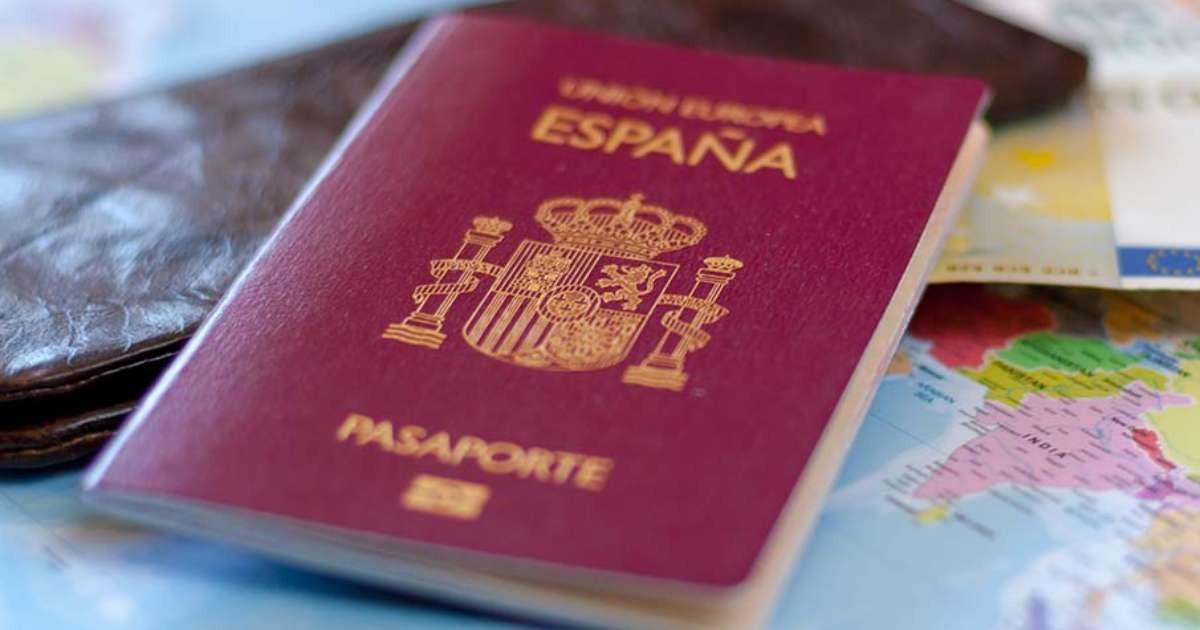
The so-called Law of Grandchildren threatens to radically transform the Spanish electoral map: according to an analysis published this Monday by El Mundo, the Register of Spaniards Resident Abroad (CERA) could increase from the current 2.7 million voters to nearly five million, which has reopened a fundamental debate about whether it makes sense for people who have never set foot in Spain to decide who governs the country.
Since the approval of the Democratic Memory Law in October 2022, the CERA has already grown by 20%, and the numbers are expected to surge when the consulates finish processing the 2.4 million pending nationality applications, with a rejection rate of no more than 2%.
If the 10% participation recorded in the general elections of 2023 is maintained, that universe of nearly five million voters would translate into about half a million votes from abroad, with the potential to sway the outcome in small constituencies ahead of the elections scheduled for 2027.
The political scientist Manuel Mostaza summarizes the concern that pervades the debate: “Does it make sense for people who have never lived here, who do not pay taxes, and who do not have the same responsibility for their vote as residents to be part of the political community? I find it strange that the last seat can be decided by someone who was not born in Spain.”
The controversy originates from an instruction from the Ministry of Justice signed by Sofía Puente — sister of Minister Óscar Puente — just a few days after the law was approved, which expanded the scope of the regulation far beyond the republican exiles to include any descendant of a Spanish emigrant, even from the 19th century.
That expansion was never voted on in Congress. In fact, during the processing of the law, the majority in the chamber explicitly rejected an amendment from Ciudadanos that requested exactly that.
The lawyer of the Courts Manuel Pulido believes that "the instruction makes a very generous interpretation of the law," and warns that "it refers to grandparents without an age limit, so an applicant of 80 years goes back to an emigration that occurred 150 years ago."
The figures by country illustrate the magnitude of the phenomenon: in Argentina, there are one million applications, and in Cuba, more than 350,000, numbers that are impossible to justify solely with the republican exile, which historians estimate to be between 30,000 and 50,000 people.
The researcher Alejandro Macarrón from CEU-Cefas wonders, "How is it possible that there are a million applications in Argentina and more than 350,000 in Cuba who are applying for Spanish nationality?"
The Cuban case also has an additional aspect: to manage the volume of files in Havana, the Spanish government hired the Palco Business Group, a Cuban state company linked to the military conglomerate GAESA, which has been sanctioned by the United States since May 1, 2026.
The opacity of the process exacerbates doubts: the only official figures available correspond to March 2026, and the three ministries consulted by El Mundo —Democratic Memory, Justice, and Foreign Affairs— referred each other without providing updated data.
In the political arena, the Grandchildren's Law has already sparked a war among parties since the leader of the PP, Alberto Núñez Feijóo, described the process as "electoral engineering," while Vox requested the annulment of the instruction before the Secretary of State for Justice and called for an audit of the CERA.
Beyond the partisan battle, the debate has sparked a deeper reflection on the electoral model. Some experts propose separating nationality from the right to vote; others suggest creating a specific constituency for Spaniards abroad, similar to the systems in Italy, France, or Portugal.
The sociologist Luis Miller, a researcher at the CSIC, offers a more cautious perspective: "For the Grandchildren's Law to have an effect in the general elections, several conditions would need to be met simultaneously: many foreigners would need to be naturalized, a large number would need to vote, and they would all need to overwhelmingly support one party. I'm not sure if all of this will happen in 2027, but I am confident that the external census will transform in the long term."
Filed under: